
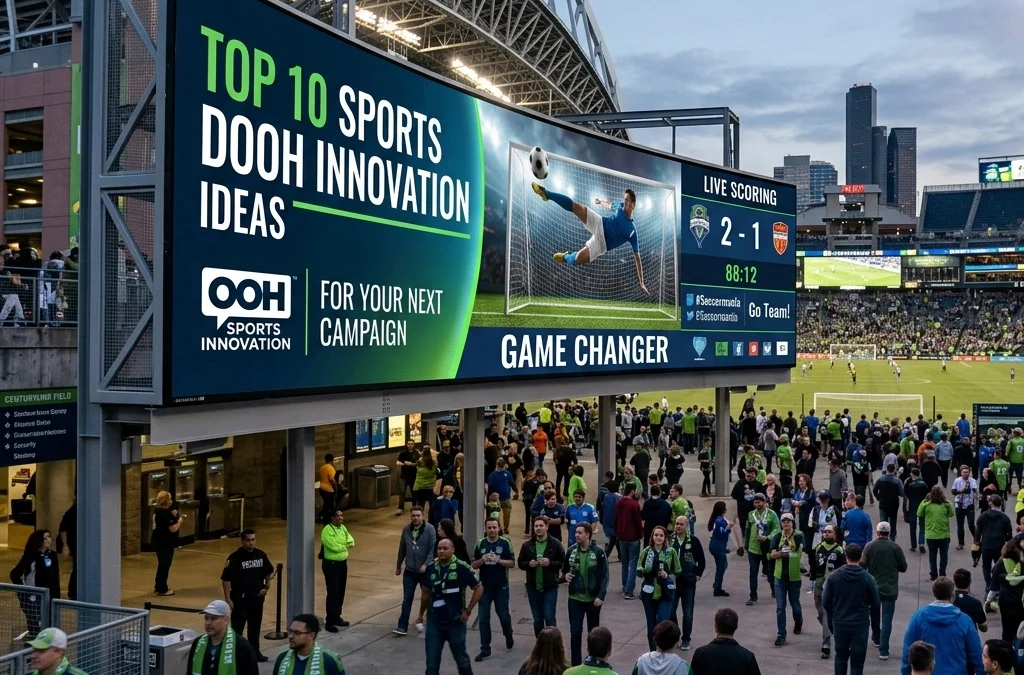
The landscape of sports marketing is undergoing a significant shift. Traditional static billboards and standard stadium signage are being supplemented, and in some cases replaced, by dynamic digital solutions. Digital Out-of-Home (DOOH) advertising has become a primary vehicle for brands to connect with fans in real time. As the industry moves toward a projected market value of 50 billion dollars by 2030, the focus has shifted from mere visibility to high-impact innovation.
Media buyers and brand managers now have access to programmatic technology that allows for unprecedented levels of relevance and timing. The following ten innovation ideas provide a roadmap for leveraging DOOH to capture fan attention and drive measurable brand lift.
1. Real-Time Score and Player Statistics
One of the most effective ways to ensure relevance is by integrating live data feeds directly into the creative. By displaying live match scores, player stats, or league standings, a brand transforms an advertisement into a utility. Fans are conditioned to look for updates, and providing this information positions the brand as a central part of the game-day experience.
The strategy involves connecting the DOOH creative to a real-time sports data API. When a goal is scored or a significant milestone is reached, the creative updates automatically across the network. This approach ensures the content is never stale and maintains a high level of engagement throughout the duration of the event.
2. Dynamic Post-Game Messaging
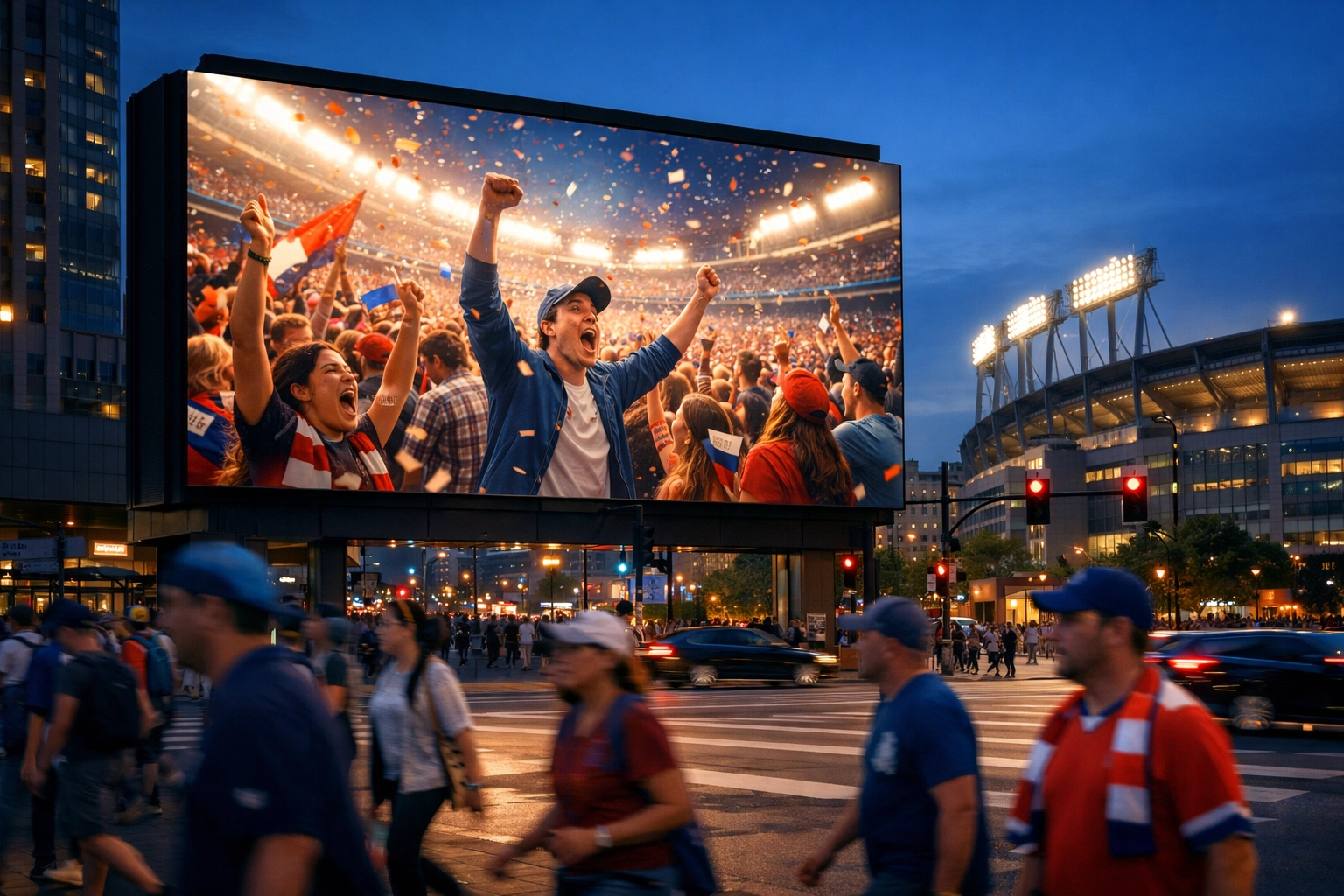
Fan emotion is at its peak immediately following a game. Innovative campaigns use dynamic triggers to change messaging based on the outcome of the event. If the local team wins, the creative can instantly pivot to celebratory content, such as "Victory is Sweet" or "Celebrate the Win with [Product]." If the team loses, the tone can shift to a message of resilience or a prompt for the next game.
This level of agility was previously impossible with traditional OOH. Programmatic DOOH allows these transitions to happen within minutes of the final whistle. This strategy capitalizes on the heightened emotional state of the audience, which often leads to higher brand recall and positive sentiment.
3. Contextual Weather-Triggered Creative
Sports are often dictated by the elements, and advertising should be no different. Weather-triggered DOOH uses local meteorological data to serve specific creative assets. For instance, if rain begins to fall at an outdoor stadium, a brand can trigger ads for umbrellas, rain gear, or even indoor dining options nearby. Conversely, on a high-temperature day, the focus can shift to hydration and cold beverages.
This tactic ensures that the brand remains useful to the consumer's immediate situation. By aligning the product with the fan's physical comfort, the message feels less like an intrusion and more like a helpful suggestion.
4. Live Odds Streaming for Betting Partners
The legalization of sports betting in various regions has opened a new frontier for DOOH. Streaming live wagering odds to screens in sports bars, transit hubs, and fan zones turns ad space into an active information board. This keeps the betting audience engaged with the brand while providing the data they need to make decisions.
This type of campaign often sees high conversion rates when paired with a clear call to action, such as a QR code leading to a mobile app. It bridges the gap between the physical world and the digital betting platform, creating a seamless user journey. For brands looking to enter this space, understanding how to launch real-time betting campaigns is essential for success. Learn more about real-time sports betting DOOH campaigns.
5. Location-Based Perimeter Targeting
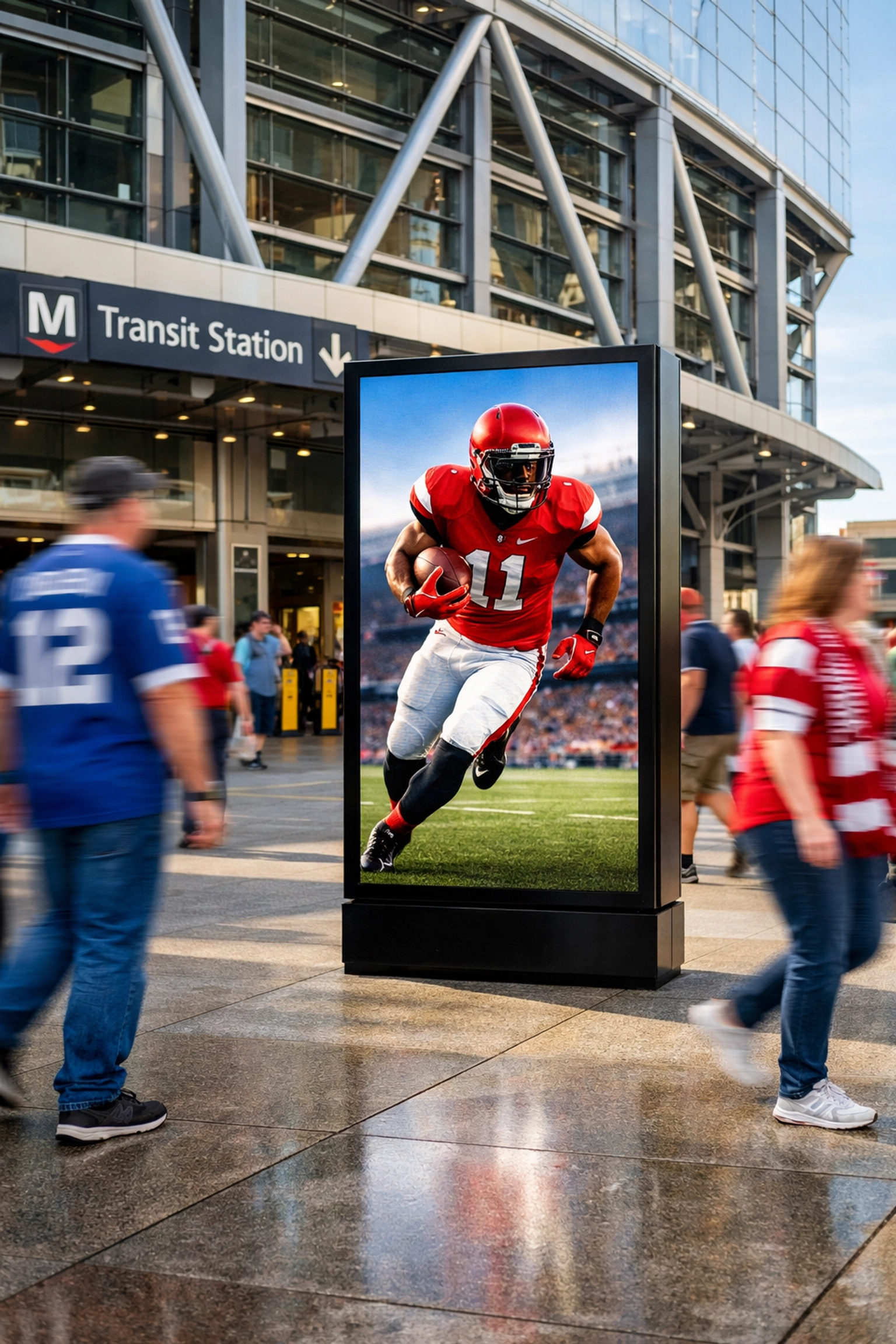
Reaching fans does not require a multi-million dollar stadium sponsorship. Location-based targeting, specifically around the perimeter of major sports venues, allows brands to reach the same high-value audience for a fraction of the cost. By deploying ads on digital screens in high-traffic areas like transit stations, parking lots, and popular bars surrounding the stadium, brands can dominate the "path to purchase."
This strategy is particularly effective for brands that are not official sponsors but want to maintain a presence during major events. It provides a way to scale advertising efforts without the constraints of exclusive league contracts. For more on the efficiency of this approach, see how smart brands scale with perimeter DOOH.
6. Social Media and User-Generated Content
Integrating social media feeds into DOOH screens creates a bridge between the physical and digital worlds. By displaying fan comments, photos, or trending hashtags, brands can foster a sense of community. This encourages fans to interact with the brand on their mobile devices in hopes of seeing their content featured on a large-scale digital screen.
This tactic works best when the content is moderated in real time to ensure brand safety. The resulting engagement not only boosts the physical campaign's visibility but also increases the brand's social media reach, creating a cross-channel ripple effect.
7. Programmatic Audience Segmentation
Not all fans are the same, and DOOH technology now allows brands to segment audiences with high precision. By using mobile location data and third-party audience insights, campaigns can serve different creative to different demographic groups at the same location. For example, a sports apparel brand might show women's jerseys to one group and men's footwear to another, based on the historical foot traffic patterns of that specific screen.
This precision reduces media waste and ensures that the creative resonates with the specific individuals standing in front of the screen. Programmatic platforms make this level of targeting automated and scalable across thousands of screens simultaneously.
8. Pre-Game Countdowns and Event Buzz
Innovation does not always have to happen during the game. Building anticipation is a powerful marketing tool. DOOH screens can be used to run countdown timers in the weeks and days leading up to a major kickoff. These countdowns can be paired with exclusive "early bird" promotions or tune-in reminders.
This strategy establishes the brand as an authority on the upcoming event. It also helps in securing mindshare before the clutter of game-day advertising begins. By the time the event starts, the audience is already familiar with the brand's involvement.
9. Interactive Participation and Gamification
Modern digital screens often come equipped with capabilities for interaction, whether through touch, gesture, or mobile synchronization. Brands can create simple games or polls that fans can participate in while waiting for a game to start or during halftime.
For example, a brand might run a "Predict the Score" poll where fans scan a QR code to vote. The live results are then displayed on the screen in real time. This type of gamification turns a passive viewer into an active participant, significantly increasing the time spent with the brand.
10. Retail and Merchandising Synchronization
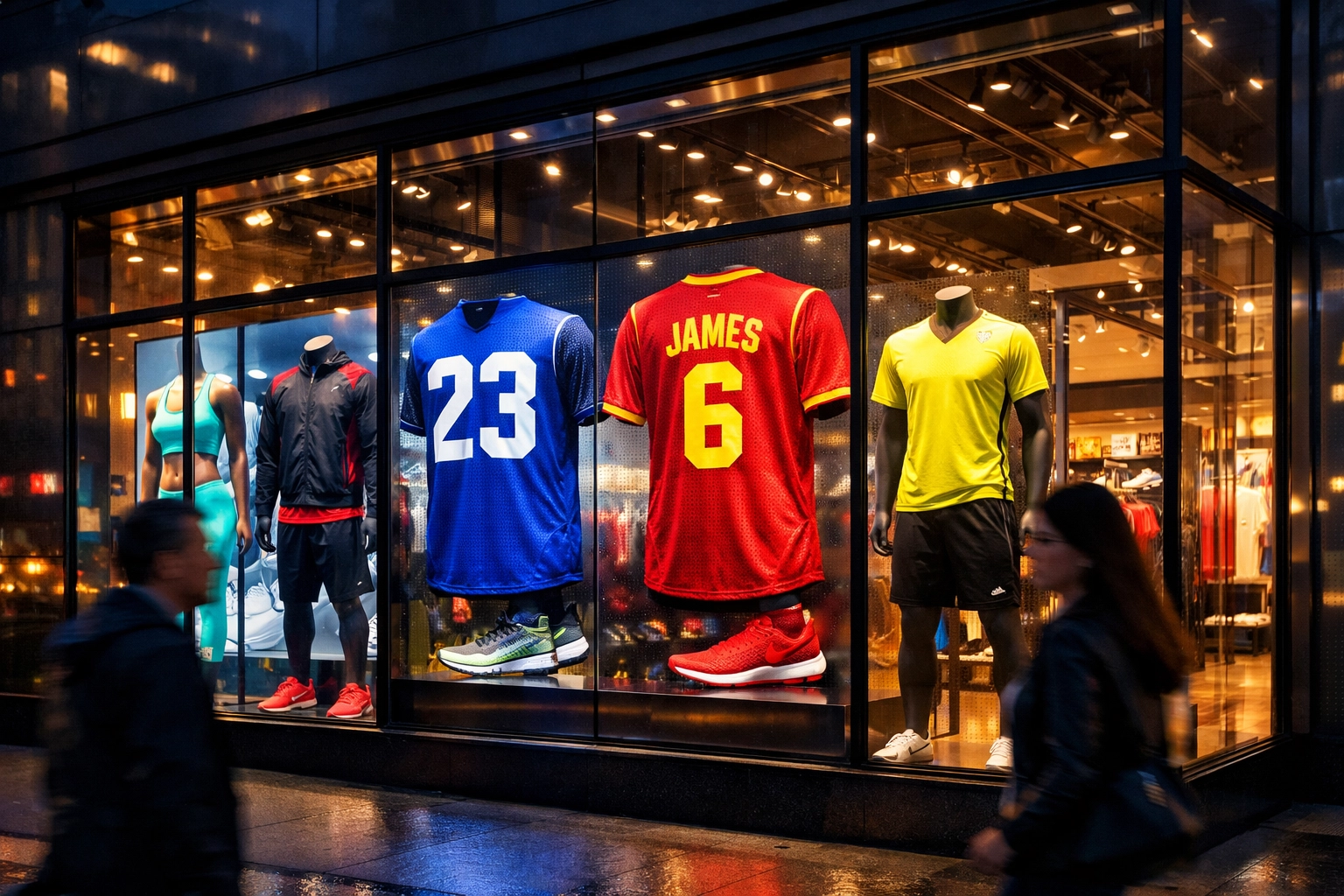
DOOH can be a direct driver of retail sales when synchronized with game events. If a specific player has a breakout performance, ads for their jersey can be instantly triggered in nearby retail locations or on screens leading to the team store. This "strike while the iron is hot" approach leverages the immediate demand generated by on-field action.
Brands like Nike have used similar tactics to maintain a dominant presence even when they are not the official sponsor of an event. By focusing on the fan's immediate desires and the context of the game, they achieve high levels of impact. Explore how Nike used DOOH to dominate the NYC Marathon.
Measuring the Impact of Innovation
The success of these innovative strategies is not just anecdotal. Data consistently shows that dynamic, targeted DOOH campaigns outperform traditional methods. For instance, campaigns focusing on programmatic execution have seen a 74% lift in purchase consideration for new product launches. In other cases, brands have reported a 119% lift in positive brand image by using real-time triggers and relevant messaging.
The key to these results lies in the use of AI-powered analytics and robust measurement frameworks. Brands no longer have to guess how many people saw an ad or how they reacted. By using device ID exposure and brand lift studies, media buyers can quantify the exact ROI of their DOOH spend.
Strategic Execution and Logistics
Implementing these ideas requires a clear understanding of the technical requirements. A successful campaign depends on:
- Data Integration: Ensuring that APIs for scores, weather, or social media are reliable and low-latency.
- Creative Asset Management: Having a library of assets ready for every possible scenario (win/loss, rain/shine).
- Platform Selection: Using a Demand Side Platform (DSP) that specializes in DOOH to manage programmatic bidding and targeting. Platforms like StackAdapt have been instrumental in driving this adoption. For more details, see the spotlight on StackAdapt DSP.
Conclusion
The future of sports marketing is dynamic, data-driven, and deeply integrated into the fan experience. By moving beyond static images and embracing real-time innovation, brands can create memorable moments that resonate far longer than a traditional 30-second spot. Whether it is through live score updates, weather-triggered creative, or perimeter targeting, the tools are now available to make every campaign a high-performance event.
For brands looking to secure their share of the growing sports advertising market, the time to innovate is now. Understanding the difference between traditional stadium ads and programmatic DOOH is the first step toward achieving better ROI and deeper fan engagement. Compare the two approaches here: Programmatic DOOH vs. Traditional Stadium Ads.