


The roar of the crowd, the tension of a last minute play, and the collective gasp of thousands of fans create an environment unlike any other in advertising. For Creative Directors and Chief Marketing Officers, capturing this lightning in a bottle is the ultimate goal. While traditional television commercials often face the hurdle of ad blockers or distracted viewers, stadium perimeter advertising sits at the very heart of the action.
Perimeter ads have undergone a significant transformation. No longer just static boards lining the pitch, they are now dynamic, digital powerhouses that bridge the gap between physical presence and digital engagement. For brands looking to maximize their impact, understanding the mechanics of these high visibility assets is essential.
Strategy: Capturing Attention in the High Heat of the Moment
The primary objective of stadium perimeter advertising is to align a brand with the peak emotional experiences of the audience. When a fan is focused on the field, their attention is at its highest. By placing messaging directly in the line of sight during these moments, brands achieve a level of "stickiness" that is difficult to replicate through other channels.
Execution involves more than just displaying a logo. It requires a strategic understanding of how fans interact with the environment. From viewing angles to regional broadcasting nuances, here are ten essential insights into the world of stadium perimeter advertising.
1. Universal Visibility Through Wide Viewing Angles
Modern LED perimeter boards are engineered with extensive viewing angles. This technical specification ensures that spectators, regardless of whether they are in the front row or the upper tiers, have a clear and unobstructed view of the content.
This universal access means that every seat in the stadium becomes a valuable touchpoint for the advertiser. When a brand occupies the perimeter, it effectively owns the visual frame of the event for everyone in attendance. This consistency is a core strength of the medium, ensuring that the message is not lost to those sitting at extreme angles.
2. Interactive Features and Behavioral Data
The transition from static to digital has introduced interactivity to the stadium floor. Perimeter ads can now feature live polls, trivia, and games that encourage fans to use their mobile devices.
These interactive elements serve a dual purpose. First, they heighten the presence of the brand within the stadium. Second, they allow marketing teams to collect valuable behavioral data. By tracking participation, brands can gain insights into audience preferences and engagement patterns. To avoid common pitfalls in this area, it is helpful to understand how AI powered analytics fix common measurement mistakes.

3. Social Media Integration and Extended Reach
Perimeter signage acts as a catalyst for social media activity. When a brand displays a specific hashtag or encourages fans to share their experiences, it extends the reach of the campaign far beyond the stadium walls.
Real-time displays that feature fan social media posts on the big screen or perimeter boards create a sense of community. Branded photo walls and "fan cams" generate user-generated content that serves as authentic endorsement. This strategy transforms a single physical ad into thousands of digital impressions as fans share their game-day memories online.
4. The Power of the Second-Screen Experience
The modern sports fan is almost always a multi-screen consumer. They watch the live game while simultaneously checking stats or social media on their phones. Perimeter ads capitalize on this behavior by incorporating QR codes.
These codes act as gateways to exclusive content, such as live player statistics, behind the scenes footage, or immediate merchandise discounts. By connecting the physical stadium environment to a digital landing page, brands can drive immediate action and track conversion rates in real time. This seamless transition from physical to digital is a hallmark of effective modern sports marketing.
5. Emotional Stickiness and Peak Moments
Advertising is most effective when it is associated with positive, high-intensity emotions. In a stadium, these moments occur during goals, touchdowns, or crucial defensive plays. Unlike a commercial break that signals a pause in the action, perimeter ads are present during the action itself.
When a brand appears in the background of a historic sports moment, it becomes anchored in the subconscious of the audience. The emotional high of the game transfers to the brand, creating a lasting positive association that traditional media often struggles to achieve.
6. Visual Communication as the Primary Language
In a loud and energetic stadium, visual communication becomes the most effective way to reach the audience. Perimeter ads serve as a primary tool for building atmosphere.
Strategic use of color, motion, and bold typography allows brands to speak to fans without needing a single word of audio. This visual language bridges the gap between logistical information and emotional connection. When a brand uses team colors or logos in its perimeter creative, it signals a shared identity with the fans, reinforcing brand loyalty through visual alignment.
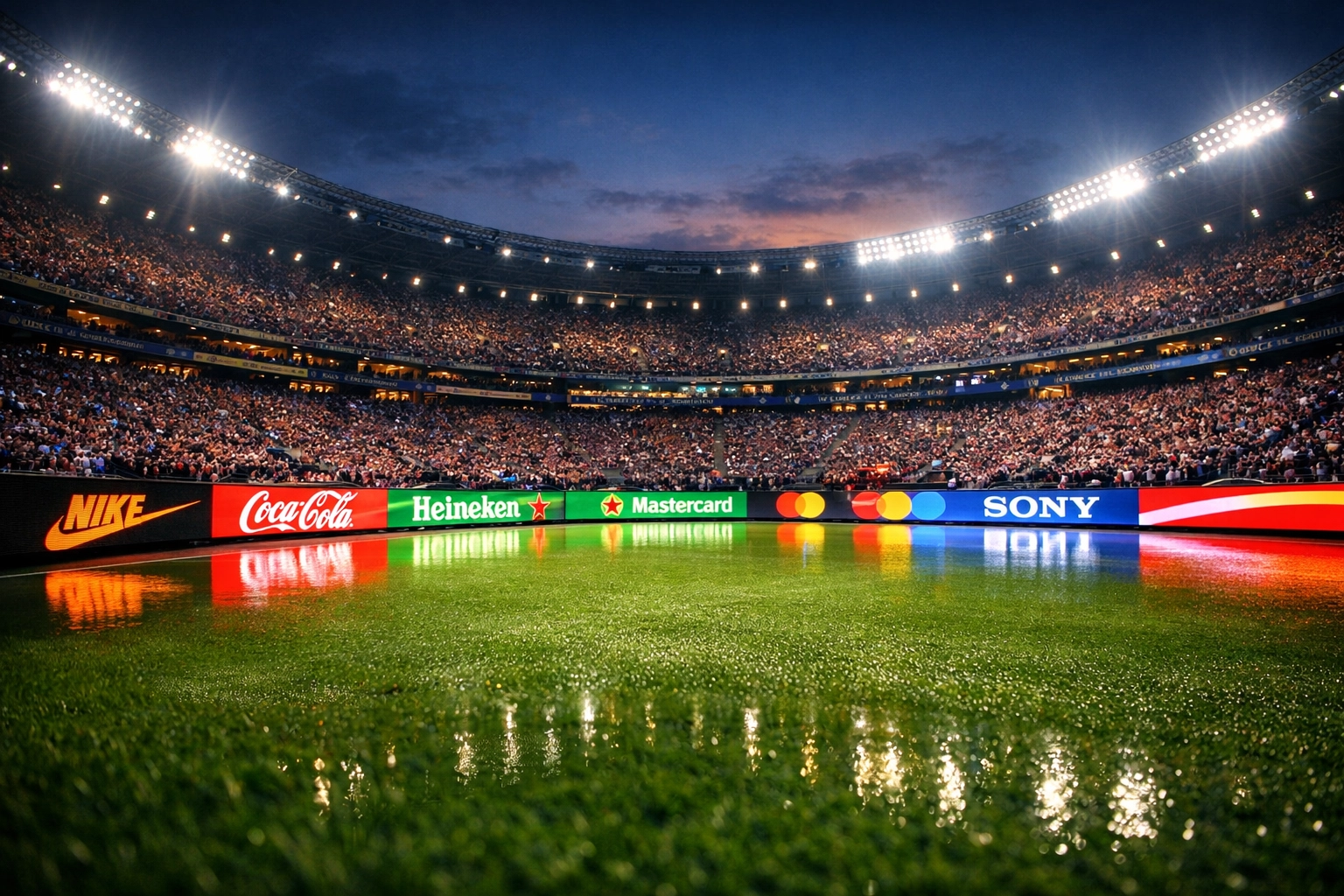
7. Virtual Overlays for Regional Personalization
One of the most significant technological advancements in sports advertising is the use of virtual overlays. Through the use of AI and advanced broadcasting technology, the same physical LED board can show different content to different audiences.
For example, fans watching the broadcast in Europe might see an ad for a local automotive brand, while viewers in North America see a different brand on the same board. This technology multiplies the revenue potential of a single asset and allows brands to deliver highly localized messaging to a global audience. Understanding the ROI differences between traditional and programmatic stadium ads is vital for CMOs looking to scale their global presence.
8. Creating Branded Environments and Loyalty
Consistency is key to brand recognition. When a brand integrates its identity throughout the stadium environment, from the perimeter boards to the entrance signage, it creates a cohesive experience.
This immersion helps transform the venue into a branded space where fans feel a sense of belonging. By aligning with the team's colors and slogans, the advertiser moves from being a guest in the stadium to being a part of the team's culture. This sense of partnership is a powerful driver of long-term fan loyalty.
9. Cross-Channel Strategy Multipliers
Stadium perimeter ads do not exist in a vacuum. Their effectiveness is exponentially increased when they are part of a broader cross-channel strategy.
By combining physical presence with geo-fencing, social media ads, and influencer partnerships, brands can create multiple touchpoints throughout the fan journey. A fan might see a perimeter ad during the game, receive a targeted mobile notification as they leave the stadium, and see a follow up ad on social media the next morning. This integrated approach builds trust and ensures the brand remains top of mind long after the final whistle.
10. Dynamic Content Optimization in Real Time
The flexibility of digital LED technology allows for instant content updates. If a game is going into overtime or if a specific player is having a record-breaking night, the perimeter ads can be updated to reflect the current situation.
This responsiveness keeps the content fresh and relevant. It also allows advertisers to pivot their strategy based on the flow of the game. For marketing teams, this agility is a significant advantage over traditional static formats. However, success requires avoiding common mistakes with stadium perimeter targeting to ensure the message remains effective and not distracting.

Technology and Results: Measuring the Impact
The shift toward Digital Out-of-Home (DOOH) in sports venues has provided brands with more tools for measurement than ever before. Utilizing device IDs, location data, and brand lift studies, marketing teams can now quantify the impact of their stadium presence.
Objective data shows that perimeter ads significantly increase brand recall and purchase intent. Because the audience is "captive" and highly engaged, the frequency and quality of impressions are superior to many other forms of outdoor advertising.
For OOH Sports, the focus remains on leveraging these technological advancements to provide brands with a seamless, high impact presence. The integration of AI powered analytics and programmatic buying platforms has simplified the process for Creative Directors to launch and manage complex campaigns across multiple venues.
Conclusion: The Future of Fan Engagement
Stadium perimeter advertising represents a unique intersection of physical emotion and digital precision. For brands looking to make a lasting impression, the stadium offers a canvas that is both vast and highly targeted.
By focusing on universal visibility, interactive features, and regional personalization, CMOs can ensure their marketing budgets are working harder. As technology continues to evolve, the ability to connect with fans in real time will only grow, making the perimeter board one of the most valuable assets in the modern advertiser's toolkit.
The goal is simple: be where the fans are, speak their language, and become part of the moments they will never forget. With OOH Sports, that goal is well within reach.