
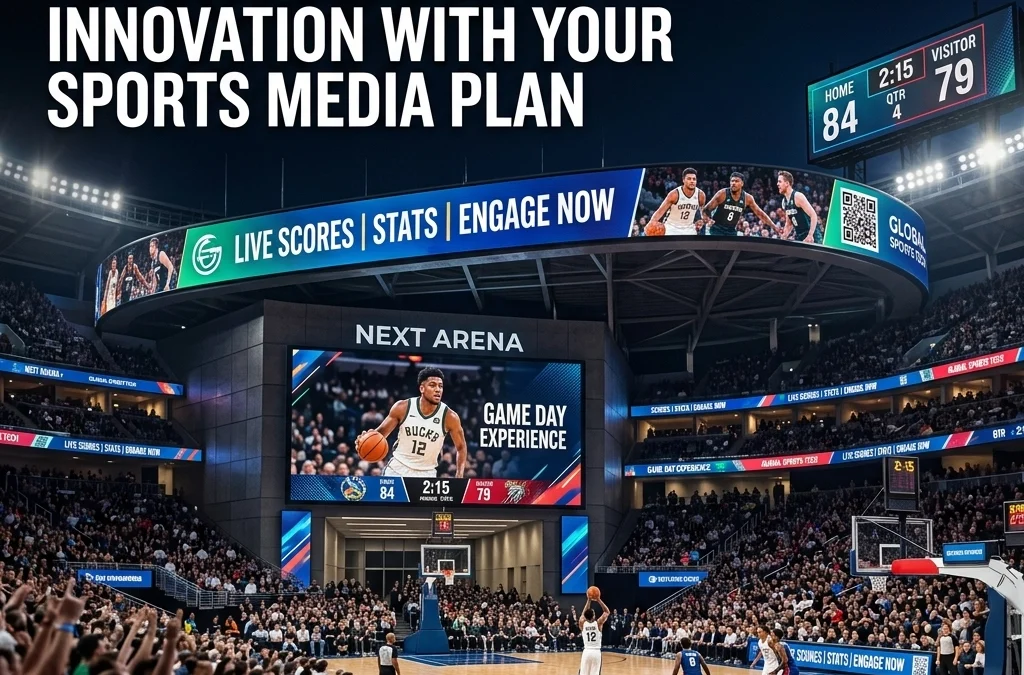
The sports marketing world is moving faster than ever. For media buyers and brand managers, the challenge is no longer just about getting a logo on a screen. It is about being in the right place at the exact moment a fan is most engaged. Static billboards and traditional TV spots still have their place, but Digital Out-of-Home (DOOH) advertising is the tool that bridges the gap between the physical stadium and the digital world.
Integrating cutting-edge DOOH into a sports media plan allows brands to react to live events, target specific fan demographics, and measure success with a level of precision that was previously impossible. This guide explores how to modernize a sports media strategy using these innovations.
The Strategy: Moving Beyond Static Placements
Traditional sports advertising often relies on broad reach. A brand buys a spot and hopes the right people see it. In contrast, a modern DOOH strategy focuses on relevance and timing. The goal is to reach fans not just during the game, but throughout their entire journey, from the commute to the stadium to the post-game celebration at a local sports bar.
By using programmatic technology, media planners can automate the buying process. This allows for flexibility. If a game is delayed or an underdog team starts a historic comeback, the media plan can shift in real time. This agility is what separates innovative brands from those stuck in old habits.

Objective and Execution: Real-Time Triggers
One of the most impactful innovations in DOOH is the use of real-time data triggers. This technology allows creative assets to change based on what is happening on the field.
Live Score Updates
Instead of a generic brand message, a display can show the live score of a high-stakes game. This transforms an advertisement into a piece of utility for the fan. When the home team scores a touchdown or hits a home run, the creative can immediately switch to a celebratory message. This creates an emotional connection between the brand and the fan's joy.
Weather and Environment Triggers
If a sudden rainstorm hits a stadium, DOOH screens in the surrounding area can automatically switch to ads for rain gear or indoor dining options. This level of context makes the advertising feel helpful rather than intrusive.
Betting Odds and Statistics
For brands in the gaming and sports betting space, DOOH is a powerful tool. Real-time odds can be streamed directly to screens in sports bars or near stadiums. This creates a sense of urgency and provides immediate value to fans looking to engage with the game on a deeper level. You can see how this works in practice by looking at how to launch real-time sports betting DOOH campaigns.

Technology Partners: The Role of Programmatic Buying
The backbone of modern DOOH innovation is the Programmatic Digital Out-of-Home (pDOOH) ecosystem. Using a Demand-Side Platform (DSP) like StackAdapt allows media buyers to access thousands of digital screens through a single interface.
Programmatic buying removes the need for manual negotiations for every single screen. Instead, buyers set parameters such as:
- Location (near specific stadiums or arenas)
- Time of day (pre-game, during play, or post-game)
- Audience demographics (based on anonymized mobile location data)
This technology ensures that the budget is spent efficiently. Advertisers only pay for the impressions that meet their specific criteria. For a deeper look at the tech behind this, the spotlight on StackAdapt DSP explains how these platforms are driving adoption across the industry.
Omnichannel Reinforcement: The Surround-Sound Effect
A successful sports media plan does not exist in a vacuum. DOOH should be the physical anchor for a wider omnichannel strategy. When a fan sees a brand on a large digital screen outside the arena and then sees a related ad on their mobile device or social feed, the brand's message is reinforced.
This is often referred to as the priming effect. The high-impact nature of DOOH builds brand awareness and trust, making the fan more likely to click on a digital ad later. By using device IDs exposed to the DOOH screens, marketers can retarget those same fans on their phones with a direct call to action, such as a discount code or a link to buy merchandise.

Results: Quantifiable Success in Sports Marketing
The primary concern for any brand manager is ROI. Fortunately, modern DOOH provides the data needed to prove its worth. Recent campaigns have shown significant lifts in both brand perception and purchase intent.
Case Study: Purchase Consideration
In a campaign for White Claw, the use of programmatic DOOH led to a 74% lift in purchase consideration. By targeting high-traffic areas during relevant social moments, the brand was able to move the needle on consumer behavior. You can read the full details on the White Claw programmatic campaign.
Case Study: Brand Image
Similarly, Mike’s Hard Iced Tea saw a 119% lift in positive brand image by using a targeted DOOH strategy. The ability to place ads in environments where fans were already in a positive, relaxed mood significantly enhanced the effectiveness of the creative. The Mike's Hard case study highlights how important the "where" and "when" are in sports marketing.
Case Study: Awareness and Engagement
Sea-Doo utilized DOOH to increase purchase consideration by 144%. By focusing on locations where their target audience spent their leisure time, they proved that out-of-home can be just as targeted as any online channel. The Sea-Doo digital OOH campaign is a prime example of high-impact visual storytelling.
Measuring What Matters: AI-Powered Analytics
The old days of "guessing" how many people saw a billboard are over. Innovative sports media plans now use AI-powered analytics to measure campaign success. These tools provide insights into:
- Foot traffic attribution (did people visit a store after seeing the ad?)
- Brand lift (did the ad change how people feel about the brand?)
- Audience movement patterns (how do fans move through the city on game day?)
By focusing on these metrics, media planners can stop wasting time on guesswork. The industry is shifting toward data-backed decisions that justify every dollar spent. For more on this, check out the guide on AI-powered DOOH analytics.

Strategic Tactics: Avoiding Common Pitfalls
While the technology is powerful, the strategy must be sound. There are several common mistakes that can hinder a sports DOOH campaign.
- Over-Complicating the Creative: In the fast-paced environment of a sports venue, the message must be simple. A fan might only have a few seconds to look at a screen while walking to their seat. Use bold visuals and minimal text.
- Ignoring the Surroundings: An ad that works on a quiet street might not work in a crowded stadium. Consider the ambient light and the "noise" of the environment.
- Forgetting the Fan Journey: Many brands only focus on the game itself. However, the pre-game and post-game moments are often when fans are most likely to make purchasing decisions or interact with their mobile devices.
- Static Measurement: Do not wait until the end of a six-month campaign to look at the data. Programmatic DOOH allows for mid-campaign optimizations. If one creative isn't performing, swap it out.
For a deeper dive into common errors, see the article on 7 mistakes you are making with sports DOOH.
The Future: Integrating New Venues and Formats
Innovation in DOOH is not just about the technology behind the screen, but also where the screens are located. We are seeing a move toward 25,000+ digital screens across the sports landscape, including locker rooms, VIP lounges, and even digital floor graphics.
This expansion means that brands can be more specific than ever. A luxury watch brand might focus only on the digital screens in stadium suites, while a snack brand focuses on the high-traffic concourse areas. This level of granularity ensures that the message reaches the right subset of fans within the larger stadium audience. The shift is so significant that many are wondering if traditional stadium sponsorships are being replaced.

Summary of Integration Steps
To successfully integrate DOOH innovation into a sports media plan, follow these logical steps:
- Define the Audience Journey: Map out where fans are before, during, and after the game.
- Identify Real-Time Opportunities: Determine which live data points (scores, weather, stats) can enhance the creative.
- Choose the Right Technology: Use a DSP to access screens programmatically for maximum efficiency.
- Synchronize with Mobile: Ensure that DOOH activations are backed up by a digital retargeting strategy.
- Set Clear KPIs: Use AI-powered analytics to measure foot traffic and brand lift rather than just impressions.
By following this framework, media buyers can move away from static, one-size-fits-all advertising and toward a dynamic, fan-centric approach that delivers measurable results. The sports world is always changing, and your media plan should be able to change right along with it.