
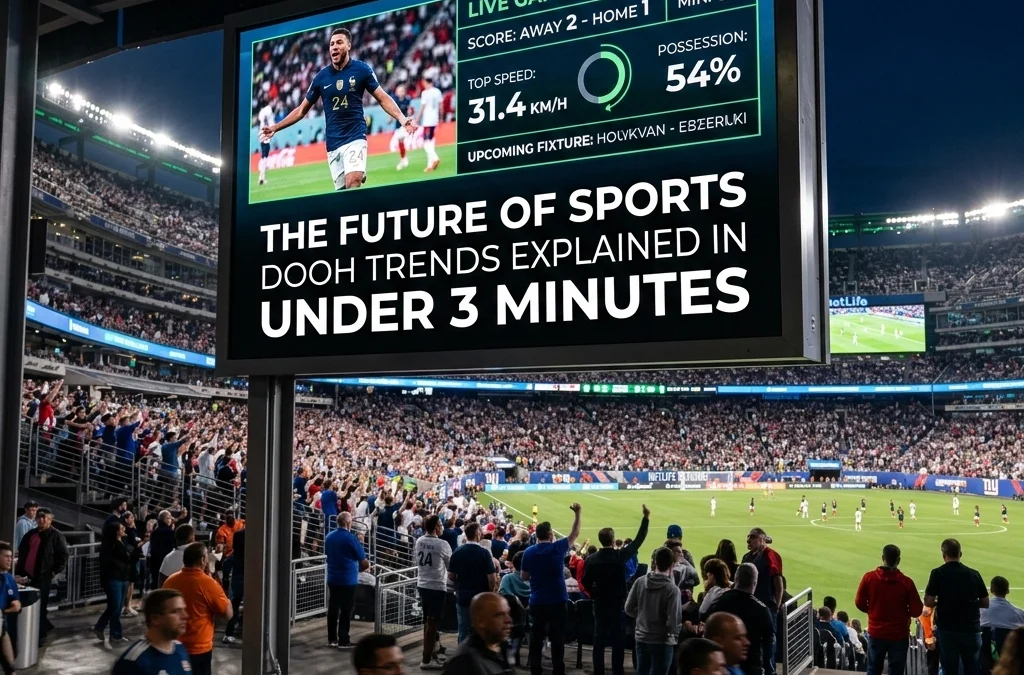
The landscape of sports advertising is undergoing a fundamental transformation. As traditional linear television audiences fragment and streaming services become the primary home for live games, the physical world has become a critical touchpoint for brand engagement. Digital Out-of-Home (DOOH) advertising is no longer just about static billboards near a stadium. It has evolved into a sophisticated, data-driven ecosystem that bridges the gap between the digital and physical realms.
By the year 2030, the sports advertising market is projected to reach 50 billion dollars. A significant portion of this growth is attributed to the adoption of advanced DOOH strategies that prioritize relevance, timing, and interactivity. For brands looking to capture the attention of a passionate fan base, understanding these emerging trends is essential for maintaining a competitive edge.

Real Time Dynamic Creative Optimization
The primary shift in sports DOOH is the move from static messaging to dynamic, trigger-based content. Dynamic Creative Optimization (DCO) allows advertisers to change their creative assets in real time based on external data feeds. In the context of sports, this means ads can react to live game events as they happen.
When a specific player scores a goal or a team wins a championship, digital displays in surrounding areas can update instantly to reflect the score or offer a congratulatory message. This level of immediacy ensures that the brand remains part of the conversation while the emotional high of the game is at its peak. Beyond scores, triggers can include weather conditions, such as promoting cold beverages on a hot game day, or traffic patterns that suggest when fans are leaving the venue and heading toward transit hubs.
The effectiveness of this approach is rooted in contextual relevance. Fans are more likely to notice and remember an ad that acknowledges the shared experience of the game. By automating these triggers through programmatic platforms, brands can execute complex, multi-city campaigns without manual intervention for every update.

The Rise of Programmatic DOOH in Sports
Programmatic DOOH (pDOOH) has revolutionized how inventory is purchased and managed. Unlike traditional methods that required long-lead times and manual contracts, programmatic buying allows for more flexible and efficient campaign execution. This is particularly valuable in sports marketing where game schedules, weather, and team performance can change rapidly.
The use of Demand-Side Platforms (DSPs), such as StackAdapt, has enabled advertisers to integrate DOOH into their broader omnichannel strategies. This integration allows for precise targeting based on location, time of day, and even audience demographics derived from mobile location data. By utilizing pDOOH, brands can bid on inventory that offers the highest value at the most opportune moments.
One of the most significant advantages of pDOOH is the ability to measure impact with greater accuracy. Advertisers can now track brand lift, purchase consideration, and even foot traffic to retail locations following exposure to a DOOH ad. For more insights on the technology driving these changes, exploring the spotlight on StackAdapt DSP reveals how programmatic adoption is streamlining omnichannel campaigns.
Omnichannel Reinforcement and the Priming Effect
Sports fans rarely consume content on a single screen. They are often watching the game on a primary screen while checking stats on a mobile device and engaging with social media. DOOH acts as a powerful reinforcement tool in this multi-screen environment. This is often referred to as the priming effect, where exposure to an out-of-home ad increases the likelihood that a consumer will engage with a digital ad on their phone later.
Strategic placement of DOOH assets along the fan journey, from transit lines to sports bars and city centers, creates a continuous brand presence. This strategy was effectively utilized in recent campaigns to drive significant brand lift. For example, a campaign for Mike's Hard Iced Tea saw a 119 percent lift in positive brand image through a coordinated programmatic DOOH approach. Similarly, White Claw's campaign resulted in a 74 percent lift in purchase consideration by targeting relevant audience segments during key consumption periods.
By aligning the messaging across all channels, brands can create a cohesive narrative that resonates more deeply than isolated ads. This synergy is a key reason why programmatic DOOH often delivers better ROI compared to traditional, siloed stadium advertising.

Immersive Experiences and 3D Anamorphic Displays
To stand out in a crowded visual environment, brands are increasingly turning to high-impact creative formats. 3D anamorphic displays, which create the illusion of three-dimensional depth on a two-dimensional screen, have become a favorite for high-profile sports campaigns. These displays are inherently shareable, often going viral on social media platforms and extending the campaign's reach far beyond the physical location of the screen.
Interactive elements are also becoming more prevalent. QR codes integrated into DOOH creative allow fans to instantly access exclusive content, enter contests, or make purchases directly from their smartphones. This bridge between the physical display and the mobile device provides a direct path to conversion.
In addition to visual impact, the location of these displays is expanding. While digital screens inside stadiums, often referred to as Sportrons, remain vital, the trend is moving toward capturing the fan's attention throughout their entire day. This includes high-traffic urban centers and shopping districts, where fans gather before and after events.
Targeting the Non Official Sponsor Advantage
One of the most significant trends in the future of sports DOOH is its accessibility for brands that are not official league or team sponsors. Official sponsorships are often prohibitively expensive and come with restrictive exclusivity clauses. However, DOOH allows non-official sponsors to engage with the fan community by targeting the geographic areas surrounding a stadium or the transit routes fans take to the game.
This strategy allows brands to capitalize on the excitement of a major sporting event without the massive price tag of an official partnership. By using data-driven targeting, a brand can reach the exact same audience of fans as they commute, shop, or celebrate in the city. A notable example of this was seen during the NYC Marathon, where Nike maintained a dominant brand presence despite not being the official sponsor of the event.

Hyper Personalization Through AI
Artificial Intelligence (AI) is playing an increasingly important role in the hyper-personalization of DOOH content. By analyzing vast amounts of data, AI can predict which creative assets will perform best in specific locations and at specific times. This allows for a level of message tailoring that was previously impossible.
In the future, we can expect to see AI-driven systems that adjust creative elements such as color, copy, and imagery in real time to better suit the demographic profile of the people currently passing by a screen. This ensures that the advertising is always as relevant as possible to the immediate audience. This level of precision is driving the industry toward the 7 strategies to capture a share of the 50 billion dollar market.
Data and Attribution in the Post Cookie Era
As the digital advertising world moves away from third-party cookies, DOOH offers a privacy-compliant way to reach large audiences. Because DOOH is a one-to-many medium, it does not rely on individual tracking in the same way that web advertising does. Instead, it uses aggregated, anonymized location data to understand audience movement and behavior.
This move toward robust attribution models is a major trend. Brands are now demanding clear evidence of how their DOOH spend influences consumer behavior. Through the use of control and exposed groups, advertisers can measure the actual lift in metrics like brand awareness, favorability, and intent. The results from early adopters, such as the 144 percent increase in purchase consideration for Sea-Doo, demonstrate the power of data-backed DOOH campaigns.

Looking Ahead
The future of sports DOOH is characterized by its ability to be both massive in scale and surgical in its precision. By leveraging real-time data, programmatic buying, and high-impact creative, brands can create memorable experiences that resonate with fans in the moments that matter most. As the technology continues to evolve, the integration between the physical and digital worlds will only become more seamless, making DOOH an indispensable part of any modern sports marketing strategy.
For organizations looking to navigate this evolving landscape, focusing on these trends will be the key to unlocking new levels of engagement and ROI. Whether it is through the use of dynamic triggers or the adoption of programmatic platforms, the opportunities for innovation in sports DOOH are vast and continue to grow. For more information on how these strategies are being applied, further reading on OOH Sports case studies provides a detailed look at successful executions across various categories.