
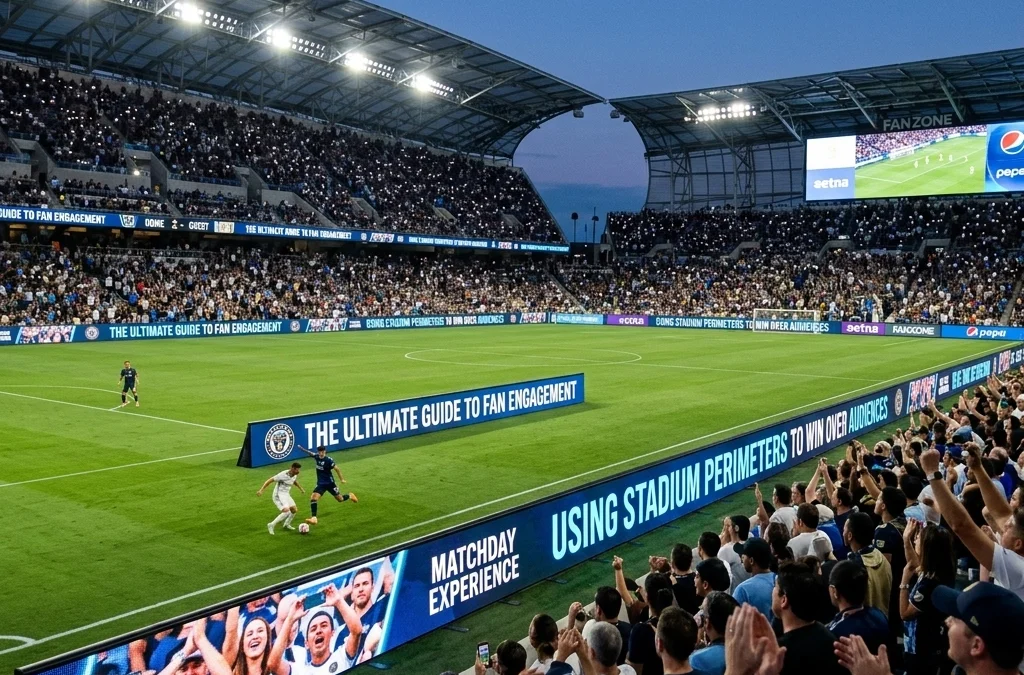
Stadium perimeter advertising has evolved from simple static boards to high-tech digital systems that serve as a bridge between a brand and a highly emotional audience. For Creative Directors and Chief Marketing Officers, the challenge is no longer just about getting a logo on a screen. The goal is to drive meaningful fan engagement that translates into brand loyalty and measurable action.
The environment within a stadium is unique. Fans are in a state of high arousal and focus, often for two to four hours at a time. This captive state provides a rare opportunity for brands to integrate themselves into the narrative of the game. Stadium perimeters, located directly around the field of play, occupy the most valuable real estate in the venue because they remain in the line of sight for both the live crowd and the broadcast audience.

The Strategic Value of Field-Side Visibility
In the landscape of modern advertising, attention is the most sought-after currency. Stadium perimeters offer a level of "unskippable" visibility that digital web ads or television commercials often struggle to match. When a fan watches a crucial play, their eyes are naturally drawn to the action on the field. The perimeter boards exist in the immediate background of that action.
This placement creates a psychological association between the brand and the excitement of the sport. Strategy dictates that high-frequency exposure in these moments leads to higher brand recall. Unlike traditional billboards, digital perimeter systems allow for movement, color shifts, and real-time updates, which keep the visual experience fresh and prevent "ad blindness" throughout a long event.
Objective and Strategy: Beyond Brand Awareness
The primary objective for most stadium perimeter campaigns is to maximize brand share of voice. However, sophisticated marketing strategies now look toward deeper engagement metrics. CMOs use these spaces to achieve several key results:
- High-Impact Brand Recognition: Establishing a dominant presence in a specific sport or geographic market.
- Narrative Integration: Aligning brand messaging with game-time events, such as a "Power Play" or a "Home Run."
- Driving Digital Traffic: Using QR codes or specific calls to action to move fans from the physical stadium to a digital storefront or social media page.
- Broadcast Amplification: Ensuring the brand is visible during televised replays and highlights, which can extend the reach from thousands in the stands to millions at home.

Technology Partners and Execution
Successful execution of stadium perimeter advertising requires a blend of creative excellence and technical precision. Modern systems use high-definition LED displays that are designed to be flicker-free on camera. This is essential for broadcast quality, as lower-grade screens often appear to "roll" or distort when viewed through a television lens.
Campaigns are increasingly managed through programmatic platforms. This allows for flexibility in messaging. A brand can change its creative based on the score, the weather, or the time of day. For example, a beverage brand might promote a cold drink during a hot afternoon game and switch to a different product during a night-time match.
The integration of OOH Sports marketing tools allows brands to synchronize perimeter displays with other digital out-of-home (DOOH) assets. This omnichannel approach ensures that a fan sees the same messaging on a digital billboard outside the stadium, on the perimeter board during the game, and perhaps on a mobile retargeting ad after they leave the venue.
Creative Tactics to Win Over Audiences
To truly win over an audience, the creative must be more than a static logo. It should complement the fan experience. Direct and simple messaging works best in a high-energy environment.
Real-Time Data Integration
One of the most effective ways to engage fans is by providing value. Perimeter boards that display live game statistics, social media feeds, or player facts alongside brand logos see higher levels of engagement. Fans look at the perimeter for information, and the brand benefits from the association with that utility.
Synchronized Takeovers
When every digital screen in a stadium, including the perimeters and the sportrons, displays the same brand message simultaneously, it creates a "moment of exclusivity." This is often timed with natural breaks in the game, such as timeouts or halftime. This tactic ensures 100 percent share of voice for a specific window of time, making it impossible for the audience to miss the message.
Gamification and Incentives
Modern campaigns often use the perimeter boards to trigger mobile interactions. A message might prompt fans to "Check your phone for a special offer" or "Vote for the player of the game." By using the physical screen as a prompt for a digital action, brands can collect valuable first-party data and track attribution more effectively.

Measuring Results and ROI
In the past, stadium advertising was often viewed as a "vanity play." Today, data and analytics have turned it into a performance-driven channel. Measurement is conducted through several lenses to ensure a clear return on investment.
Brand Lift Studies
Exposure to stadium ads is measured against brand preference and purchase intent. For instance, data shows that programmatic DOOH campaigns can drive significant lifts in brand image. Specific studies have shown that well-executed sports campaigns can lead to a 119 percent lift in positive brand image, as seen in various case studies.
Foot Traffic and Sales Attribution
By using geofencing and mobile device IDs, marketers can track if a fan who was exposed to a stadium perimeter ad later visited a retail location or made a purchase online. This level of granularity allows CMOs to justify the spend based on actual consumer behavior rather than just estimated impressions.
Purchase Consideration
Specific campaigns in the beverage and outdoor recreation sectors have demonstrated that targeted stadium and DOOH efforts can increase purchase consideration by over 140 percent. This is often achieved by reaching the consumer in a high-intent environment where they are already in a "spending" mindset, whether at the concession stand or planning their next weekend trip.
The Importance of an Evergreen Strategy
While specific games and seasons come and go, the strategy behind stadium perimeter advertising remains constant. It is about building a presence in the community and staying top-of-mind during moments of peak emotional engagement.
A successful long-term strategy involves:
- Consistency: Maintaining a presence across multiple games to build familiarity.
- Relevance: Updating creative to stay fresh without losing the core brand identity.
- Integration: Ensuring the stadium presence is a part of a larger marketing funnel.

Conclusion: The Future of Fan Engagement
As stadium technology continues to advance, the opportunities for perimeter advertising will only grow. The move toward more interactive, data-driven, and programmatic executions means that brands can be more precise than ever before.
For Creative Directors and CMOs, the stadium perimeter is not just a fence around the field. It is a canvas for storytelling and a powerful tool for building a lasting connection with an audience. By focusing on simple, high-impact creative and leveraging the latest in digital technology, brands can turn every game into a winning marketing event.
To stay updated on the latest trends in stadium advertising and digital out-of-home strategies, professionals are encouraged to explore the OOH Sports blog for deeper insights and industry analysis. For those ready to plan their next campaign, reaching out through the contact page is the first step toward securing high-impact placement in the world's most exciting venues.