
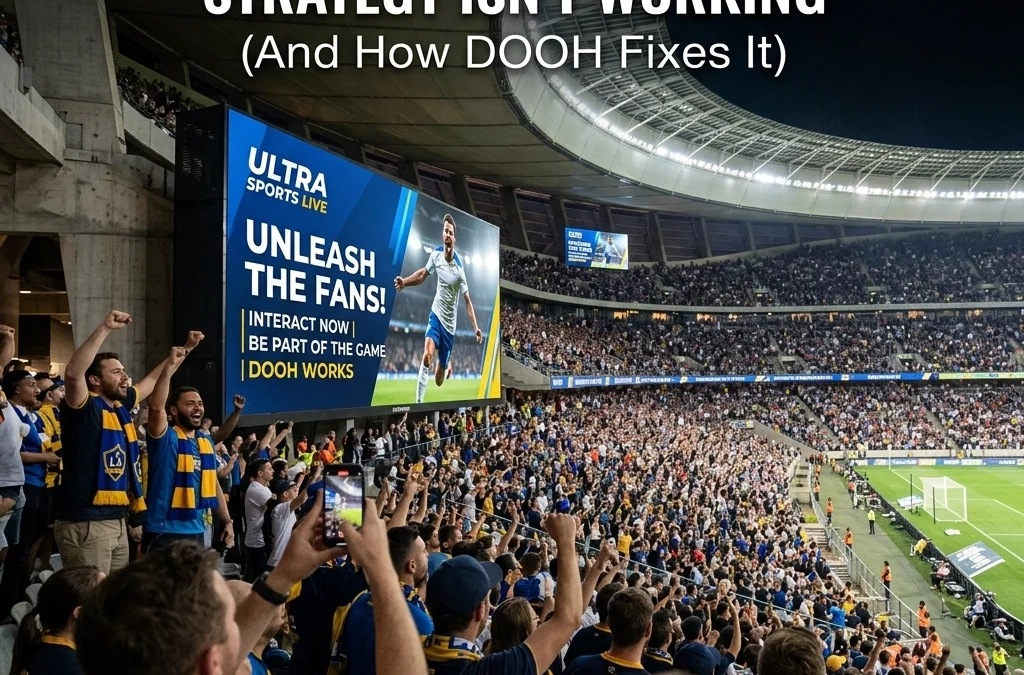
Fan engagement is the cornerstone of modern sports marketing. For Creative Directors and Chief Marketing Officers, the challenge is no longer just getting eyes on a brand, it is about maintaining attention in an environment where fans are constantly distracted by their phones, the action on the field, and the social atmosphere of the stadium. Many traditional engagement strategies are failing to deliver the necessary ROI. When campaigns feel disconnected or static, the audience quickly tunes out.
Digital Out-of-Home (DOOH) advertising, particularly through stadium perimeter solutions, offers a way to bridge the gap between a brand and a distracted fan. By moving away from static placements and toward dynamic, data-driven content, brands can reclaim the spotlight. Here are 10 reasons why current fan engagement strategies are falling short and how DOOH provides the solution.
1. Generic Messaging Lacks Resonance
Many fan engagement strategies rely on broad, generic campaigns. Research indicates that loosely targeted segments lead to a significant drop in engagement. Fans today expect messaging that reflects their specific interests and current situation.
DOOH fixes this through dynamic creative. Instead of a one-size-fits-all banner, stadium perimeter boards can change content based on the flow of the game. If a team scores a goal or makes a touchdown, the creative can shift to a celebratory message. This level of relevance ensures the brand feels like a part of the fan experience rather than an interruption.
2. Data Silos Prevent Real-Time Action
Fan data often lives in separate silos, including ticketing systems, CRM platforms, and merchandise logs. It can take days to pull this data together and create an actionable segment. By the time a strategy is ready, the opportunity has often passed.
OOH Sports utilizes programmatic DOOH to break these silos. By integrating real-time data feeds, brands can launch campaigns that react instantly to live events. This removes the manual back-and-forth and allows for marketing strategies that are as fast-paced as the game itself.

3. Communication Is Too One-Sided
A major reason strategies fail is that they treat fans as passive observers. Many fans report feeling like anonymous customers rather than valued community members. When a brand only speaks "at" a fan, the relationship remains transactional.
DOOH turns advertising into a conversation. Modern Sportrons and perimeter displays can integrate social media feeds, allowing fans to see their own posts or photos on the big screen. This co-creation of content builds a sense of belonging and increases the likelihood that a fan will remember the brand long after the game ends.
4. The Engagement Slump Between Plays
Traditional advertising often focuses on pre-game or halftime slots. However, fan attention peaks during the live action. If a brand is not visible while the game is in play, it misses the most emotionally charged moments of the event.
Stadium perimeter advertising solves this by keeping the brand in the primary field of vision during live play. As the camera follows the athletes, it naturally captures the perimeter boards. This ensures continuous engagement without requiring the fan to look away from the action they paid to see.
5. High Friction for In-Stadium Conversions
Directing a fan to take action while they are in a crowded stadium is difficult. Expecting a fan to type in a complex URL or search for a product during a game creates too much friction.
DOOH reduces this friction through the use of QR codes and scannable triggers. A clear, high-contrast QR code on a perimeter board allows a fan to quickly scan and save a link for later, or even order merchandise directly to their seat. This creates a seamless path from physical visibility to digital conversion.

6. Fragmented Omnichannel Experience
Often, the ads a fan sees on their social media feed have no connection to what they see inside the stadium. This fragmentation weakens brand recall. Creative Directors often struggle to maintain a cohesive narrative across so many different touchpoints.
DOOH acts as the "glue" for omnichannel campaigns. By using the same visual assets and messaging on stadium screens that are used in mobile retargeting, brands create a unified experience. A fan who sees a brand on the perimeter board is significantly more likely to engage with a follow-up ad on their phone later that evening.
7. KPIs That Ignore the Fan Experience
Many marketing teams focus strictly on ticket yields or immediate sales, ignoring the long-term health of the fan relationship. When dashboards do not include metrics like fan satisfaction or brand sentiment, the strategy becomes short-sighted.
DOOH provides measurable brand lift. Case studies show that programmatic campaigns can lead to significant increases in brand perception. For instance, a campaign for Mike's Hard Iced Tea saw a 119 percent lift in positive brand image. By focusing on these types of impact measurements, brands can ensure their engagement strategy is actually building loyalty.
8. Static Displays Are Easily Ignored
The human brain is wired to notice motion and change. Static billboards and signs eventually fade into the background as "visual noise." If a fan engagement strategy relies on unmoving assets, it is likely being ignored by the majority of the audience.
The movement and brightness of digital perimeter boards capture attention more effectively than static alternatives. The ability to use high-definition video and animations ensures that the brand stands out against the green of the field or the grey of the stands.

9. Rising Costs of Traditional Media
As the cost of traditional television spots and physical print rises, many brands find themselves priced out of major sporting events. Furthermore, traditional physical signage requires high production and installation costs that cannot be easily updated.
DOOH offers a more cost-effective entry point through programmatic buying. Advertisers can bid on specific slots, game times, or locations, allowing for better budget optimization. This flexibility allows brands to achieve a high ROI without the massive overhead of permanent physical installations. A look at how Sea-Doo increased purchase consideration by 144 percent illustrates the power of a well-executed digital campaign.
10. Lack of Real-Time Attribution
In the past, it was difficult to prove that a stadium ad actually led to a sale. This lack of clear attribution makes it hard for CMOs to justify continuing or expanding a fan engagement budget.
Modern DOOH technology uses device IDs and location data to track attribution with high precision. Marketers can see how many fans exposed to a perimeter ad later visited a website or a retail location. This data-driven approach turns "brand awareness" into a quantifiable metric, as seen in the White Claw case study where purchase consideration saw a 74 percent lift.
The Path Forward with OOH Sports
Fixing a fan engagement strategy requires a shift in perspective. It is about moving away from being a spectator to becoming a participant in the sporting event. Stadium perimeter advertising offers a unique vantage point that traditional digital ads cannot match. It places the brand at the center of the action, where the emotions are highest and the audience is most attentive.
For brands looking to evolve their strategy, the integration of DOOH is no longer optional. It is the most effective way to ensure that a message is not just seen, but felt and acted upon. By leveraging the technology available at OOH Sports, brands can create memorable, high-impact campaigns that resonate with fans on a deeper level.
Whether the goal is to drive immediate sales or build long-term brand equity, the perimeter of the field is where the most valuable connections are made. Organizations that embrace these digital tools will find their fan engagement strategies not only working but excelling in an increasingly competitive landscape. For more information on how to implement these strategies, visit the OOH Sports blog or reach out via the contact page.