
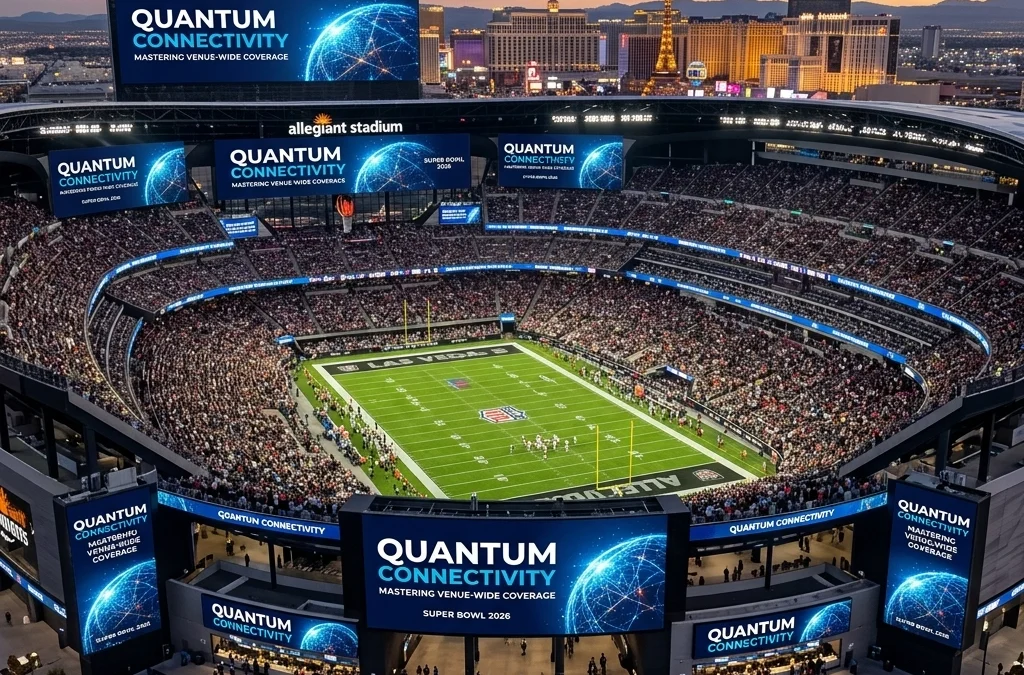
The conclusion of Super Bowl LX on February 8, 2026, at Levi's Stadium marked a significant turning point in the evolution of sports marketing. As brands analyzed the impact of their investments in the months following the event, the focus shifted from simple television spots to comprehensive venue-wide coverage. With 30 second commercial slots reaching a price point of 8 million dollars, the necessity for a multi-layered advertising strategy has never been more critical.
Success in the 2026 landscape required more than just a memorable creative concept. It demanded a strategic presence that permeated the physical environment of the stadium while simultaneously capturing the attention of the digital audience. This post examines the methodologies used to master venue-wide coverage during the 2026 season and how 40 years of industry leadership informed these high-stakes decisions.

40 Years of Advertising Leadership
The foundation of modern sports advertising is built upon decades of iteration. For 40 years, the industry has transitioned from static wooden boards to high-definition digital displays that react in real time to game events. OOH Sports has remained at the forefront of this transition, developing the infrastructure required to turn a sports venue into a cohesive brand ecosystem.
In the early days of sports marketing, a single billboard behind home plate or near the end zone was considered peak exposure. Today, the approach is vastly different. Leadership in this space requires an understanding of how fans move through a stadium, from the parking lot to the concessions and finally to their seats. Mastery of this "fan journey" allows advertisers to place messages where they are most likely to be seen and remembered.
To understand the scale of modern executions, viewing the following overview of sports media innovation is recommended:
https://www.youtube.com/watch?v=l6J-0zileKE
Strategy: Mastering Venue-Wide Coverage
Venue-wide coverage in 2026 is defined by a "floor to ceiling" approach. This means every available surface is a potential touchpoint for brand messaging. The strategy used during Super Bowl LX involved a combination of traditional out of home (OOH) media and cutting-edge digital integrations.

The Physical Layer: Floors and Perimeter Branding
One of the most effective yet underutilized areas for branding is the physical floor of the concourse and entryways. Large scale floor graphics provide a high-impact visual that fans cannot avoid as they navigate the venue. When combined with stadium perimeter branding, these elements create a sense of brand immersion.
The Digital Layer: Sportrons and DOOH
Digital Out of Home (DOOH) technology has revolutionized the ability to update messaging on the fly. During the 2026 game, Sportrons played a vital role in keeping fans engaged during breaks in the action. These large-scale digital displays allow for programmatic ad buying, meaning brands can trigger specific creative based on game states, such as a touchdown or a timeout.
Objective and Strategy: The 2026 Blueprint
The primary objective for advertisers in 2026 was to maximize Return on Investment (ROI) in an environment where attention is highly fragmented. To achieve this, the strategy focused on three core pillars:
- Saturation: Ensuring the brand is visible at every stage of the live experience.
- Contextual Relevance: Delivering messages that resonate with the emotional state of the fan.
- Omnichannel Synchronization: Aligning in-stadium visuals with the national broadcast and social media campaigns.
Data from the 2026 season indicates that 70 percent of Super Bowl viewers engaged with a second screen during the broadcast. This behavior makes venue-wide coverage even more important, as fans taking photos or videos inside the stadium inadvertently become brand ambassadors when those images feature prominent in-stadium advertising. More information on this shift can be found in our about section.

Technology Partners and Execution
Execution of a venue-wide campaign requires seamless coordination between several technology partners. For Super Bowl LX, the integration of programmatic DOOH platforms allowed advertisers to bid on inventory in real-time, optimizing their spend based on live audience metrics.
The use of specialized platforms for marketing allowed for hyper-local targeting. For example, a beverage brand could increase its visibility on digital screens near concession stands during the second quarter when foot traffic typically peaks. This level of precision is what separates modern venue-wide coverage from the "spray and pray" tactics of the past.
Results and Data-Driven Insights
The results of the 2026 Super Bowl advertising cycle provided clear evidence of the power of integrated OOH strategies. Despite the 8 million dollar price tag for airtime, 66 ads were featured, including 18 brands making their Super Bowl debut.
Engagement Metrics
- AI.com: Achieved 9.1X the engagement compared to the median ad by utilizing a combination of high-frequency DOOH and a clever broadcast spot.
- Universal Pictures: Their "Minions" campaign saw 9.09X engagement, driven largely by recognizable characters appearing across stadium displays.
- Social Amplification: Advertisements that were visible in the background of fan-generated content saw a 25 percent increase in organic social reach.
The success of these campaigns was not accidental. It was the result of meticulous planning and the use of DOOH industry secrets that focus on placement and timing rather than just creative flair.

Measuring ROI in the Modern Stadium
One of the greatest challenges in sports advertising is quantifying the impact of physical branding. In 2026, the industry moved toward a more robust attribution model. By using anonymized mobile device IDs, advertisers could track whether a fan who was exposed to a digital billboard inside Levi's Stadium later visited a retail location or searched for the brand online.
This data-driven approach has proven that programmatic DOOH vs. traditional stadium sponsorships is no longer a matter of choosing one over the other. Instead, the highest ROI is achieved when traditional perimeter branding provides the "always-on" foundation, while programmatic elements provide the "high-impact" peaks.
Strategic Alignment: The Path to 2027
As the industry looks toward future seasons, the lessons learned from 2026 will serve as the new standard. Mastering venue-wide coverage is not a one-time effort but a continuous process of refining how brands occupy space. The 40 years of leadership at OOH Sports suggest that while the technology changes, the core principle remains the same: be where the fans are, and be there in a way that adds to the experience rather than detracting from it.

For brands looking to secure their place in the next great sporting event, the time to plan is now. Understanding the logistics of stadium-wide execution is a complex undertaking that requires expertise and a deep network of venue partnerships. To explore how these strategies can be applied to your specific brand goals, you can contact us for a detailed consultation.
Summary of Tactics for Venue-Wide Dominance
To conclude, mastering the venue in 2026 requires a disciplined adherence to several key tactics:
- Audit the Entire Venue: Look beyond the scoreboard. Consider stairs, floors, and restroom mirrors as high-dwell-time locations.
- Synchronize with the Game Clock: Use digital triggers to change messaging based on the intensity of the game.
- Prioritize Clarity: In a loud and visually crowded stadium, simple and bold creative outperforms complex messaging.
- Leverage 40 Years of Insight: Use historical data to predict fan movement and optimize placement.
The 2026 Super Bowl demonstrated that the most successful brands are those that own the environment. By moving from floor to ceiling and integrating digital and physical assets, advertisers can ensure that their 8 million dollar investment is just the beginning of a much larger, more impactful brand story. For more insights on the evolution of this industry, visit our blog.