
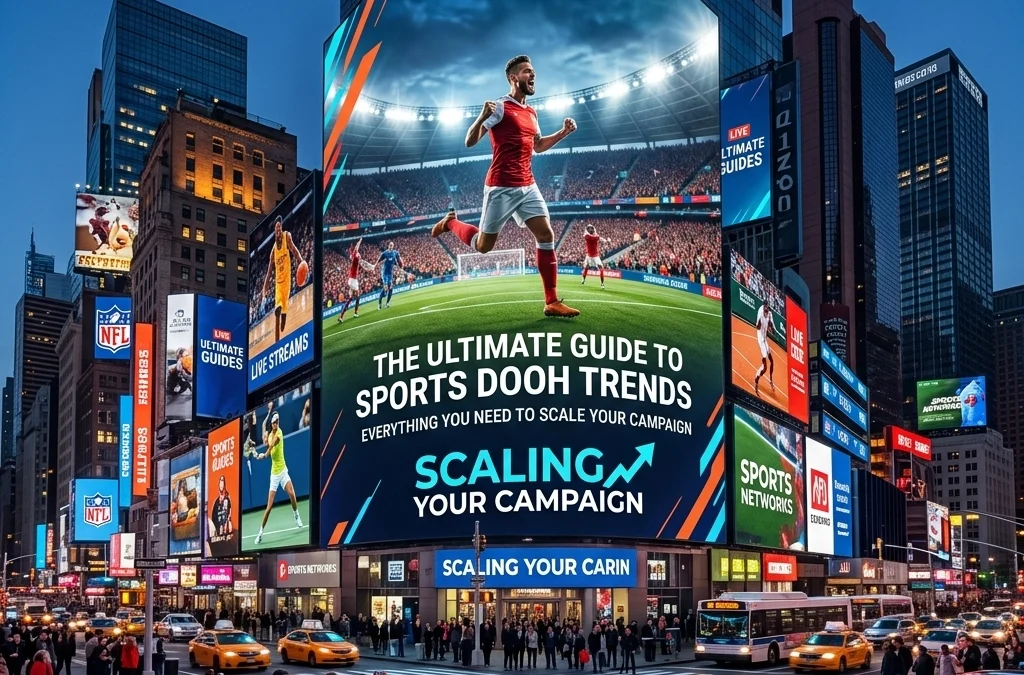
Digital Out-of-Home (DOOH) advertising has evolved from a secondary media buy into a primary driver of brand momentum, especially within the sports industry. As fans move between stadiums, transit hubs, and retail environments, the ability to reach them with high-impact visuals and real-time messaging has become a competitive necessity. This guide explores the prevailing trends in sports DOOH and provides a strategic framework for scaling campaigns to achieve maximum reach and measurable results.
The Strategy: Moving Beyond Static Impressions
Traditional stadium signage was once limited to static boards that remained unchanged throughout an entire season. Today, the strategy has shifted toward dynamic, data-driven placements that react to the environment and the action on the field. The objective is to create a seamless connection between the physical world and the digital excitement of the game.
To scale effectively, a brand must look beyond the stadium walls. While stadium perimeter branding is a cornerstone of sports marketing, the most successful campaigns now utilize a multi-touchpoint approach. This includes transit networks, digital billboards in entertainment districts, and screens inside sports bars or retail locations where fans gather before and after the game.
Trend 1: Real-Time Data and Dynamic Creative
One of the most significant shifts in the industry is the move toward dynamic creative optimization (DCO). Advertisers no longer need to rely on a single creative asset for the duration of a tournament. Instead, DOOH screens can be programmed to update automatically based on live data feeds.
Key Triggers for Dynamic DOOH:
- Live Scores: Updating the creative to reflect the current score of a game in real-time.
- Game Outcomes: Triggering celebration messaging immediately following a victory.
- Weather Conditions: Changing ads for sports apparel or beverages based on local temperature or precipitation.
- Player Performance: Highlighting specific athletes when they achieve a milestone during the match.
By using these triggers, a campaign becomes a part of the live conversation. For example, a beverage brand might run a standard ad during the first half of a game but switch to a "celebration" creative the moment the home team scores. This level of relevance increases brand recall and strengthens the emotional connection with the audience.

Trend 2: The Rise of Programmatic DOOH (pDOOH)
Programmatic technology has revolutionized how sports media is bought and sold. Programmatic DOOH (pDOOH) allows advertisers to purchase inventory through automated platforms, similar to how they buy digital display or social media ads. This level of automation is essential for scaling because it provides agility and precision.
With pDOOH, marketers can set specific parameters for when and where their ads appear. Instead of buying a blanket loop on a set of screens, they can bid on impressions that occur only when their target audience is most likely to be present. This is particularly effective for sports marketing where fan movement is highly predictable based on match schedules.
Benefits of Programmatic Scaling:
- Flexibility: Campaigns can be paused, adjusted, or ramped up in a matter of minutes.
- Efficiency: Budget is allocated to the highest-performing screens and times.
- Targeting: Using device ID data to identify screens that over-index for sports enthusiasts or specific fan demographics.
To understand how this compares to traditional methods, many experts look at the ROI differences between programmatic and traditional stadium sponsorships. The ability to buy impressions rather than just space allows for a more focused spend.
Trend 3: Anamorphic and 3D Visual Innovation
As the physical landscape becomes more crowded with digital screens, the need for creative standout has never been higher. Anamorphic DOOH, often referred to as 3D billboards, has become a major trend for brands looking to make a massive impact. These displays use forced perspective to make images appear as though they are "popping out" of the screen.
In a sports context, this technology is used to bring fans closer to the action. Imagine a life-sized 3D basketball player appearing to dunk a ball over a busy city street, or a soccer ball seemingly flying toward pedestrians from a high-rise screen. These high-production executions are designed for "social amplification." Fans who see these displays are highly likely to film them on their phones and share them on social media, effectively turning a single DOOH placement into a viral digital campaign.

Trend 4: The 360-Degree Fan Journey
Scaling a campaign requires a deep understanding of the fan journey. A sports fan does not just exist inside the stadium. Their journey often begins at the airport, continues through public transit, moves to a sports bar, and eventually ends back at home or a hotel.
Strategic Touchpoints for Scaling:
- Airports and Transit: Capturing fans as they travel to the host city.
- Urban Panels: Reaching fans as they walk through city centers and fan zones.
- Retail Screens: Driving last-minute purchases of snacks, beverages, or merchandise at nearby convenience stores.
- Sportrons: Utilizing specialized high-impact screens like Sportrons to dominate the immediate vicinity of the venue.
By mapping the campaign to these touchpoints, a brand ensures that its message is reinforced at every stage of the day. This creates a "surround sound" effect that makes the brand feel like an integral part of the event.
Technology Partners and Logistics
Executing a large-scale sports DOOH campaign involves multiple moving parts. Success depends on the coordination between media buyers, creative agencies, and technology providers.
The logistics of a modern campaign often involve:
- SSPs and DSPs: Supply-Side Platforms and Demand-Side Platforms that facilitate the programmatic trade.
- Content Management Systems (CMS): Software that pushes creative updates to thousands of screens simultaneously.
- Data Providers: Third-party companies that provide live sports data, weather feeds, and location-based audience insights.
For companies looking to dive deeper into the technical execution, the OOH Sports marketing section provides detailed information on how these technologies are integrated into a cohesive strategy.

Measurement and Results: Proving the Impact
One of the historical challenges of out-of-home advertising was measurement. However, modern DOOH has solved this through sophisticated attribution models. Marketers can now track the effectiveness of their sports campaigns with a high degree of accuracy.
Standard Measurement Metrics:
- Brand Lift: Using surveys to measure increases in brand awareness and favorability among those exposed to the ads.
- Foot Traffic Attribution: Tracking mobile device IDs to see if fans who saw a DOOH ad actually visited a retail location or a fan activation zone.
- Website and App Conversions: Measuring spikes in digital activity that correlate with DOOH exposure.
- Sales Lift: Analyzing point-of-sale data to determine if screens near retail outlets drove an increase in product movement.
Quantifiable results are the backbone of any scaling effort. When a pilot campaign shows a 25% increase in foot traffic to a specific partner location, it provides the data necessary to justify a wider rollout across multiple cities or regions.
Steps to Scale Your Sports DOOH Campaign
To move from a local execution to a national or international scale, a systematic approach is required.
- Define the Audience Profile: Use data to understand exactly who the fans are. Are they business travelers in premium lounges, or local supporters in high-traffic transit hubs?
- Select the Right Inventory: Choose a mix of large-format billboards for awareness and street-level screens for frequency and proximity to purchase.
- Develop a Dynamic Creative Framework: Build templates that can easily adapt to different scores, players, and locations without needing manual intervention for every update.
- Integrate with Mobile: Use DOOH as the first touchpoint and follow up with mobile retargeting to move the fan further down the funnel.
- Audit and Optimize: Continuously review performance data during the tournament. If certain screen types or cities are underperforming, shift the programmatic budget toward the winning locations.
The future of sports advertising is physical, digital, and real-time. By embracing these trends and focusing on a data-driven approach to scaling, brands can ensure their message is heard above the noise of the crowd. For more insights on high-level strategies, visit the OOH Sports blog to stay ahead of the latest industry shifts.

Final Considerations
Scaling a campaign in the sports sector requires a balance of creative ambition and technical precision. As the industry moves toward more integrated and programmatic solutions, the brands that succeed will be those that view DOOH not just as a billboard, but as a dynamic platform for storytelling. Whether it is through anamorphic visuals or hyper-local programmatic targeting, the opportunities to win over fans are greater than ever.
By following the strategies outlined in this guide, advertisers can build campaigns that are not only large in scale but also deep in impact. The goal is to be where the fans are, with the message they need to see, at the exact moment it matters most. For assistance in planning your next major execution, the team at OOH Sports is available to help navigate the complexities of the modern sports advertising landscape.