
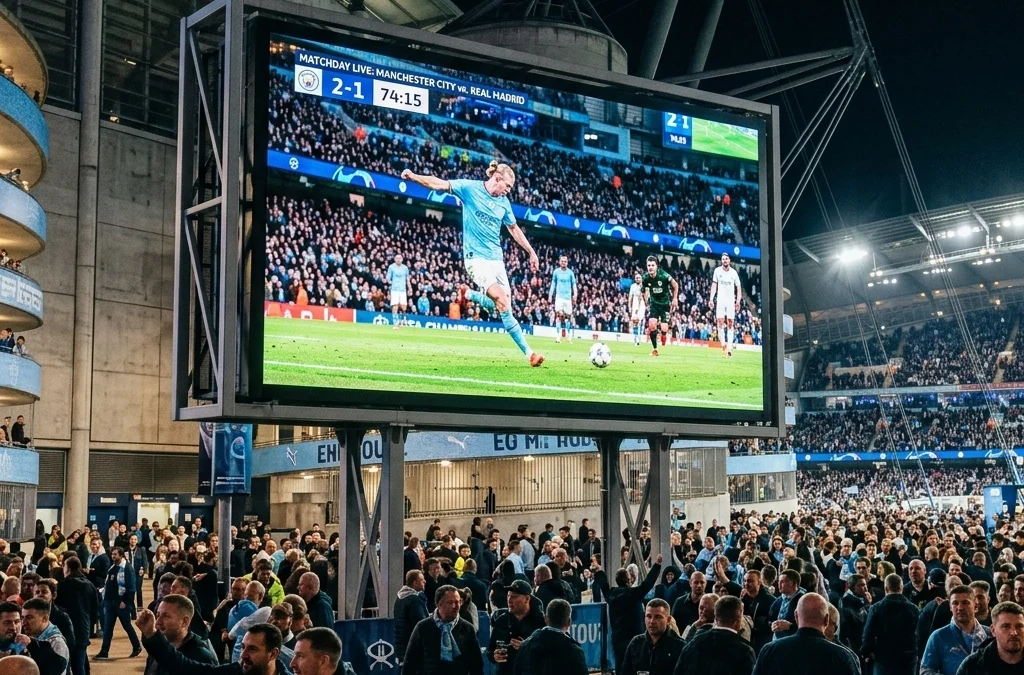
Sports marketing is undergoing a significant transformation. As traditional advertising channels face fragmentation, Digital Out of Home (DOOH) advertising has emerged as a powerhouse for brands looking to connect with passionate audiences. This guide explores the intersection of sports culture and digital innovation, providing a framework for media buyers and brand managers to achieve measurable success.
Strategy: Understanding the Sports Audience
The foundation of any successful sports DOOH campaign is a deep understanding of fan behavior. Fans are not just consumers. They are an emotionally invested audience that follows specific patterns of movement and attention. Innovation in this space involves moving beyond simple logo placement to creating contextually relevant experiences.
Effective strategy begins with identifying key touchpoints where fans congregate. While the stadium is the heart of the action, the fan journey begins long before the first whistle and continues well after the final score. Media planners must consider the entire ecosystem: transit hubs, bars, restaurants, and retail centers.
A successful approach prioritizes relevance over reach. By leveraging Sportrons, brands can place their messaging in high-impact locations that align with the natural flow of sports enthusiasts. The goal is to become part of the game day narrative rather than an interruption to it.
Objective and Strategy: Leveraging Dynamic Creative
One of the most significant innovations in sports DOOH is the ability to use dynamic creative. Static billboards are being replaced by screens that react to live events in real time. This capability allows brands to maintain a fresh and urgent presence.
Dynamic creative strategies include:
- Live Scoring Updates: Automatically updating ad content to reflect the current score of a game.
- Countdowns: Creating anticipation by showing the time remaining until a major event or kickoff.
- Weather Triggers: Adjusting creative based on local conditions, such as promoting cold beverages on hot game days.
- Social Media Integration: Displaying real-time fan reactions or trending hashtags to foster a sense of community.
These tactics ensure that the content is always timely. For media buyers, this means the creative remains relevant throughout the duration of a campaign without the need for manual updates.

Reaching Fans Outside the Stadium
Statistical data indicates that a vast majority of sports fans do not attend every game in person. Instead, they consume sports in social environments or while on the move. Innovation in sports marketing requires capturing this "out of stadium" attention.
The strategy involves targeting urban centers where fans gather to watch games. Digital screens in pedestrian zones and near transit lines provide high visibility. By using programmatic DOOH, brands can bid on inventory specifically during game windows, ensuring that their budget is spent when the audience is most engaged.
This geographical targeting is often supplemented by mobile retargeting. When a fan is exposed to a DOOH ad near a venue or a sports bar, their device ID can be captured. This allows brands to follow up with a synchronized mobile advertisement, reinforcing the message and driving the consumer toward a specific action, such as a purchase or a website visit.

Technology Partners and Programmatic Execution
The execution of a modern sports DOOH campaign relies on a robust technological stack. Programmatic platforms allow for precise control over when and where ads appear. This automation is what makes sports innovation scalable.
Technology partners provide the data feeds necessary for real-time updates. These feeds can include league statistics, player performance data, or even betting odds. The integration of these elements turns a standard advertisement into a source of information for the fan.
From a logistics perspective, programmatic execution simplifies the buying process. Media buyers can set specific parameters, such as:
- Targeting screens within a five-mile radius of a specific stadium.
- Activating ads only when a specific team wins or scores.
- Adjusting bid prices based on the expected foot traffic during championship events.
This level of precision ensures that marketing dollars are allocated to the highest-impact moments.
Case Studies: Quantifying Success
Data driven results provide the best evidence for the power of sports DOOH innovation. Several high profile campaigns demonstrate the impact of well executed digital strategies.
White Claw Purchase Consideration
In a campaign for White Claw, programmatic DOOH was used to support a vodka launch. The strategy focused on high traffic areas and social hubs. The results showed a 74 percent lift in purchase consideration. This significant increase highlights how DOOH can move the needle on consumer intent by being present in the right context. You can read more about this in the White Claw case study.
Mike’s Hard Iced Tea Brand Image
For Mike’s Hard Iced Tea, the objective was to improve brand perception through a programmatic campaign. By aligning creative with the social atmosphere of sports and leisure, the campaign achieved a 119 percent lift in positive brand image. This outcome demonstrates the medium's ability to influence how consumers feel about a brand, not just what they buy. Details are available in the Ab-InBev study.
Sea-Doo Purchase Consideration
Sea-Doo utilized DOOH to target outdoor enthusiasts and sports fans. This first time digital campaign resulted in a 144 percent increase in purchase consideration. The success was attributed to the ability of DOOH to reach active audiences who were already in a mindset related to adventure and outdoor activity. The full breakdown can be found in the Sea-Doo case study.

Results: Measuring Impact and Attribution
The shift toward digital means that OOH is no longer a "black box" when it comes to measurement. Modern attribution techniques allow brand managers to see the direct impact of their spend.
Measurement methodologies include:
- Brand Lift Studies: Using surveys to compare the awareness and intent of those exposed to the ads versus a control group.
- Foot Traffic Attribution: Tracking device IDs to determine if individuals who saw an ad later visited a retail location or a stadium.
- Online Conversion Tracking: Linking DOOH exposure to website visits or app downloads through cross-device mapping.
These metrics provide the clarity needed to justify marketing budgets and refine future strategies. By focusing on data, OOH Sports ensures that every campaign is optimized for performance. More information on these results can be found in our general case study section.
The Future of Sports DOOH Innovation
As technology continues to evolve, the possibilities for sports DOOH will expand. We are seeing the rise of augmented reality (AR) integrations where fans can interact with a screen using their smartphones to unlock exclusive content or discounts. There is also an increasing focus on 3D anamorphic creative, which creates a sense of depth and realism that stops pedestrians in their tracks.
Innovation also means becoming more sustainable. The move toward energy efficient LED screens and smarter scheduling helps brands meet their corporate social responsibility goals while still delivering high impact messages.
For media buyers, the message is clear: sports DOOH is not just about being seen. It is about being relevant, timely, and data-driven. By leveraging the latest innovations in programmatic technology and dynamic creative, brands can build deeper connections with fans and drive significant business results.

Summary of Key Tactics for Success
To succeed in sports DOOH, advertisers should adhere to these core principles:
- Start with Data: Use audience movement patterns to select the best locations.
- Be Dynamic: Incorporate live scores and real-time triggers to maintain relevance.
- Think Beyond the Arena: Reach fans in the places where they live, work, and socialize.
- Measure Everything: Use attribution tools to quantify the lift in brand awareness and purchase intent.
- Integrate Channels: Ensure the DOOH strategy works in harmony with mobile and social media efforts.
By following this guide, brand managers can navigate the complexities of the modern media landscape and harness the power of sports to grow their business. For further insights and to explore how to implement these strategies, visit the OOH Sports blog.