
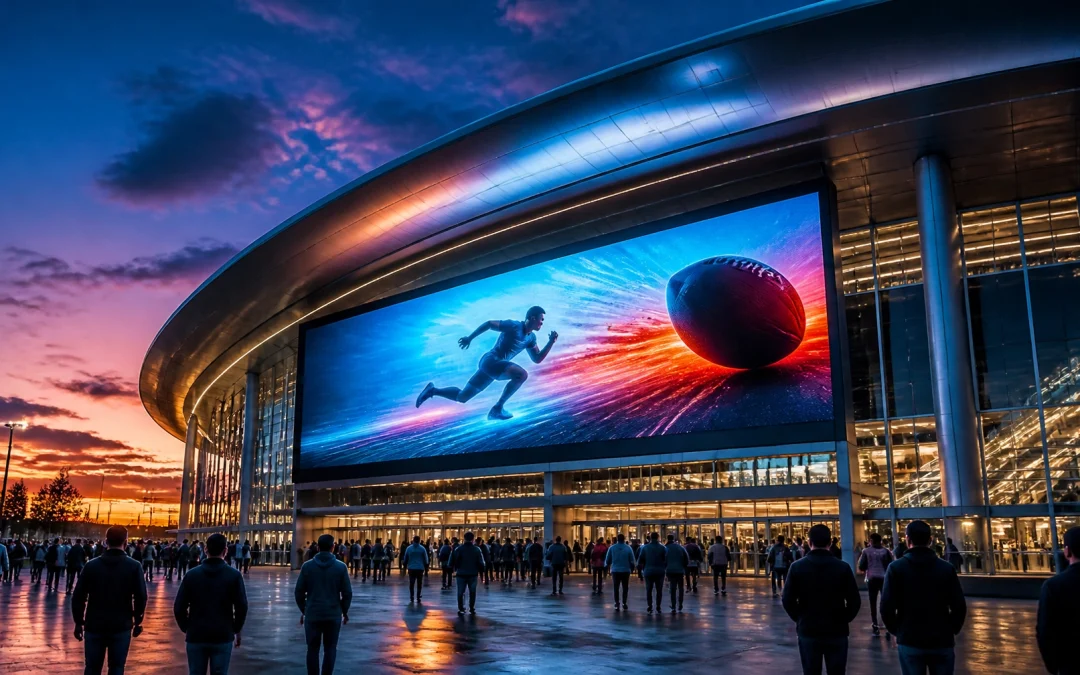
Sports marketing has undergone a massive transformation. The era of static billboards that remain unchanged for months is ending. Today, the industry is witnessing a shift toward Digital Out of Home (DOOH) advertising that is as fast and unpredictable as the games themselves. For media buyers and brand managers, understanding this innovation is no longer optional. It is the key to capturing the attention of a fragmented audience that moves seamlessly between the physical world and digital screens.
This guide explores the mechanisms behind sports DOOH innovation, the technology making it possible, and the strategies required to deliver measurable results in a competitive landscape.
The Evolution of the Fan Journey
The traditional approach to sports advertising often focused solely on the "big game" moment. Brands would purchase expensive stadium signage and hope for television exposure. However, modern fan behavior is far more complex. A fan journey begins hours before kickoff at home, continues through the commute, peaks at the venue, and lingers in sports bars and transit hubs after the final whistle.
Innovation in DOOH allows brands to follow this entire journey. By utilizing a network of digital screens that extends far beyond the stadium walls, advertisers can maintain a consistent presence. This "surround sound" approach ensures that a brand message is not just a fleeting moment but a continuous narrative that matches the fan's emotional state throughout the day.
Strategy: The 10-Mile Perimeter Advantage
One of the most significant strategic shifts in sports DOOH is the move toward perimeter targeting. Instead of focusing only on the stadium itself, high-impact campaigns now target a 10-mile radius around sports venues. This area is where the highest density of target consumers: passionate fans: can be found before and after events.

Objective and Strategy
The primary objective of perimeter targeting is to reach fans at every touchpoint. This includes:
- Transit Hubs: Reaching fans as they arrive at train stations or bus stops near the arena.
- Retail Corridors: Capturing attention as fans stop for snacks, beverages, or merchandise.
- Sports Bars and Restaurants: Engaging fans who are watching the game or celebrating nearby.
- Gyms and Fitness Centers: Connecting with active audiences who follow sports closely.
By dominating these local environments, brands can achieve a level of frequency and relevance that traditional mass-media buys often lack. This strategy is discussed in detail in the analysis of how 25,000 digital screens are changing sports marketing.
Technology Partners and Programmatic DOOH
The backbone of sports DOOH innovation is programmatic technology. Programmatic DOOH (pDOOH) allows for the automated buying and selling of ad space, similar to online display advertising but in the physical world. This technology enables brands to be agile, adjusting their presence based on real-world data.
Real-Time Triggers
The use of data triggers is perhaps the most exciting innovation in the field. Campaigns can now be programmed to activate or change creative based on:
- Live Scores: If a team wins, the creative can immediately switch to a celebratory message.
- Weather Conditions: A beverage brand might trigger ads for cold drinks when the temperature at the stadium exceeds 80 degrees.
- Game Milestones: A specific player hitting a home run or scoring a goal can trigger a congratulatory brand message across the entire city network within seconds.
- Betting Odds: Sportsbooks can update live odds on digital screens in real-time, providing immediate utility to fans.
This level of responsiveness ensures that the advertising feels like a part of the event rather than an interruption.
Contextual Creative: Speaking the Fan's Language
Innovation is not just about the technology of delivery; it is also about the creative itself. In 2026, successful campaigns use modular creative assets that adapt to their environment. A screen in a quiet transit hub might feature a detailed brand story, while a screen in a loud, crowded sports bar focuses on high-impact visuals and short, punchy calls to action.

The Cross-Screen Connection
Innovative DOOH campaigns do not live in a vacuum. They are increasingly integrated with mobile and social media strategies. By using device IDs and geofencing, brands can retarget individuals who were exposed to a DOOH ad with a follow-up message on their smartphones. This creates a powerful bridge between the physical and digital worlds, driving fans toward app installs, website visits, or immediate purchases.
Proven Success: Case Studies in Sports DOOH
The effectiveness of these innovative strategies is backed by significant data. Several major brands have already utilized these tactics to achieve remarkable results.
White Claw: Driving Purchase Consideration
White Claw launched a programmatic DOOH campaign aimed at supporting a new product launch. By targeting high-traffic areas and using data-driven placements, the campaign achieved a 74% lift in purchase consideration. This success demonstrates how DOOH can move the needle on mid-funnel metrics. More details can be found in the White Claw case study.
Mike’s Hard Iced Tea: Enhancing Brand Image
In another instance, Mike’s Hard Iced Tea utilized a pDOOH campaign to improve brand perception among sports fans. The campaign resulted in a 119% lift in positive brand image. By appearing in the right context: near stadiums and fan hubs: the brand successfully aligned itself with the excitement of the game. The full results are detailed in the Mike's Hard brand image report.
Sea-Doo: Increasing Intent
Sea-Doo utilized its first digital OOH campaign to reach outdoor enthusiasts near relevant venues. The strategic placement of ads led to a 144% increase in purchase consideration. This proves that even for high-consideration purchases, DOOH provides the necessary reach and impact to influence consumer behavior. The Sea-Doo campaign analysis provides further insights into their methodology.
Results and Measurement: Moving Beyond Impressions
For a long time, the criticism of outdoor advertising was that it was difficult to measure. Innovation has solved this problem. Today, media buyers have access to sophisticated analytics that provide a clear picture of campaign performance.

Key Metrics for Success
Campaigns are now evaluated using a variety of high-level metrics:
- Brand Lift Studies: Measuring changes in awareness, favorability, and purchase intent through exposed vs. control group surveys.
- Foot Traffic Attribution: Using anonymized location data to track how many people visited a retail location after seeing a DOOH ad.
- Website/App Conversion: Tracking digital actions taken by users who were in the vicinity of a digital screen at the time an ad was served.
- Reach and Frequency: Precise calculations based on real-time movement data rather than outdated traffic estimates.
As the industry moves toward 2030, experts predict that DOOH sports advertising will hit $50 billion. This growth is driven by the ability to prove return on investment through these advanced measurement techniques.
Execution: Tips for Media Buyers
To succeed in sports DOOH, media buyers should follow a structured approach to execution:
- Define the Audience: Identify specific fan segments (e.g., "avid basketball fans," "weekend golfers") rather than just general demographics.
- Select High-Impact Venues: Focus on screens within the 10-mile perimeter of relevant stadiums and arenas.
- Automate with pDOOH: Use programmatic platforms to ensure flexibility and real-time optimization.
- Prepare Dynamic Creative: Create multiple versions of assets that can be triggered by game events or location context.
- Measure and Optimize: Set up brand lift and attribution studies before the campaign launches to ensure data collection is accurate.

Conclusion
Innovation in sports DOOH is not just about larger or brighter screens. It is about the intelligence behind the placement and the relevance of the message. By combining the scale of out of home advertising with the precision of digital data, brands can connect with fans in ways that were previously impossible.
As fans continue to demand more engaging and personalized experiences, the brands that embrace programmatic triggers, perimeter targeting, and cross-screen integration will be the ones that succeed. The tools are available, the data is clear, and the network is ready. The only question remains how your brand will choose to innovate in the next big game.