
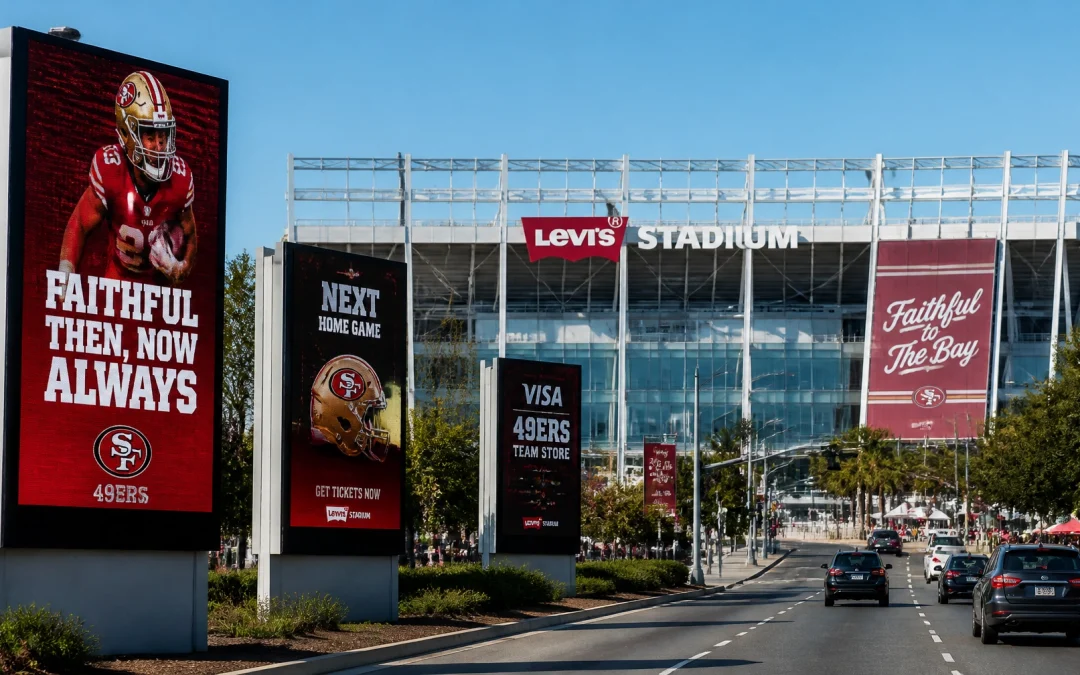
Super Bowl LX is set to transform the San Francisco Bay Area into the epicenter of the sporting world on February 8, 2026. For media buyers and brand managers, this event represents the ultimate stage for visibility. However, with 30 second television spots reportedly reaching the $10 million mark, the barrier to entry for traditional broadcast has never been higher. This financial reality is driving a strategic shift toward more agile, high impact alternatives that leverage the power of student-athlete voices and localized digital out of home (DOOH) advertising.
The convergence of Name, Image, and Likeness (NIL) rights with programmatic advertising technology has created a new playbook for Super Bowl marketing. Success in 2026 will not be defined by a single television commercial but by the ability to surround the event with a digital halo that captures fans where they live, travel, and celebrate.
The Strategy: Building a 10-Mile Digital Halo
A primary tactic for the 2026 season involves the implementation of a 10 mile perimeter around Levi’s Stadium in Santa Clara. This geographic strategy ensures that every digital screen within the radius, from roadside billboards to transit hubs and sports bars, becomes an extension of a brand’s Super Bowl presence. By focusing on the 10 mile zone, media planners can target the massive influx of visitors and local residents who are most engaged with the game-day environment.
This perimeter-based approach allows for high frequency exposure at a fraction of the cost of national television. It captures the attention of fans as they navigate the Bay Area, creating a localized dominance that feels omnipresent. When combined with the authentic voices of student-athletes, this strategy transforms a simple advertisement into a community-led movement.

Scaling Authenticity: The Power of 20,000 NIL Voices
The true differentiator for Super Bowl 2026 is the integration of a vast network of student-athletes. The OOH Sports platform provides access to over 20,000 authentic voices, allowing brands to move beyond the traditional "hero" celebrity endorsement. Instead of relying on one high priced athlete, media buyers are now deploying rosters of dozens or even hundreds of athletes to create a groundswell of social and digital activity.
These athletes act as micro-influencers with deep ties to their respective campuses and regional fan bases. During the weeks leading up to the game, these 20,000 voices can be activated to produce content that resonates with collegiate loyalty and sports passion. This strategy effectively bridges the gap between the professional spectacle of the Super Bowl and the grassroots fervor of college sports.
Why NIL Works for the Super Bowl
- Trust and Credibility: Fans often view student-athletes as more relatable and authentic compared to professional superstars.
- Social Amplification: Each athlete brings a dedicated following on platforms like TikTok and Instagram, providing built-in reach.
- Regional Dominance: Brands can select athletes from specific markets (such as those in Northern California) to reinforce their 10 mile DOOH strategy.
- Cost Efficiency: Distributing a budget across a roster of NIL talent often yields a higher return on engagement than a single massive contract.
Objective & Strategy: A Multichannel Execution
The objective for a successful Super Bowl campaign is to achieve omnichannel saturation. This requires a coordinated effort between digital screens and social feeds. The strategy involves two primary layers of execution.
First, the social layer utilizes the NIL network to drive digital conversation. Athletes share behind the scenes content, watch party invitations, and branded challenges. This creates a digital footprint that follows the fan wherever they go online.
Second, the physical layer utilizes the OOH Sports network to project these same athlete voices onto digital screens throughout the Bay Area. When a fan sees a student-athlete on their TikTok feed and then sees that same athlete on a digital billboard near Levi’s Stadium, the brand message is reinforced through multiple touchpoints. This dual-layered approach ensures that the message is both personal and public.

Technology Partners and Execution
Execution at this scale requires sophisticated technology and reliable partnerships. Programmatic DOOH platforms allow media buyers to bid on and display advertisements in real time, ensuring that creative can be updated based on game-day developments or specific triggers.
The OOH Sports platform integrates these programmatic capabilities with a specialized NIL marketplace. This allows for seamless contracting, payment, and compliance management for thousands of athletes simultaneously. By automating the logistical hurdles of NIL deals, brands can focus on creative storytelling rather than administrative paperwork.
The following video provides a detailed look at how these technologies come together to create impactful sports marketing campaigns:
https://www.youtube.com/watch?v=l6J-0zileKE
Results: Quantifying the Impact
The success of a combined NIL and DOOH campaign is measured through data-driven metrics. In previous high profile sporting events, brands utilizing this localized perimeter strategy have reported significant lifts in brand awareness and purchase intent.
For example, programmatic DOOH campaigns in the sports sector have historically achieved:
- 74% lift in purchase consideration for product launches, as seen in recent alcoholic beverage campaigns.
- 119% lift in positive brand image when utilizing localized, sports-centric creative.
- 144% increase in purchase consideration for brands entering the digital out of home space for the first time.
These results are supported by brand lift studies that track exposed device IDs and retargeting audiences. By analyzing the movement of fans within the 10 mile perimeter, media buyers can accurately measure how many individuals saw a billboard and subsequently engaged with the brand online or visited a retail location.
Measuring the 2026 Campaign
- Reach and Frequency: Calculating total impressions across both digital screens and social media platforms.
- Engagement Rate: Monitoring interactions on NIL-driven content to gauge audience interest.
- Attribution: Using location data to link OOH exposure to digital conversions or physical store visits.
- Brand Sentiment: Analyzing social media sentiment to measure the impact of authentic athlete voices on brand perception.

Final Tactics for Media Buyers
As February 2026 approaches, media buyers must act quickly to secure inventory within the Silicon Valley and San Francisco markets. The competition for digital screens around Levi's Stadium will be intense, and the most successful brands will be those that have already identified their NIL rosters.
To succeed, focus on building a cohesive narrative that spans from the athlete's smartphone to the largest digital screens in the city. The goal is to make the brand part of the fan's journey, from the moment they arrive at the airport to the final whistle of the game.
For those looking to explore these strategies further, the OOH Sports Sportrons page offers detailed information on the available digital inventory and the capabilities of the perimeter network. Staying informed on the latest NIL trends and case studies will also be crucial for navigating this rapidly evolving landscape.
The Super Bowl is no longer just a game; it is a complex media ecosystem. By leveraging 20,000 voices and a 10 mile digital perimeter, brands can ensure they are not just watching the action from the sidelines but are an active part of the conversation.