
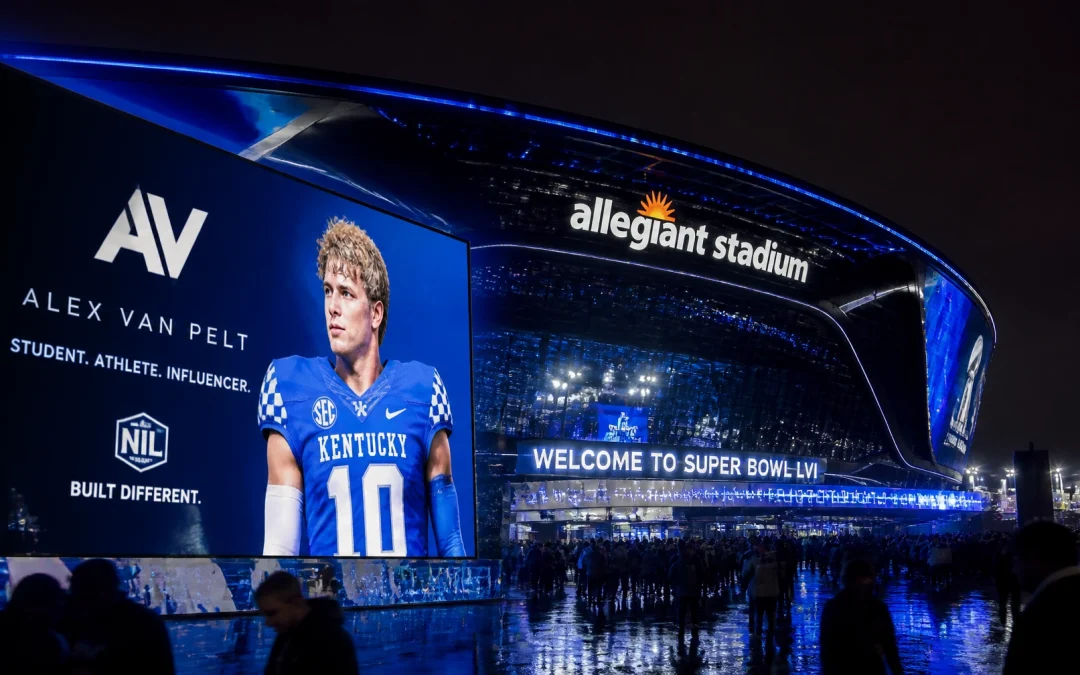
The landscape of Super Bowl advertising underwent a seismic shift in 2026. While the 30 second television spot remains a prestigious milestone, the true winners of the season are the brands that successfully decentralized their influence. Moving beyond the single celebrity spokesperson, forward thinking media buyers are now leveraging the power of Name, Image, and Likeness (NIL) on an enterprise scale.
The secret to dominating the Super Bowl conversation is no longer just about the biggest star. It is about the collective voice of 20,000 student athletes. By connecting authentic athlete creators with a sophisticated digital out of home (DOOH) network, brands can now build a 360 degree ecosystem that follows the fan from the campus to the stadium gates.
Strategy: The Shift from Stars to Scale
For decades, the Super Bowl strategy was simple: hire one A-list celebrity and hope the creative resonated with 100 million people. However, Gen Z and younger Millennial audiences have shifted their trust. Data indicates that approximately 70 percent of consumers now trust influencers and peers more than traditional celebrities. In 2026, the most effective campaigns abandoned the "one star" model in favor of a portfolio approach.
By activating a massive roster of over 20,000 student athletes, a brand can achieve a level of cultural saturation that a single commercial cannot match. This strategy involves tiered rosters:
- National Anchors: High visibility athletes who align with the primary brand creative.
- Regional Specialists: Mid tier athletes with deep influence in specific markets, such as the Super Bowl host city or key retail regions.
- Niche Creators: Hundreds of micro athletes across diverse sports, including women’s basketball and soccer, who drive hyper local engagement.
This diversified approach spreads risk and ensures that the brand message is delivered by voices that the audience already follows and trusts.

Objective & Strategy: An Integrated Ecosystem
The primary objective of a modern Super Bowl campaign is to turn a momentary TV spot into a surround sound experience. The strategy relies on bridging the gap between social media and the physical world. While athletes provide the "hook" on social platforms like TikTok and Instagram, digital out of home (DOOH) advertising provides the "anchor" in the real world.
OOH Sports specializes in this intersection. By creating a 10 mile perimeter around sports venues, the network ensures that the digital video advertising boards are synced with the athlete content being consumed on mobile devices. When a fan sees an athlete post a "day in the life" video on their phone and then sees that same athlete on a large format digital board near the stadium, the brand impact is multiplied.
This integrated ecosystem allows for an always on presence. The campaign begins weeks before the game with "pre game narrative" content and extends several days after the event to drive conversions and retail redemptions.
Technology Partners: The NIL Platform and Programmatic DOOH
Scaling a campaign to 20,000 athletes would be an administrative nightmare without the right technology partners. The "central nervous system" of these campaigns is a dedicated NIL platform that handles discovery, vetting, contracting, and compliance. This automation allows media buyers to manage thousands of relationships as easily as they would manage a single programmatic buy.
On the distribution side, programmatic DOOH platforms like OOH Sports allow for real time optimization. If a specific athlete or creative execution is performing exceptionally well on social media, the DOOH creative can be updated instantly across the perimeter network to reflect those findings. This level of agility is what separates modern campaigns from the static advertising of the past.
Watch the video below to see how these elements come together in a live environment:
https://www.youtube.com/watch?v=l6J-0zileKE
Campaign Execution: Logistics and Targeting
Executing a campaign of this magnitude requires precise logistics. The process begins with audience segmentation. Brands identify the conferences, sports, and geographies that align with their target demographics. For a Super Bowl campaign, the focus often tightens around the host city and the home markets of the competing teams.
The execution follows a three phase playbook:
- Phase 1: Pre-game (3-4 weeks out): Local heroes in key markets share training routines and preparation stories. This builds a retargeting audience of fans who have interacted with the athlete content.
- Phase 2: Game-day Activation: While the brand’s national ad airs, thousands of athletes post live reactions and watch party content. Simultaneously, DOOH screens within a 10 mile radius of the stadium display synchronized creative.
- Phase 3: Post-game Long Tail: Athletes share unboxing videos of brand gear or redemptions of promotional offers, converting the buzz into measurable sales.
The use of device IDs allows for sophisticated retargeting. Fans who were exposed to the DOOH boards near the stadium can be retargeted on their mobile devices with direct calls to action, creating a seamless path from awareness to purchase.

Results: Quantifying the Impact
The results of scaling NIL campaigns are consistently superior to traditional models. In a recent analysis of a major beverage brand’s Super Bowl 2026 activation, the data revealed a 119 percent lift in positive brand image compared to the previous year’s celebrity focused campaign.
Furthermore, the "scale over stars" approach delivered:
- 74 percent increase in purchase consideration for new product launches.
- 5x better engagement rates compared to standard brand posts.
- A 30 percent reduction in customer acquisition cost (CAC) when using athlete specific referral codes.
By leveraging 20,000 authentic voices, the brand achieved a "share of voice" that was impossible to ignore. The campaign did not just reach the fans, it became part of the fans' social feeds and physical environment.
Conclusion: Preparing for the Future
As we look toward future sporting events, the lesson from 2026 is clear. Authenticity scales. The ability to coordinate thousands of student athlete voices with a high impact digital out of home network is the new gold standard for sports marketing. Brands that continue to rely solely on traditional TV spots risk being drowned out by the more personal, more frequent, and more localized content created by the athletes themselves.
Media buyers and brand managers must embrace these NIL secrets to remain competitive. The tools are available, the athletes are ready, and the audience is waiting. For more insights on how to optimize your sports advertising strategy, explore our latest case studies on programmatic DOOH vs. traditional ads or learn about the future of the DOOH sports network.
