
Fan engagement serves as the cornerstone of modern sports marketing. For Chief Marketing Officers and Creative Directors, the challenge remains constant: how to capture the fleeting attention of a fan base that is increasingly distracted by fragmented media landscapes. Traditional methods often fall short because they fail to meet fans where they are emotionally and physically. When a strategy does not yield the expected brand lift or purchase consideration, the issue usually lies in the execution of the engagement model rather than the brand message itself.
Successful sports marketing requires a transition from episodic interactions to a continuous, immersive brand presence. This post examines ten common reasons why fan engagement strategies fail and details how high impact perimeter advertising, integrated with a wider digital out of home network, provides a definitive solution.
1. Episodic Engagement Rather Than Continuous Presence
Many fan engagement strategies operate on a "matchday only" schedule. The brand presence wakes up during the game and disappears once the final whistle blows. This inconsistency prevents the brand from becoming a part of the fan's daily lifestyle. Fans do not stop being supporters when the game ends. A strategy that ignores the time between events fails to build a lasting psychological connection.
2. Over-Reliance on Saturated Social Channels
While social media remains a vital tool, it is also a crowded environment. Algorithms frequently suppress organic reach, forcing brands to compete in a noisy digital space where ads are easily skipped or ignored. Digital out of home (DOOH) options, particularly those within a sports context, offer a non-disruptive alternative that fans view with 73 percent more favorability than traditional video ads.
3. The Lack of a Physical Touchpoint
Digital advertising exists in a two-dimensional space. Without a physical presence in the real world, a brand can feel detached. Stadium perimeter advertising provides a tangible connection to the physical environment where the action occurs. It anchors the brand in the fan's reality, creating a sense of permanence and prestige that mobile banners cannot replicate.

4. Neglecting the Ten-Mile Perimeter
Fan engagement does not start at the stadium gate. It begins when the fan leaves their home. Many strategies fail because they do not target the geographic area surrounding the venue. By utilizing a digital video advertising network that covers a ten-mile perimeter around sports venues, brands can capture the attention of fans as they commute, shop, and socialize before and after the event.
5. Poor Contextual Alignment
Engagement fails when the message does not match the mood of the audience. A generic ad served during a high-stakes moment feels intrusive. Perimeter advertising, however, is contextually native. It lives within the field of play. When a brand appears on the boards during a goal or a game-winning play, it becomes associated with the peak emotional state of the spectator.
6. Measuring the Wrong Performance Metrics
Focusing solely on clicks or likes often leads to a misunderstanding of a campaign's true impact. In the sports sector, the most valuable metrics are brand lift, purchase consideration, and foot traffic. Strategies that do not utilize modern attribution methods fail to prove their ROI. High-performance DOOH campaigns now allow for precise measurement of brand preference ratings and device IDs exposed.
7. Creative Fatigue Through Static Messaging
Fans are exposed to thousands of images daily. When a fan engagement strategy uses static or repetitive creative, the audience naturally tunes it out. Modern Sportrons and digital perimeter boards allow for dynamic, programmatic updates. This technology enables brands to rotate creative based on live scores, weather, or time of day, keeping the message fresh and relevant.
8. Inconsistent Branding Across the Fan Journey
A fragmented strategy often results in a disjointed brand experience. A fan might see a social media post, then a television commercial, and then enter a stadium with no visible branding. This lack of cohesion weakens the brand's authority. Integrating perimeter ads with an omnichannel approach ensures that the brand message follows the fan through every stage of their journey.
9. Missing the Peak Emotional Moment
Emotional resonance is the primary driver of brand loyalty in sports. If a strategy focuses on halftime breaks or post-game recaps, it misses the moments of highest tension and excitement. Perimeter ads are visible during the most critical minutes of play, ensuring that the brand is present when the fan's dopamine levels are at their highest.
10. Friction in the Path to Purchase
Many engagement strategies create awareness but fail to drive action. By placing digital ads in high-traffic areas around the stadium, such as transit hubs and retail centers, brands can bridge the gap between "seeing the ad" and "making a purchase." This localized targeting reduces friction and directs the fan toward a clear next step.

The Solution: Stadium Perimeter Advertising
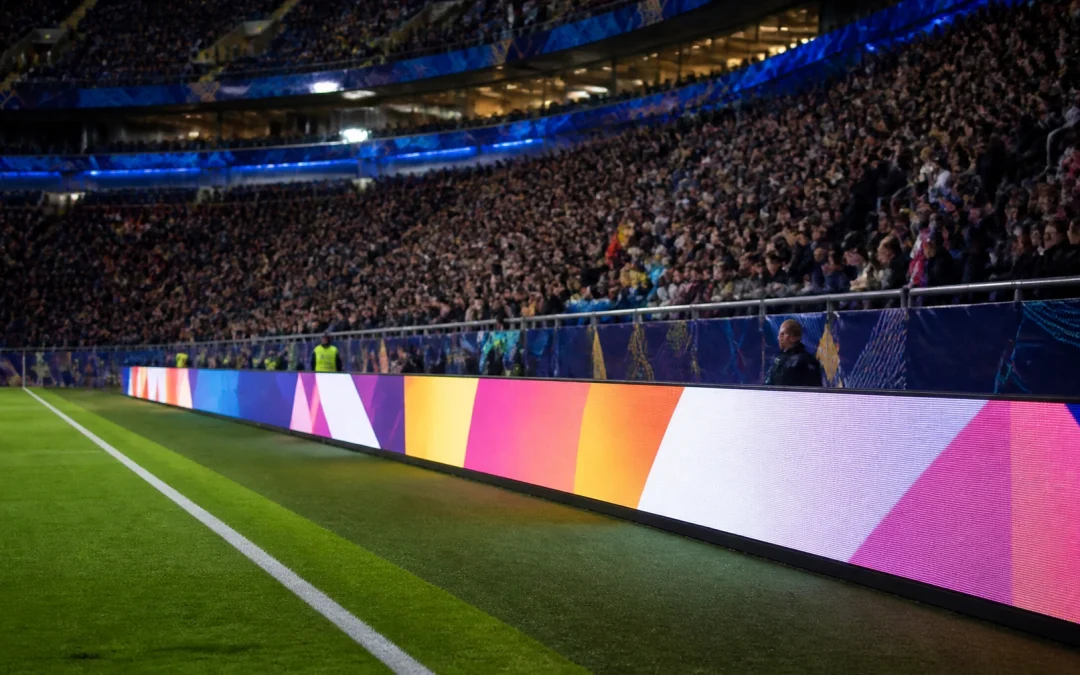
Stadium perimeter advertising, particularly when executed through a programmatic framework, addresses these ten points of failure by offering a high-visibility, high-frequency solution. This medium allows brands to achieve dual reach, impacting both the fans in the seats and the millions of viewers watching the broadcast at home.
Objective and Strategy
The primary objective of a perimeter advertising campaign is to achieve maximum brand saturation within a premium, brand-safe environment. The strategy involves:
- Establishing a dominant presence on the digital boards surrounding the field of play.
- Synchronizing the stadium creative with broader DOOH assets within a ten-mile radius.
- Using dynamic creative to align with live game events.
- Retargeting exposed audiences through mobile and digital channels to reinforce the message.
Technology Partners and Execution
Successful execution relies on specialized technology platforms. Utilizing a Demand Side Platform (DSP) like StackAdapt allows for the programmatic buying of DOOH inventory. This technology ensures that ads are served at the right time and in the right locations based on real-time data.
The process involves mapping out the digital footprint of the target audience and selecting screens that offer the highest dwell time. This includes large-format billboards, transit screens, and street-level kiosks. By integrating these assets, the campaign creates a "surround sound" effect for the brand.

Results and Measurement
The effectiveness of this approach is backed by significant data from previous case studies. When fan engagement is moved beyond the screen and into the physical world of the stadium, the impact is measurable and substantial.
- Brand Image Lift: A recent campaign for Mike’s Hard Iced Tea by AB InBev saw a 119 percent lift in positive brand image by utilizing a programmatic DOOH strategy.
- Purchase Consideration: A campaign for White Claw’s vodka launch resulted in a 74 percent lift in purchase consideration. These results demonstrate that when fans are engaged in a sports context, they are significantly more likely to consider the brand for their next purchase.
- Audience Exposure: By targeting the ten-mile perimeter, brands can reach a high volume of unique device IDs, which can then be used for retargeting and further brand lift studies.
For more detailed information on successful campaigns, review the White Claw DOOH study and the AB InBev Mike's Hard Iced Tea report.

Conclusion
Fan engagement should not be a difficult puzzle to solve. When a strategy is not working, it is usually because it is too narrow in focus or too reliant on digital-only channels. Stadium perimeter advertising provides the scale, the emotional connection, and the physical presence required to move the needle for a brand. By expanding the campaign to include the full ten-mile network around the venue, CMOs and Creative Directors can ensure their message is not just seen, but remembered and acted upon.
The evolution of sports marketing is moving toward a more integrated, physical, and data-driven future. Perimeter ads are at the heart of this shift, offering a reliable way to fix a broken engagement strategy and deliver real, quantifiable results.