
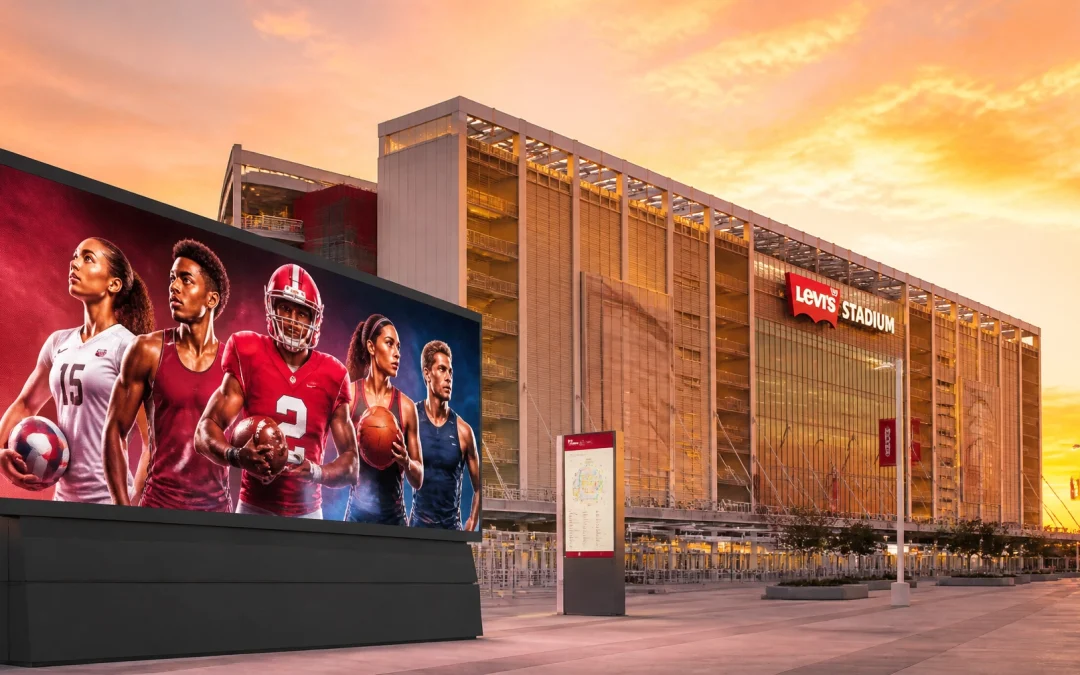
Super Bowl LX, scheduled for February 8, 2026, at Levi's Stadium in Santa Clara, California, represents a significant milestone in sports marketing. For media buyers and brand managers, this event is no longer just a single 30-second television spot. It is a multi-week cultural phenomenon that requires a sophisticated, multi-channel approach. One of the most significant shifts for the 2026 season is the integration of Name, Image, and Likeness (NIL) partnerships at a massive scale. By leveraging a network of over 20,000 student-athlete voices, brands can move beyond traditional celebrity endorsements to achieve authentic, localized engagement that resonates with younger demographics and sports fans alike.
The challenge for modern branding is how to scale this authenticity without losing the personal touch that makes NIL effective. OOH Sports, in partnership with Sports Media Inc., provides the infrastructure to bridge the gap between digital athlete content and physical world presence through a robust digital out-of-home (DOOH) network. This strategy focuses on creating a unified narrative that starts on the screens of student-athletes and culminates on massive digital billboards within a 10-mile perimeter of the Super Bowl venue.
Objective and Strategy
The primary objective for any Super Bowl 2026 campaign is to achieve "brand fame" by being present where the fans are, both digitally and physically. A strategy involving 20,000 student-athletes serves to decentralize the brand message, making it feel less like a corporate advertisement and more like a collective cultural moment.
The strategy is built on three distinct phases. First, the pre-game build-up uses the athlete network to create "trailers" for the main event. Second, game-day amplification uses real-time content to turn the Super Bowl into thousands of live touchpoints. Finally, the post-game phase extends the story by shifting from hype to emotional storytelling. This structured approach ensures that the brand remains relevant long after the final whistle.

The Power of NIL Authenticity
Traditional sports marketing often relies on a few high-profile professional athletes. While effective for broad reach, this approach can lack the relatability that modern consumers crave. Student-athletes, however, possess a unique connection to their communities and campuses. They are the creators who define culture for Gen Z and young families.
When a brand activates 20,000 student-athletes, it is not just buying reach. It is buying trust. These athletes share their personal journeys, game-day rituals, and campus traditions. This creates a grassroots movement that supports the larger branding strategy. By distributing toolkits to these athletes, brands ensure that the core message remains consistent while allowing for localized twists that feel organic to each athlete’s specific audience.
Technology Partners and Programmatic DOOH
To manage a campaign of this magnitude, technology is a critical component. OOH Sports utilizes programmatic DOOH platforms, such as StackAdapt, to automate the buying and placement of ads across thousands of digital screens. This allows for precision targeting within specific geographic areas, such as the 10-mile radius surrounding Levi's Stadium.
The integration of NIL content into these digital boards creates a seamless omnichannel experience. When a fan sees a student-athlete on their social media feed and then encounters that same athlete on a digital billboard near the stadium, the brand impact is multiplied. This synergy between mobile and out-of-home media is what drives high levels of brand recall and purchase consideration.

Execution: Turning 20,000 Voices into One Message
The logistics of managing 20,000 individual creators might seem daunting, but the process is streamlined through a centralized creator network. Brands can segment athletes based on region, sport, or audience size to ensure the right voices are used for the right purposes.
During the pre-game phase, athletes are provided with visual style guides and script prompts that align with the Super Bowl creative theme. For instance, if the theme is "togetherness," athletes might share stories about their teammates or families. This content is then repurposed for use on digital screens in high-traffic areas, ensuring the message is seen by residents and visiting fans alike.
On the day of the Super Bowl, the network shifts to real-time amplification. Athletes can post live reactions or watch-party content that features the brand in a natural setting. This real-time engagement keeps the brand at the center of the conversation as it happens.
https://www.youtube.com/watch?v=l6J-0zileKE
Measuring Success: Data-Driven Outcomes
Success in a Super Bowl campaign is measured through both brand lift and hard data. OOH Sports has documented significant results in previous campaigns that utilized similar omnichannel strategies. For example, White Claw’s programmatic DOOH campaign saw a 74 percent lift in purchase consideration. Similarly, AB InBev’s Mike’s Hard Iced Tea experienced a 119 percent lift in positive brand image.
For a Super Bowl 2026 strategy involving 20,000 voices, media buyers should focus on several key metrics:
- Brand Preference Rating: Measuring how the campaign influenced the consumer's choice compared to competitors.
- Geographic Reach: Analyzing the concentration of impressions within the 10-mile radius of the venue.
- Engagement Rates: Tracking how many fans interacted with the NIL content across social platforms.
- Retargeting Conversion: Monitoring the effectiveness of retargeting audiences who were exposed to the DOOH ads with digital follow-ups.

Strategic Alignment and Future Outlook
The use of NIL at this scale represents a shift toward a more democratic form of advertising. It moves away from the "one-to-many" model of traditional television and toward a "many-to-many" model that mirrors how information flows in the digital age. By the time 2030 arrives, DOOH sports advertising is expected to hit 50 billion dollars. Getting ahead of this trend now, specifically for high-stakes events like the Super Bowl, is essential for maintaining a competitive edge.
The combination of the Sports Media Inc. family of services and a vast network of student-athletes provides a unique opportunity for brands to create a lasting impact. Whether the goal is to drive immediate sales or build long-term brand equity, the integration of 20,000 voices ensures that the message is not just heard, but felt by the audience.

Conclusion
Integrating 20,000 student-athlete voices into a Super Bowl 2026 strategy is about more than just numbers. It is about creating a rich, multi-layered narrative that captures the energy and passion of the sports world. By using a combination of NIL authenticity and programmatic DOOH technology, brands can achieve a level of reach and resonance that was previously impossible. As the media landscape continues to evolve, the ability to connect with fans through trusted, local voices will remain a cornerstone of successful sports marketing. Media buyers and brand managers who embrace this collaborative approach will be well-positioned to win the big game in 2026 and beyond.
For more information on how to execute a high-impact sports marketing campaign, visit our about page or explore our case studies to see how we help brands transcend traditional advertising.