
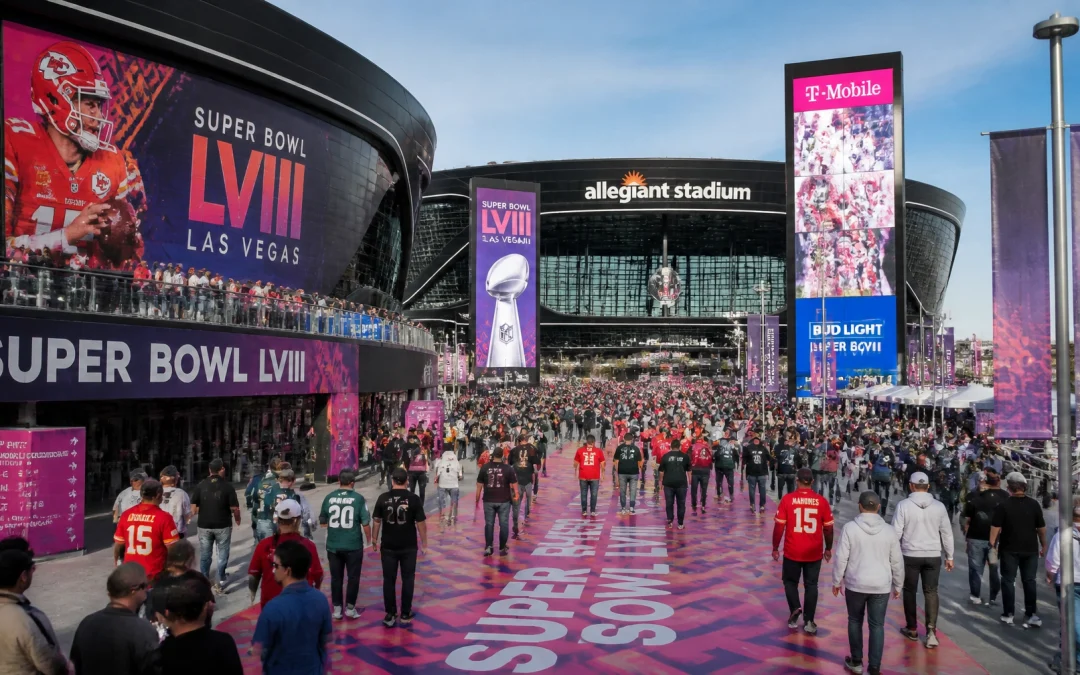
Success in sports marketing during the most significant game of the year is rarely about a single television commercial. While a thirty-second spot captures attention for a brief moment, the true victors are the brands that occupy every physical and digital space where fans live, breathe, and celebrate. In 2026, the strategy for Super Bowl dominance evolved into a comprehensive, multi-dimensional takeover.
With over 40 years of advertising leadership, Sports Media Inc. and its OOH Sports division have refined the art of stadium and venue saturation. The methodology is simple: if a fan can see it, touch it, or walk on it, a brand should own it. This newsletter explores the strategic framework that allowed top-tier brands to own the venue, from the concrete floors of the concourse to the towering digital billboards that define the city skyline.
Objective & Strategy: The 10-Mile Perimeter Rule
The primary objective for any major Super Bowl activation is the creation of a "brand halo." This is not achieved by targeting only the lucky few inside the stadium. Instead, the strategy focuses on a 10-mile perimeter surrounding the sports venue. This zone represents the high-density area where fans congregate, travel, and celebrate before and after the final whistle.
By utilizing a perimeter-based approach, brands ensure their message is the first thing a visitor sees upon entering the host city and the last thing they see when they leave. The strategy involves a coordinated deployment of Digital Out of Home (DOOH) assets, high-impact static displays, and transit advertising. The goal is to create a seamless visual narrative that follows the fan journey through every touchpoint.
Venue Integration: From Floors to Billboards
One of the most effective tactics observed during the 2026 season was the use of unconventional advertising surfaces. Traditional billboards are essential, but true venue ownership requires a more granular approach.
High-Impact Floor Graphics
Floor graphics represent an often-overlooked opportunity for brand interaction. In high-traffic areas like stadium concourses and entry gates, floor wraps provide a unique perspective. These graphics are durable, vibrant, and impossible to ignore as fans navigate the venue. For many brands, these "underfoot" advertisements served as the perfect companion to eye-level digital signage, creating a 360-degree branding environment.

Billboards and Sky-High Dominance
While floor graphics capture the immediate vicinity, large-format billboards and digital displays provide the scale necessary for cultural impact. During the Super Bowl 2026 campaign, the integration of Sporttrons and digital ribbon boards allowed brands to sync their messaging across 780-plus venues nationwide. This national reach, combined with localized stadium billboards, ensured that the brand remained synonymous with the event itself.
Technology Partners and Programmatic DOOH
The shift toward programmatic DOOH has revolutionized how brands execute Super Bowl campaigns. By leveraging specialized platforms, advertisers can now buy and deploy media in real-time, adjusting creative based on game triggers, weather conditions, or fan sentiment.
The organization partnered with industry leaders to drive programmatic adoption. For example, the use of StackAdapt's DSP allowed for precise targeting of audiences exposed to specific billboards. This omnichannel approach ensures that once a fan sees a billboard, they are retargeted with relevant digital content on their mobile devices, reinforcing the brand message long after they have moved past the physical ad.

Strategic Execution: 40 Years of Expertise
The level of precision required to manage a nationwide sports network comes from decades of experience. Sports Media Inc. has spent 40 years building a veteran-owned agency that understands the logistics of live sports. Whether it is navigating the complexities of stadium licensing or managing the installation of thousand-square-foot vinyl wraps, the execution phase is where the campaign is won or lost.
The following video details the comprehensive nature of the 2026 strategy and the 40-year legacy behind the brand's success.
https://www.youtube.com/watch?v=l6J-0zileKE
Measuring the Impact: Results and Data
Data remains the cornerstone of every successful campaign. By using ROI predictive modeling and brand lift studies, the impact of these venue-wide takeovers can be quantified with precision.
In recent campaigns, similar DOOH strategies have yielded significant results:
- Brand Image Lift: A programmatic DOOH campaign for Mike's Hard Iced Tea saw a 119 percent lift in positive brand image.
- Purchase Consideration: A digital OOH campaign for Sea-Doo resulted in a 144 percent increase in purchase consideration among the target demographic.
- Audience Retargeting: By capturing device IDs of fans within the 10-mile perimeter, brands were able to maintain a 74 percent higher engagement rate on follow-up digital advertisements compared to non-exposed audiences.
These figures illustrate that the "surround sound" effect of venue-wide advertising does more than just build awareness. It moves the needle on actual consumer behavior.

Conclusion: The New Standard for Sports Branding
The lessons from Super Bowl 2026 are clear. To truly own a moment as large as the Super Bowl, a brand must move beyond the screen. It must inhabit the environment. By combining 40 years of industry knowledge with modern programmatic technology, OOH Sports provides the blueprint for venue dominance.
From the floors that fans walk on to the billboards that light up the night, the future of sports advertising is immersive, data-driven, and omnipresent. For media buyers and brand managers looking to make an impact, the strategy remains consistent: any sport, any venue, anytime.
For more information on how to execute a high-impact campaign, visit our case studies page or contact us to begin planning for the next major season.