
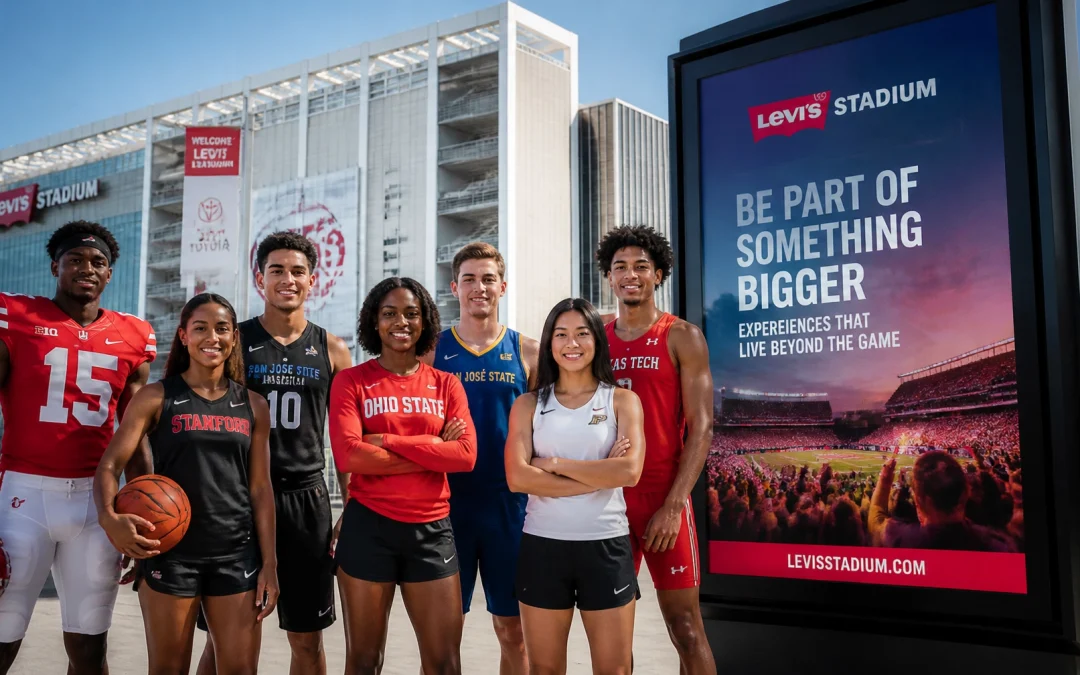
The landscape of sports marketing has undergone a fundamental shift as the industry moves toward Super Bowl 2026 in Santa Clara. For media buyers and brand managers, the traditional approach of relying solely on a single high-priced celebrity endorsement is no longer the only path to success. The emergence of Name, Image, and Likeness (NIL) has opened a new frontier where 20,000 authentic student-athlete voices are proving to be more impactful than a solitary 30-second television spot. This newsletter explores why the NIL platform is the decisive factor for brands looking to dominate the Super Bowl LX conversation.
The Shift Toward Grassroots Authenticity
In previous years, the Super Bowl was defined by massive broadcast spends and celebrity-heavy creative. However, data from recent campaigns indicates that younger demographics, particularly Gen Z and Millennials, prioritize authenticity and peer-to-peer recommendations over traditional corporate messaging. By leveraging a network of 20,000 student-athletes, brands can create a groundswell of organic engagement that feels personal and trustworthy.
These athletes are not just influencers; they are the heart of their respective campus communities. When thousands of athletes share a unified message, it creates a "surround sound" effect that broadcast ads cannot replicate. This strategy allows a brand to be present in the daily lives of fans long before the kickoff at Levi’s Stadium.
Strategy: The 10-Mile Digital Perimeter
The core of the OOH Sports strategy for Super Bowl 2026 involves a dual-layered approach. The first layer is the physical presence around the venue. Utilizing the Sportrons network, brands can secure digital video advertising boards within a 10-mile perimeter of the sports venue. This ensures that every fan traveling to the game, attending pre-game festivities, or staying in local hotels is exposed to the brand message.
The second layer is the digital integration with the NIL platform. By synchronizing the physical out-of-home (OOH) displays with the social media activity of 20,000 student-athletes, the campaign achieves true omnichannel reach. A fan might see a digital billboard on their way to the stadium and then see a post from their favorite college quarterback on their mobile device minutes later.

Objective & Strategy: Connecting with the "Last Mile"
The objective for media planners is to dominate the "last mile" of the fan journey. While a television ad reaches a national audience, the OOH Sports network focuses on the high-intent audience physically present at the event. The strategy is built on three pillars:
- Saturation: Using digital boards to create a visual dominant presence in the host city.
- Authenticity: Deploying 20,000 student-athlete voices to provide a human element to the brand.
- Frequency: Ensuring the brand is seen multiple times across different touchpoints throughout the Super Bowl weekend.
This approach transforms the advertising from a passive experience into an active part of the event atmosphere. The focus is on being where the fans are, both physically and digitally.
Technology Partners and Programmatic DOOH
The execution of a campaign of this scale requires sophisticated technology. Programmatic Digital Out-of-Home (pDOOH) allows for real-time bidding and flexible creative deployment. This means that brands can adjust their messaging based on game-day events, weather conditions, or local trends.
By using specialized platforms, media buyers can target specific audiences with precision. The use of device IDs allows the campaign to track who was exposed to the digital boards and subsequently retarget those individuals through the NIL athlete network. This creates a closed-loop marketing system that maximizes every dollar spent.
The following video provides a deeper look into how these sports media strategies are changing the game for brands:
https://www.youtube.com/watch?v=l6J-0zileKE
Results: Measurable Impact and Brand Lift
Success in the Super Bowl era is measured by data, not just "buzz." Previous campaigns managed by OOH Sports and its partners show the power of this integrated approach. For instance, a programmatic DOOH campaign for White Claw saw a 74% lift in purchase consideration. Similarly, AB InBev's Mike’s Hard Iced Tea campaign resulted in a 119% lift in positive brand image.
For Super Bowl 2026, the projected results for brands using the NIL platform are equally significant. Brands can expect:
- Increased Brand Preference: A measurable rise in brand affinity by aligning with local heroes and student-athletes.
- Higher Engagement Rates: NIL content typically generates higher interaction rates compared to standard brand posts because the audience has a pre-existing emotional connection with the athlete.
- Attribution Clarity: Through the use of brand lift studies and exposed device tracking, planners can see exactly how the OOH and NIL components contributed to sales or awareness goals.

Logistics and Execution Processes
The process of managing 20,000 student-athletes might seem daunting, but the OOH Sports platform simplifies the logistics for media buyers. The platform handles the following steps:
- Athlete Selection: Filtering the 20,000 voices based on sport, region, and audience demographics to find the perfect fit for the brand.
- Creative Distribution: Sending standardized yet authentic creative briefs to all participating athletes simultaneously.
- Compliance and Reporting: Ensuring all NIL activities meet current regulatory standards and providing a comprehensive dashboard for performance tracking.
This streamlined process allows a chief marketing officer to execute a massive, multi-channel campaign with the same ease as buying a single TV spot.
Why 20,000 Voices Win
The sheer volume of 20,000 voices provides a level of scale that was previously impossible. In a world where the Super Bowl broadcast is increasingly fragmented across streaming and traditional cable, the physical world and the social feeds of athletes remain the most consistent ways to reach a large audience.
One celebrity might have millions of followers, but their engagement is often broad and shallow. Conversely, 20,000 student-athletes have deep, localized connections with their followers. When these voices are combined, they create a national impact with the precision of a local campaign. This is the "secret sauce" for Super Bowl 2026.
Conclusion for Media Buyers
As the planning for Super Bowl 2026 intensifies, the choice for media buyers is clear. They can follow the old playbook of expensive, one-off spots, or they can embrace the future of sports marketing. By combining the 10-mile digital perimeter of OOH Sports with the authentic reach of 20,000 student-athletes, brands can achieve a level of saturation and trust that is otherwise unattainable.
The data supports the effectiveness of this model. The technology is in place to handle the logistics. The only question remains which brands will be bold enough to leverage the power of NIL to win the biggest game of the year. For more information on how to get started, visit the OOH Sports case study library to see these strategies in action.