
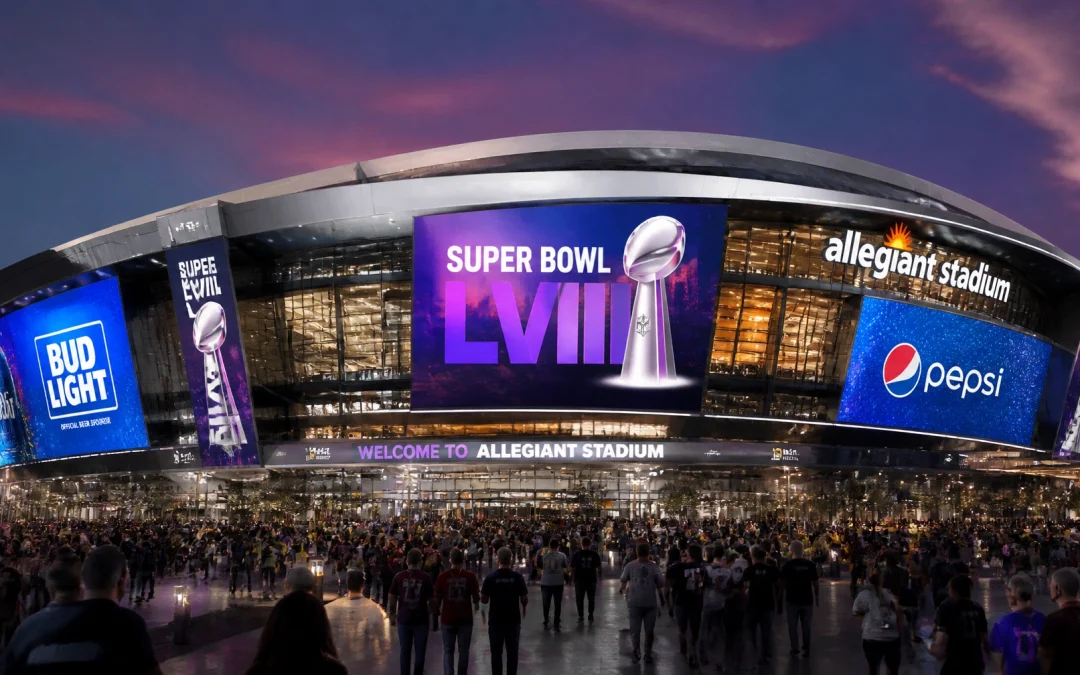
The Super Bowl in 2026 is more than just a championship football game. It represents the pinnacle of global sports marketing and a significant evolution in how brands connect with consumers. While the action on the field at Levi's Stadium captures the world's attention, a more complex competition takes place across the digital landscape of the surrounding area. Behind this high stakes environment lies a strategy built on four decades of industry leadership.
Sports marketing has undergone a massive transformation since the mid-1980s. What once relied on static banners and 30 second television spots has evolved into a fully integrated, omnichannel experience. For brands aiming to capture the attention of over 100 million viewers, the secret to dominance is no longer just about the broadcast. It is about owning the physical and digital space where fans live, travel, and celebrate.
The Strategy: A 40-Year Legacy of Advertising Leadership
The foundations of modern sports branding were not built overnight. Organizations like Sports Media Inc. have spent 40 years refining the art of the "perimeter." In the early days, this meant physical signage within the line of sight of the cameras. Today, that perimeter has expanded significantly, covering every touchpoint from a fan's home to their seat in the stadium.
This long term perspective allows for a level of strategic depth that newer agencies often miss. By understanding the historical data of fan movement and brand recall, experienced planners can predict exactly where a message will have the highest impact. The goal is to move beyond simple visibility and toward complete brand immersion.
The 10-Mile Perimeter: Surrounding the Fan
One of the most effective strategies for Super Bowl 2026 involves the 10-mile radius surrounding the host venue. This "halo effect" ensures that a brand is the first thing a fan sees when they arrive in the city and the last thing they see as they head home.
The OOH Sports network utilizes this perimeter strategy to saturate high-traffic areas. This includes:
- Digital billboards on major highways leading to Santa Clara.
- Digital signage in transit hubs and airports.
- Screens in local bars, casual dining locations, and quick-service restaurants.
- Displays in fitness centers and urban office buildings.
By placing ads within this 10-mile zone, brands create a sense of omnipresence. A fan might see a brand on a highway billboard, then again on a screen at a sports bar, and finally on a digital kiosk near the stadium gates. This repetition builds a level of familiarity that makes the brand feel like an official part of the Super Bowl experience.

Objective & Strategy: From Floors to Billboards
The true "secret" to venue dominance in 2026 is the "floor to ceiling" approach. Successful campaigns do not stop at the stadium walls. Through the Sportrons Network, brands can extend their reach directly into the heart of the action.
The objective is to eliminate "blind spots" in the fan journey. If a fan looks at their phone, they see a digital ad. If they look at the scoreboard, they see a brand. If they walk through the concourse, they are greeted by high-definition screens. Even the physical surfaces of the venue can be utilized to ensure that the branding is unavoidable.
Tactics for full venue coverage include:
- Perimeter Boards: These are the digital displays that run along the field or court, providing constant visibility during the broadcast.
- Concourse Digital Out-of-Home (DOOH): Strategically placed screens near concessions and restrooms where dwell time is high.
- Sportrons Network: Specialized in-stadium screens that offer immersive experiences and high-contrast branding.
- Floor Branding: Utilizing ground-level graphics and floor-based projections to catch the eyes of fans moving through the venue.
Technology Partners and Programmatic Execution
The efficiency of a 2026 Super Bowl campaign is driven by advanced technology. Programmatic DOOH (pDOOH) has changed the way media buyers interact with sports venues. Instead of long-term manual contracts, planners can now use data-driven platforms to trigger ads based on real-world conditions.
Technology partners allow brands to:
- Target Specific Time Slots: Run ads only during peak pre-game hours or during the high-energy post-game celebrations.
- Utilize CPM-Based Buying: Set budgets ranging from $5 to $30 CPM to maximize reach within a specific budget.
- Implement Rainout Protection: While less of a concern for the Super Bowl, this technology ensures that if an outdoor event is canceled, the campaign budget is preserved.
- Leverage Device IDs: Identify and retarget fans who were exposed to specific OOH screens, continuing the conversation on their mobile devices long after the game ends.

Real-Time Engagement and Fan Interaction
In 2026, the most successful ads are those that interact with the live environment. Dynamic creative allows brands to update their messaging in real-time based on the score, player statistics, or even the weather.
For example, if a specific player makes a game-changing play, a brand can immediately update its digital screens across the 10-mile perimeter to reference that moment. This level of agility creates a deep connection with the fans, showing that the brand is just as invested in the game as they are. This strategy has been shown to increase purchase consideration significantly, as seen in various case studies involving omnichannel campaigns.
Experience the Power of Sports Marketing
To truly understand the impact of these strategies, one must see them in action. The following video showcases how modern digital out-of-home advertising brings brands to life in the most competitive sports environments.
https://www.youtube.com/watch?v=l6J-0zileKE
Results: The Magnitude of Measured Impact
The success of a Super Bowl branding strategy is measured through rigorous data analysis. It is not enough to simply be visible. Brands must prove that their presence translated into measurable results.
Key metrics for 2026 campaigns include:
- Brand Lift Studies: Measuring the increase in brand awareness and favorability following the game.
- Device ID Exposure: Tracking how many unique fans were exposed to the OOH network and subsequently visited a brand’s website or retail location.
- Attribution Modeling: Connecting physical world impressions to digital world actions.
Historical data from similar large-scale events shows that fans exposed to DOOH ads near a stadium are 60% more likely to take action compared to those who only saw traditional television spots. By combining the 40 years of experience from Sports Media Inc. with modern programmatic tools, brands can achieve an ROI that traditional advertising simply cannot match.

Conclusion: Dominating the Arena
The secrets of Super Bowl 2026 branding are rooted in a combination of legacy and innovation. By using a 10-mile perimeter strategy, saturating the venue from floors to billboards, and leveraging the latest in programmatic technology, brands can ensure their message is heard above the noise of the crowd.
Success in this arena requires more than just a large budget. It requires a partner with the experience to navigate the complexities of sports media. As the landscape continues to evolve, those who understand the value of venue-wide coverage and hyper-local targeting will continue to dominate the sports marketing world.
For those ready to launch their own hyperlocal campaign, the process is now more accessible than ever, with some strategies allowing for deployment in under three hours. The road to the 2026 championship starts with a strategy that owns the ground, the walls, and the skies.