
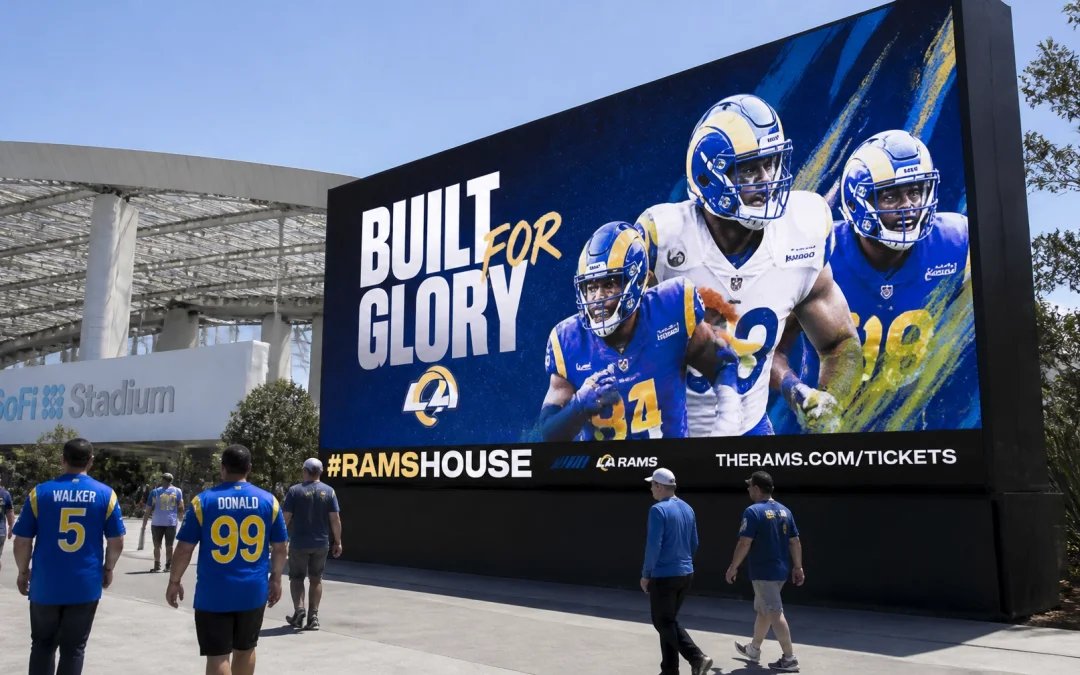
The landscape of sports marketing is undergoing a significant transformation. As traditional advertising channels face fragmentation, digital out-of-home (DOOH) advertising has emerged as a powerhouse for brands seeking high-impact, unskippable engagement. By 2026, programmatic DOOH is projected to account for approximately 65.5 percent of the market, reflecting a shift toward automation and data-driven precision. For media buyers and brand managers, staying ahead of these shifts is essential to maintaining a competitive edge in the sports arena.
The following five industry insights highlight how modern technology and strategic placement can elevate a brand's presence, ensuring that messaging resonates with fans exactly where they gather, live, and celebrate.
1. The Rise of Programmatic Scaling
Programmatic digital out-of-home (pDOOH) has transitioned from a niche alternative to the industry standard. This technology allows for the automated buying, selling, and delivery of out-of-home advertising, similar to the processes used in display and video advertising. The primary advantage of pDOOH is its flexibility. Campaigns can be launched quickly, and optimizations can be made in real-time based on performance data.
In the context of sports marketing, programmatic platforms enable advertisers to access inventory across stadiums, sports bars, gyms, and transit hubs through a single demand-side platform (DSP). This integration simplifies the execution of complex campaigns. Brands can now adjust frequency, dayparts, and locations on the fly to align with live sporting schedules. For instance, a brand promoting a post-game beverage can programmatically increase ad frequency on screens near an arena immediately following a victory. This level of agility ensures that marketing budgets are allocated to the moments of highest fan engagement.
2. Strategic Proximity and the 10-Mile Radius
One of the most effective tactics in DOOH involves hyper-local targeting around specific high-intent venues. Research indicates that targeting a perimeter of up to 10 miles around sports venues is a critical strategy for capturing the attention of fans during their entire event-day journey. This geographic focus allows brands to dominate the local environment, from the initial commute to the final celebration.

Objective and Strategy
The objective of proximity targeting is to create a sense of brand omnipresence. By activating screens at bus stops, retail centers, and fitness facilities within this radius, a brand remains top-of-mind throughout the day. This approach is particularly effective for sports-related products. For example, footwear brands often target screens near training facilities and gyms to reach active consumers.
Implementation Tactics
- Geo-Fencing: Establishing virtual perimeters around DOOH screens to identify mobile devices in the vicinity.
- Contextual Alignment: Choosing screen locations that match the demographics of the local fan base.
- Frequency Capping: Ensuring a consistent presence across the 10-mile radius without over-saturating the audience.
By utilizing specialized networks like Sportrons, advertisers can secure premium placements in high-traffic sports environments that traditional buys might overlook.
3. Omnichannel Synergy and Sequential Messaging
In a fragmented media environment, DOOH does not exist in a vacuum. The most successful campaigns treat digital screens as nodes within a single, adaptive system that includes mobile, social video, and connected TV (CTV). This omnichannel approach facilitates sequential storytelling, where a consumer is exposed to a brand message across multiple touchpoints.
A common strategy involves displaying a high-impact visual on a DOOH screen at a transit station, followed by a targeted mobile offer delivered via social media minutes later. This repetition reinforces the brand message and increases the likelihood of conversion. According to industry data, campaigns that combine DOOH with mobile retargeting see a significant lift in engagement compared to single-channel efforts.
The use of device IDs allows for a seamless transition between the physical and digital worlds. When a fan is exposed to a screen near a stadium, their device can be added to a retargeting pool for future digital ads. This strategy is further explored in our guide on mastering media planning, which emphasizes the importance of a unified audience view.
4. AI-Driven Dynamic Content and Real-Time Triggers
Artificial intelligence is reshaping DOOH into a contextually aware medium. Dynamic creative optimization (DCO) allows advertisers to automatically change the content of an ad based on external data signals such as weather, time of day, or live game scores. This ensures that the messaging is always relevant to the viewer's current experience.

Strategy and Technology Partners
By leveraging AI and real-time data feeds, brands can execute highly sophisticated campaigns. If a local team wins a game, digital boards within the city can immediately switch to celebratory creative featuring the final score. Conversely, if the weather turns rainy, an outdoor apparel brand can trigger ads for waterproof gear on transit screens.
Measurable Impact of Dynamic Creative
Data from recent campaigns suggests that dynamic content can lead to a double-digit increase in brand recall. By aligning the creative with the fan's immediate environment, the ad feels less like an interruption and more like a relevant part of the event experience. This level of personalization was previously only possible in digital display advertising, but it is now a core component of modern DOOH strategy. For those interested in innovative applications, the Ultimate Guide to NIL Innovation provides additional examples of how dynamic content is being used in high-stakes sports environments.
5. Full-Funnel Attribution and Measurement
The historical challenge of out-of-home advertising was its perceived lack of measurement. However, advancements in 2026 have brought DOOH's attribution capabilities on par with online channels. Marketers can now track the entire consumer journey, from initial screen exposure to final purchase.

Results and Data Analysis
The integration of mobility data and device IDs enables "closed-loop" attribution. This process measures:
- Foot Traffic Lift: Determining how many people visited a retail location or stadium after being exposed to a DOOH ad.
- Digital Actions: Tracking website visits, app installs, or online searches that occur following an OOH exposure.
- Brand Lift Studies: Surveying exposed versus unexposed groups to quantify changes in brand awareness and preference.
Case studies indicate that brands utilizing these measurement tools can see a 20 percent or higher increase in measurable foot traffic when optimizing their placements based on real-time mobility data. Detailed performance metrics and examples of these successes can be found in the OOH Sports Case Study library.
Strategic Alignment for Future Success
The convergence of programmatic technology, hyper-local targeting, and advanced attribution has turned DOOH into a precise instrument for sports marketers. By focusing on the 10-mile radius around arenas and integrating screens into an omnichannel strategy, brands can achieve a level of impact that was previously unattainable.
As the industry continues to evolve, the focus remains on delivering the right message to the right fan at the right moment. Whether through the use of AI-driven dynamic creative or the application of robust data analytics, the goal is to create a seamless and engaging experience that resonates long after the final whistle. Brands that embrace these insights will find themselves better positioned to capture the passion and loyalty of sports fans across the nation.