
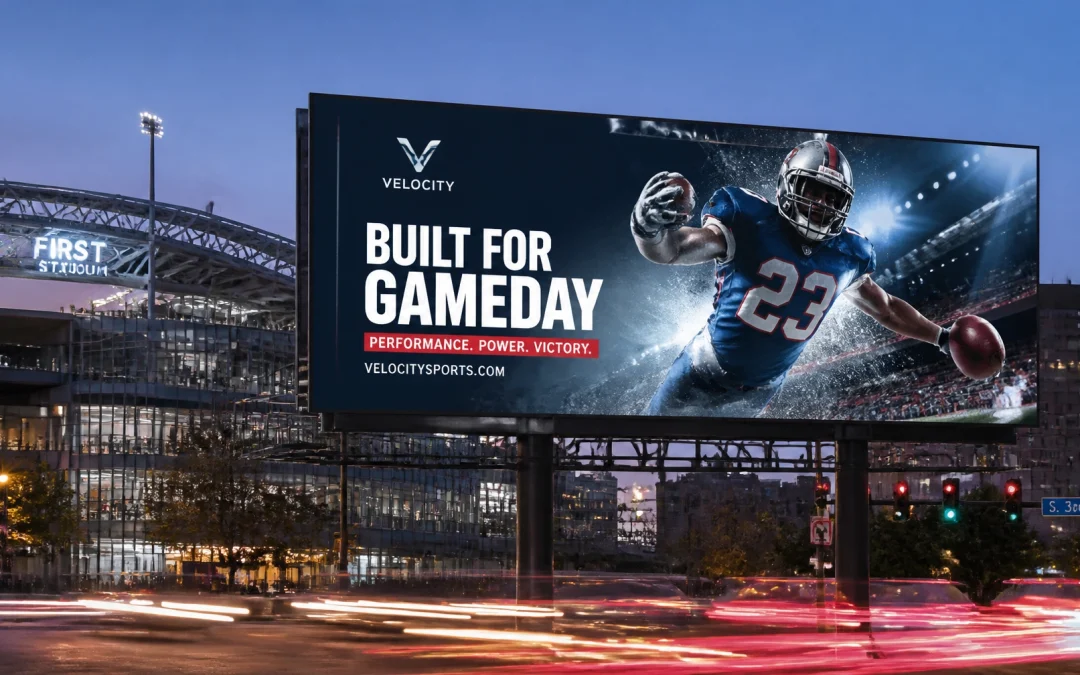
Traditional sports marketing has often been confined to the four walls of an arena. Brands paid premium prices for jerseys, court-side LEDs, and halftime sponsorships. While these methods remain effective for massive broad-scale awareness, the landscape of sports media is shifting toward a more localized and data-driven approach. The true innovation in the industry is currently happening outside the stadium gates.
The concept of the 10-mile zone represents a strategic radius around sports venues where fan engagement is at its peak. This perimeter encompasses transit hubs, sports bars, retail centers, and fan zones where the game-day energy is most concentrated. By leveraging Digital Out-of-Home (DOOH) advertising within this specific zone, brands can capture the attention of a highly motivated audience during the most critical moments of their journey.
Objective & Strategy
The primary objective of a 10-mile zone strategy is to create a seamless brand presence that follows the fan from their initial arrival in the city to their post-game celebrations. This approach recognizes that the "game-day experience" starts hours before the first whistle and continues long after the final buzzer.
Strategic placement within this radius serves several functions:
- It builds frequency and reach in high-traffic environments where fans are naturally congregating.
- It leverages the emotional heightened state of sports fans to increase brand recall and sentiment.
- It provides a cost-effective alternative or supplement to in-stadium advertising, which often carries higher entry costs and more rigid creative restrictions.
The strategy involves identifying key nodes within the 10-mile perimeter. For example, transit stations within three miles of the venue capture fans during their commute. High-end retail districts within five miles reach fans who are shopping or dining before the event. By saturating these zones with dynamic digital screens, a brand becomes an integral part of the local sports culture.

Technology Partners
Executing a successful campaign within the 10-mile zone requires a sophisticated technological stack. Modern DOOH is no longer about static images on a loop. It is a programmatic ecosystem that allows for real-time adjustments and data integration.
Technology partners play a vital role in several areas:
- Programmatic Platforms: These allow media buyers to bid on inventory in real time based on specific triggers such as game start times, weather conditions, or even the current score of the game.
- Data Integration: By connecting live sports data feeds to DOOH creative, advertisers can display real-time updates. If a local hero hits a home run, the creative can update instantly across the entire 10-mile zone to congratulate the player and the city.
- Audience Measurement: Using mobile location data, partners can provide heat maps of fan movement. This allows for precise measurement of how many "exposed" fans eventually entered the stadium or visited a nearby retail location.
Collaborating with specialized networks like Sportrons allows brands to access premium inventory that is specifically curated for sports audiences. This ensures that the message is appearing on high-quality screens in environments that are contextually relevant to the sporting event taking place.
Tactics for Execution
Success in the 10-mile zone is built on three tactical pillars: timing, relevance, and cross-channel integration.
Real-Time Creative Updates
Static billboards are often ignored because they become part of the background. Digital screens in the 10-mile zone avoid this by remaining dynamic. Tactical execution includes changing creative based on the phase of the game. Pre-game creative might focus on excitement and "getting ready," while post-game creative can pivot to celebration or "safe ride home" messaging. This level of relevance ensures that the content feels like a live update rather than a generic advertisement.
Geo-Fencing and Retargeting
The 10-mile zone provides a unique opportunity for omnichannel marketing. When a fan enters the designated radius and is exposed to a DOOH screen, their anonymized mobile device ID can be captured. This allows media planners to retarget that specific fan with mobile ads or connected TV (CTV) content later that evening or during the following week. This sequential messaging reinforces the brand message and moves the fan further down the conversion funnel.
Proximity to Point of Sale
Many of the screens in a 10-mile radius are located near restaurants, bars, and convenience stores. Tactics often include a direct call to action related to these nearby locations. For example, a beverage brand might use DOOH screens near a cluster of sports bars to promote a specific game-day special. This shortens the distance between the advertisement and the purchase, leading to higher measurable ROI.

Measuring Success and Results
The efficacy of the 10-mile zone strategy is not just theoretical. It is backed by significant data and case studies. Analyzing recent campaigns in major metropolitan areas has shown that hyper-local DOOH targeting yields impressive results across several key performance indicators (KPIs).
In several case studies, brands that utilized a 10-mile perimeter approach reported:
- 2.2x Higher Brand Recall: Fans were more than twice as likely to remember a brand seen on a digital screen near the stadium compared to traditional static billboards located further away in the city.
- 35% Increase in Foot Traffic: Retailers and restaurants within the 10-mile zone saw a measurable uptick in visitors when DOOH screens in the immediate vicinity were active during game-day windows.
- Greater Social Engagement: Campaigns that included real-time score updates or social media triggers saw a 15% higher rate of brand mentions on social platforms during the event window.
These results highlight the power of the "leisure mindset." When fans are in a state of high emotional arousal and enjoyment, they are more receptive to marketing messages. The proximity to the event acts as a powerful amplifier for the brand's voice.

Strategic Alignment
For media buyers and brand managers, the 10-mile zone is about more than just proximity. It is about strategic alignment with the lifestyle of the modern sports fan. This audience is mobile, tech-savvy, and deeply invested in the local community. By utilizing DOOH to inhabit the spaces where these fans live and celebrate, a brand demonstrates that it understands and shares their passion.
This approach also provides a solution to the problem of "ad blindness" in digital spaces. While fans might scroll past an ad on their phone or skip a commercial on TV, they cannot "swipe away" a large-format digital screen that is providing them with helpful game updates or entertaining visuals while they wait for a train or walk to the arena.
Conclusion
The evolution of sports marketing is moving away from the "one size fits all" broadcast model and toward a more surgical, localized approach. The 10-mile zone provides the perfect balance of scale and precision. It allows brands to dominate the conversation in a specific geography during the moments when attention is at its absolute peak.
Innovation in this space will continue to grow as data sources become more granular and creative capabilities expand. For those looking to maximize their impact in the sports world, looking outside the stadium to the surrounding 10 miles is no longer just an option. It is a necessity.
To learn more about how to integrate these strategies into a media plan, visit the About Us page or Contact our team to explore the latest in sports media innovation.
