
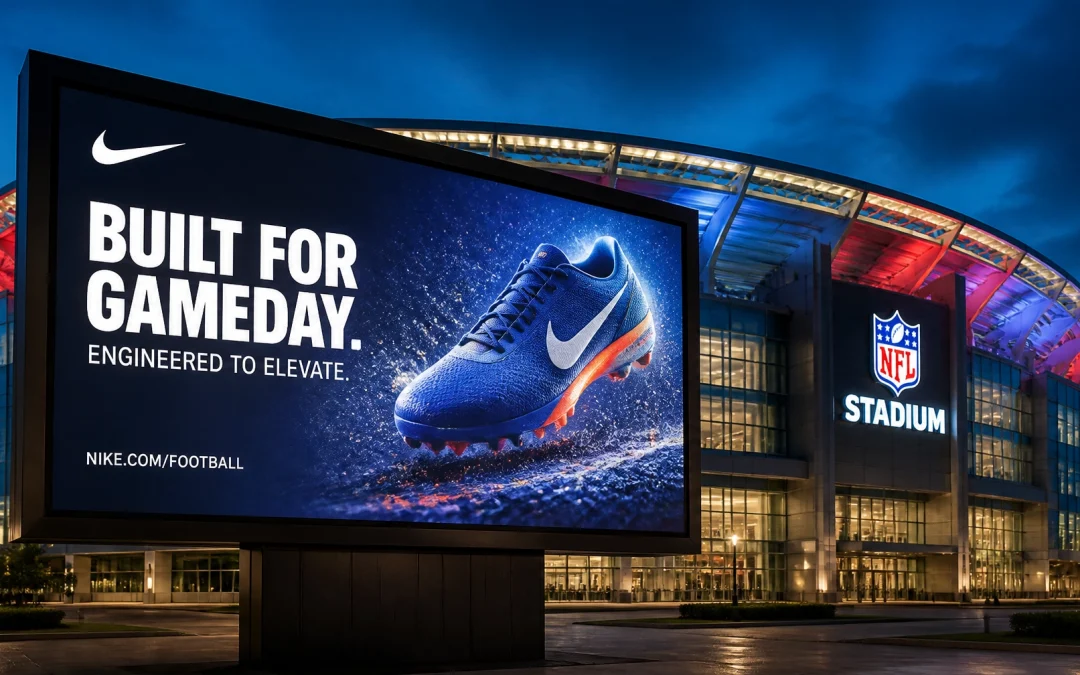
The landscape of sports marketing is undergoing a significant transformation as digital out-of-home (DOOH) advertising moves from a secondary tactic to a primary growth engine for major brands. For media buyers and planners seeking massive reach combined with granular precision, the OOH Sports Network offers a infrastructure built specifically for the high-stakes environment of professional and collegiate athletics.
Establishing a brand presence within the vicinity of a sports stadium is no longer just about static billboards. It is about creating a dynamic, data-driven ecosystem that follows the fan from their local sports bar to the stadium gates and back again. Below are 10 critical components of the OOH Sports Network that every chief marketing officer and media planner should understand when evaluating scale and impact.
1. Massive National Footprint
The OOH Sports Network has established a unified presence across North America, boasting more than 25,000 digital screens. This scale is designed to solve the fragmentation problem often associated with traditional out-of-home media. Instead of negotiating with dozens of disparate vendors, media buyers can execute coordinated national campaigns through a single point of entry.
This vast network covers more than 850 venues through the Sportrons partnership, allowing brands to reach an estimated 260 million sports fans annually. Whether the objective is a wide-net national awareness campaign or a targeted multi-city blitz, the infrastructure supports high-volume impression delivery without sacrificing quality or screen consistency.
2. The 10-Mile Perimeter Strategy
One of the most strategic advantages of the OOH Sports Network is the 10-mile "stadium perimeter" model. Marketing efforts are concentrated within a designated radius of major sports arenas and stadiums. This ensures that brand messaging is visible during the most critical times: the pre-game transit, the arrival at the venue, and the post-game celebration.
By saturating the perimeter, brands can capture the attention of fans who are already in a heightened emotional state. This geographical targeting reaches fans in high-traffic areas such as transit hubs, shopping centers, and commercial corridors leading directly to the arena, effectively owning the "last mile" of the fan journey.
3. Programmatic DOOH Integration
Efficiency in media buying is driven by automation. The OOH Sports Network is fully integrated with leading programmatic platforms, such as StackAdapt, allowing for seamless execution of AI-driven DOOH campaigns. Programmatic buying enables media planners to:
- Purchase inventory through real-time bidding (RTB).
- Set specific CPM-based budget controls, typically ranging from $5 to $30.
- Optimize campaigns in real-time based on performance data.
- Target specific audience segments, such as frequent stadium-goers or local residents.
This level of technical integration transforms physical billboards into flexible digital assets that can be managed with the same precision as online display or social media advertising.
4. Rule-Based Game-Day Triggers
The value of a sports-focused network lies in its ability to react to the sports calendar. The OOH Sports Network utilizes rule-based triggers to ensure that advertising spend is allocated only when it is most relevant. Campaigns can be programmed to activate automatically when a specific team is playing at home or when a high-profile rivalry game is scheduled.
This "if-then" logic allows brands to remain dormant during off-days and surge during peak periods. For instance, a campaign can be set to ramp up its frequency during the playoffs or during a major championship series, ensuring that the brand remains top-of-mind when fan engagement is at its zenith.

5. Dynamic Content and Live Data
Static messaging is increasingly less effective in the fast-paced world of sports. The OOH Sports Network supports dynamic creative that can update in real-time. By integrating live game data, screens can display:
- Live scores and game countdowns.
- Real-time team statistics and highlights.
- Contextual weather updates (e.g., promoting rain gear or indoor venues during storms).
- Local traffic and transport alerts for fans leaving the game.
This capability turns a standard advertisement into a utility for the fan, increasing the likelihood of visual engagement and brand recall.
6. Premium Venue Access
The network provides access to some of the most prestigious sporting environments in the world. From major league baseball stadiums to professional basketball and hockey arenas, the inventory is located where the most affluent and dedicated fans congregate.
Because the OOH Sports Network is part of the Sports Media Inc. family, it leverages decades of relationships with venue operators. This ensures that brands are placed on high-quality, well-maintained digital screens that meet the rigorous standards of premium advertising. This is essential for maintaining brand safety and ensuring that the creative is presented in a professional context.
7. Rainout and Event Protection
A significant concern for outdoor advertising is the risk of event cancellation. The OOH Sports Network addresses this through automatic rainout protection. If a game is cancelled or postponed due to weather, the system can automatically pause the campaign flight.
This protection ensures that media budgets are not wasted on empty streets or closed stadium gates. This logistical safeguard is a critical component of the network's commitment to efficiency and advertiser ROI. Spend is only utilized when the target audience is physically present and engaged.
8. High-Impact, Unskippable Formats
Unlike digital ads on mobile devices or computers, DOOH advertisements cannot be skipped, blocked, or ignored. Large-format digital screens in public spaces command attention through sheer size and visual dominance.
Research indicates that premium large-format DOOH attracts significantly more attention than online formats. The viewing times are longer, and the "forced" nature of the exposure in a physical environment leads to higher brand lift. In a world where consumers are increasingly adept at filtering out digital clutter, the physical presence of the OOH Sports Network provides a reliable way to break through the noise.

9. Proven Conversion and Action
The effectiveness of the OOH Sports Network is supported by robust data. According to industry studies by the OAAA and The Harris Poll, sports-related out-of-home advertising drives significant consumer behavior:
- 90% of fans who see sports OOH ads take some form of action.
- 61% of those fans engage with the brand on social media after exposure.
- A high percentage of fans look up product information or make a purchase immediately following the event.
These metrics demonstrate that the network is not just an awareness tool; it is a driver of lower-funnel activity. By reaching fans in a state of high excitement, brands can capitalize on the positive associations of the game to drive measurable results.
10. Omnichannel Synergy
The OOH Sports Network is designed to function as a core component of a broader omnichannel strategy. It does not compete with mobile or social media; it amplifies them. By using device ID tracking and retargeting, media planners can identify audiences exposed to a digital billboard and follow up with a coordinated mobile ad or social media prompt.
This retargeting loop ensures that the initial physical impression is reinforced throughout the fan's digital journey. This synergy is why network scale matters in the modern era of marketing. The ability to coordinate 25,000 screens with digital retargeting provides a level of reach and frequency that was previously impossible in traditional sports media.

Objective & Strategy
The primary objective of the OOH Sports Network expansion is to provide a standardized, high-scale solution for sports-adjacent advertising. The strategy relies on three pillars: geographic saturation, technical precision, and event-based relevance.
By focusing on the perimeter of 850+ venues, the network ensures that it captures the highest density of sports fans at the lowest possible cost per impression. The integration of programmatic technology allows for a level of agility that matches the unpredictable nature of live sports, providing brands with a powerful tool for both long-term branding and short-term tactical execution.
Results and Impact
The growth of the network has led to a fundamental shift in how media buyers approach the sports calendar. Campaigns are now evaluated based on their ability to integrate with the fan experience rather than just their proximity to the game.
Data collected from recent multi-market campaigns indicates a clear "halo effect," where brands saw a notable increase in local search volume and social media mentions in cities where the perimeter network was active. This measurable impact on host city economies and digital engagement confirms the network's role as a cornerstone of modern sports marketing.
As the industry continues to move toward a more data-centric model, the OOH Sports Network remains positioned at the intersection of technology and the physical world, offering a scalable solution for brands that want to be part of the game.