
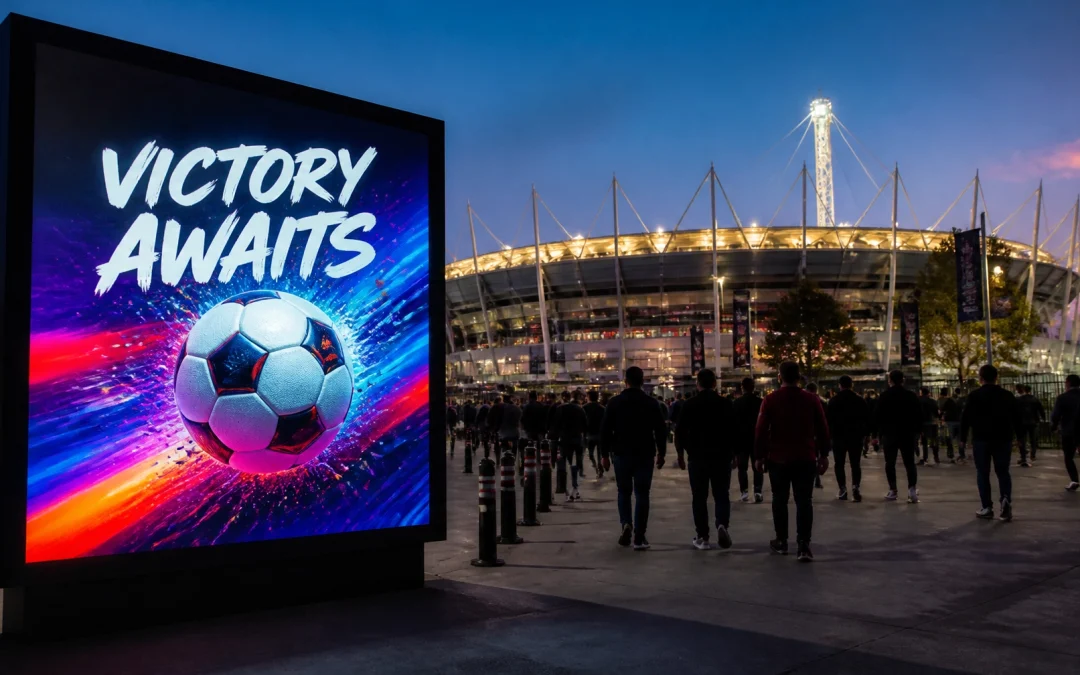
The knockout stages of a global soccer tournament represent the pinnacle of emotional engagement in sports. For brands, these high-stakes matches offer a concentrated window of fan attention that generic national advertising often fails to fully capture. Success in these moments requires more than a broad media buy. It demands a hyper-local, 10-mile stadium perimeter strategy that aligns with fan movement and intensity.
As fans converge on host cities and stadiums, their behavior follows a predictable pattern of movement, celebration, and second-screen consumption. Digital Out of Home (DOOH) advertising, when integrated into a 10-mile radius of the venue, transforms from a passive medium into a dynamic touchpoint that follows the fan journey from the transit hub to the stadium gate.
The Strategy: Dominating the 10-Mile Perimeter
The 10-mile radius around a stadium is a high-value fan movement zone. This area encompasses the stadium itself, official fan zones, transportation hubs, and local sports bars where the atmosphere is most electric.
Objective & Strategy
The primary objective of a perimeter strategy is to maintain brand presence where fans are most likely to make immediate purchasing decisions or form lasting brand associations. By focusing on a 10-mile radius, a campaign can achieve high frequency among a premium, captive audience.
- Geo-Fencing Fan Hubs: Digital screens at rail stations, bus stops, and high-traffic intersections within the radius ensure the brand is the first and last thing fans see.
- Contextual Relevance: Creative assets should reflect the specific tension and excitement of the knockout rounds, moving away from generic messaging to match-specific or city-specific content.
- Programmatic Flexibility: Using programmatic DOOH allows for real-time adjustments based on match outcomes, weather, or crowd density.

Execution: The Three-Phase Matchday Blueprint
A successful stadium perimeter campaign is structured around the lifecycle of the match. Each phase requires a distinct tactical approach to creative and media pacing.
1. Pre-Match: Building Anticipation
In the hours leading up to kickoff, fans are in a state of high anticipation. Research indicates that the 60 to 90 minutes before a match are peak times for fans seeking lineups and previews.
- Tactics: Deploy "countdown" creative on roadside billboards and transit screens.
- Messaging: Focus on "getting ready" or "last chance" offers for food, beverage, or apparel.
- Impact: Builds brand awareness at the exact moment fans are moving toward the stadium.
2. The Live Window: Real-Time Engagement
During the match and at halftime, the focus shifts to the immediate vicinity of the stadium and fan zones.
- Tactics: Utilize concourse screens and large-format digital boards near the venue.
- Messaging: Adapt creative to reflect halftime scores or major match events.
- Second-Screen Alignment: Coordinate DOOH with mobile display ads. Fans frequently check their phones during breaks in play, making this an ideal time for cross-channel reinforcement.
3. Post-Match: Harvesting Momentum
The emotional aftermath of a knockout match, whether a win or a loss, is a prime opportunity for brand connection.
- Tactics: Retarget fans for up to 30 days after they leave the 10-mile perimeter.
- Messaging: Transition from matchday excitement to conversion-focused offers.
- Technology: Use device ID capture to identify audiences exposed to perimeter DOOH and follow up with tailored mobile or CTV (Connected TV) advertisements.

Technology Partners and Integration
Executing a 10-mile stadium strategy requires specialized platforms that can handle the complexities of sports marketing. OOH Sports provides the infrastructure to access Sportrons and other digital video advertising boards across the national sports network.
By leveraging advanced marketing tools, media planners can sync DOOH buys with live sports data. This ensures that creative remains relevant even if a match goes into extra time or a penalty shootout. The integration of mobile retargeting ensures that the physical reach of a billboard is extended into a digital conversion funnel.
Measuring Results: Data-Driven Success
Success in sports OOH is no longer measured solely by estimated impressions. Modern attribution models provide clear insights into how a 10-mile perimeter strategy impacts the bottom line.
Key Performance Indicators
- Footfall Uplift: Brands typically see a significant increase in store visits within the host city when DOOH is paired with geo-fenced mobile targeting.
- Brand Lift Studies: Post-campaign surveys often show a notable rise in brand preference among fans exposed to stadium-adjacent advertising versus those who only saw national television spots.
- Conversion Metrics: Tracking app installs, sign-ups, or orders from audiences identified within the 10-mile radius provides a direct link between the physical ad and digital action.
In previous high-impact sports campaigns, data has shown that match-specific creative can lead to a 20% to 30% increase in engagement compared to generic creative. By focusing on the 10-mile radius, brands can effectively "own" the host city environment.

Creative Strategy and Legal Compliance
During global tournaments, brands must navigate strict legal guidelines regarding the use of official logos and trademarks. A professional strategy focuses on "the culture of the fan" rather than official tournament marks.
- Avoid Official Marks: Use generic football imagery, team colors, and city pride to build association without infringing on protected IP.
- Focus on the Moment: Creative should lean into the universal emotions of knockout soccer: tension, pride, and celebration.
- Localization: Tailor messaging to the specific host city. A brand that feels like a local part of the matchday experience often outperforms a detached national campaign.
Conclusion
The knockout stages of major tournaments are rare moments of absolute cultural focus. For Chief Marketing Officers and Creative Directors, the 10-mile stadium strategy represents a precise, data-driven method for capturing that focus. By combining the physical scale of DOOH with the precision of geo-fencing and the longevity of retargeting, brands can ensure their message isn't just seen: it’s remembered long after the final whistle.
For more information on planning your next stadium-based campaign, explore our case studies or contact us to learn about our digital out-of-home sports network.