
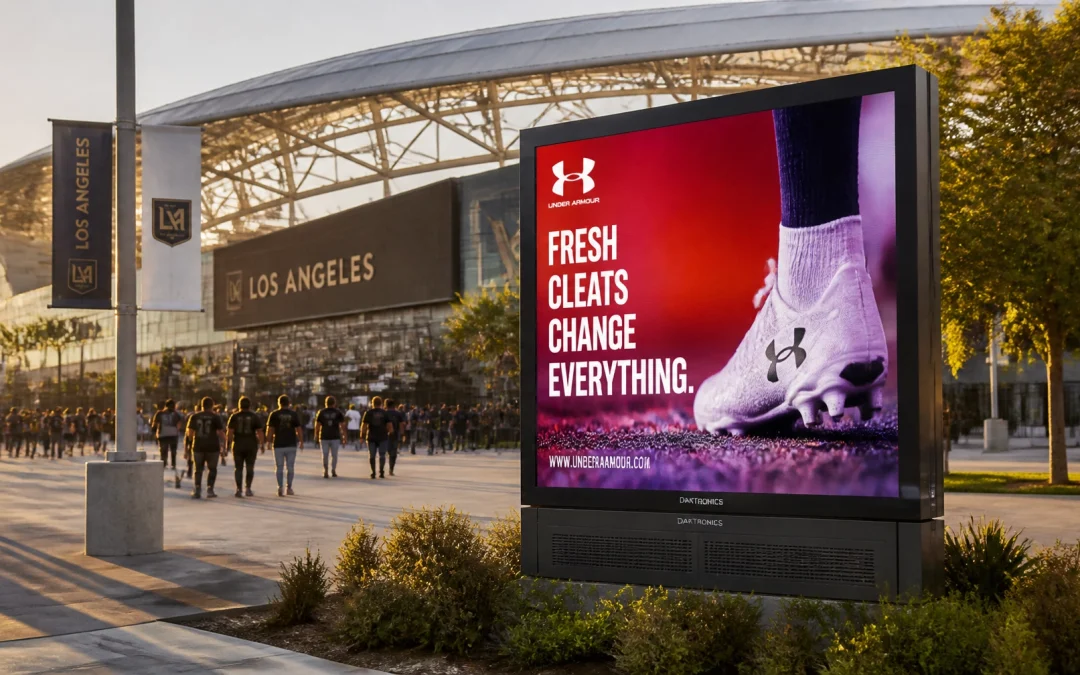
The landscape of sports marketing is undergoing a significant transformation. Traditional static billboards are being replaced by a sophisticated network of digital screens that offer real-time engagement and measurable impact. For media buyers and brand managers, the rise of Digital Out of Home (DOOH) advertising around sports venues represents a strategic opportunity to reach a highly engaged audience at the peak of their emotional involvement. This guide explores the innovations driving this sector and the tactics required to execute a successful sports DOOH campaign.
Objective and Strategy: The 10-Mile Radius Approach
The core of a modern sports DOOH strategy is precision. Unlike broad citywide placements, a targeted sports network focuses on the perimeter of sports venues. A radius of up to 10 miles around a stadium or arena is the critical zone for fan engagement. This area encompasses transit hubs, sports bars, retail centers, and high-traffic pedestrian routes that fans frequent before and after a game.
By concentrating impressions within this specific geography, brands can create a sense of omnipresence. The goal is to move beyond simple brand awareness and toward a full-funnel marketing approach. This strategy leverages the high recall associated with sporting events. Research from the OAAA and The Harris Poll indicates that nearly 60 percent of adults recall seeing an OOH ad for a major sporting event. Furthermore, 90 percent of those individuals took action, such as watching the game, discussing it, or visiting a brand website.
Technology Partners and Programmatic Execution
Innovation in sports DOOH is fueled by programmatic technology. The shift from manual insertion orders to automated buying allows for greater flexibility and scale. Media planners now use Demand-Side Platforms (DSPs) to activate sports-relevant screens with the same precision used in display or Connected TV (CTV) advertising.
Seamless DSP Integration
Integrating DOOH into an omnichannel plan is now a standard practice. Platforms like StackAdapt provide the infrastructure to buy and optimize DOOH inventory in real time. This allows for:
- Flexible Flighting: Adjusting spend based on playoff schedules or game days.
- Real-Time Optimization: Reallocating budget to the highest-performing screens based on foot traffic and exposure data.
- Unified Reporting: Analyzing DOOH performance alongside other digital channels to understand the total campaign impact.

Innovative Tactics: Triggers and AI
The most significant advancement in sports DOOH is the move toward dynamic content. Static imagery is being replaced by Dynamic Creative Optimization (DCO), which uses data signals to change the message on the fly.
Dynamic Content Triggers
Dynamic triggers allow a brand to stay relevant to the unfolding action. For example, a campaign can be programmed to display specific creative based on the following:
- Real-Time Scores: Updating the billboard with the current score of a local rivalry.
- Game Outcome: Displaying a celebratory message immediately following a home team victory.
- Weather Conditions: Promoting cold beverages on a hot game day or warm apparel during a winter matchup.
- Time of Day: Shifting from pre-game "hype" content to post-game "celebration" or "commute" messaging.
AI-Driven Targeting
Artificial Intelligence is increasingly used to analyze complex datasets, including historical foot traffic patterns and fan behavioral data. This ensures that advertisements are shown at the exact moment when fan density and intent are highest. By using these data points, the OOH Sports Network can maximize the efficiency of every impression delivered.

Measurable Results: Case Studies in Impact
The success of DOOH is no longer anecdotal. The use of brand lift studies and mobile location data allows for precise measurement of campaign effectiveness. Several recent campaigns demonstrate the power of this medium.
White Claw Vodka Launch
When White Claw launched its vodka line, the brand utilized a programmatic DOOH strategy to drive purchase consideration. By targeting high-traffic areas and sports-adjacent locations, the campaign achieved a 74 percent lift in purchase consideration. This success is detailed in the White Claw case study.
Mike's Hard Iced Tea
AB InBev’s Mike's Hard Iced Tea saw similar success by focusing on brand image. A programmatic DOOH campaign resulted in a 119 percent lift in positive brand image. This was achieved by delivering consistent, high-impact creative to fans in key market segments. The full results are available in the Mike's Hard case study.
Sea-Doo Brand Awareness
In its first foray into digital out of home, Sea-Doo focused on increasing purchase consideration. The campaign was highly effective, yielding a 144 percent increase in purchase consideration among the target audience. The execution of this strategy is documented in the Sea-Doo case study.
The Fan Journey and Cross-Device Integration
A successful sports DOOH campaign does not exist in a vacuum. It serves as a physical anchor for a broader omnichannel experience. The fan journey begins long before they enter the stadium and continues well after the final whistle.
Mobile Retargeting
One of the most effective ways to drive conversion is by retargeting devices that have been exposed to a DOOH ad. By capturing anonymized device IDs within the 10-mile radius, brands can serve follow-up advertisements on mobile devices and social media. This reinforces the message and provides a direct path to purchase or website visitation. Studies have shown that integrated DOOH and mobile campaigns can increase store visitation by as much as 127 percent.
Social Media Amplification
Sports fans are naturally inclined to share their experiences on social media. High-impact DOOH creative in a stadium environment often becomes a backdrop for fan photos and videos. This provides organic reach that extends far beyond the physical location of the screen. Brands that create "Instagrammable" moments on their digital boards benefit from this viral amplification.

Strategy for Maximum Engagement
To achieve the best results in the OOH Sports ecosystem, media planners should adhere to several key principles:
- Focus on Proximity: Prioritize screens within a 10-mile radius of the venue to capture fans during their travel and pre-game rituals.
- Utilize Dynamic Creative: Move beyond static files and use data-driven triggers to keep content relevant to the game.
- Implement Mobile Retargeting: Ensure that the campaign has a digital follow-up to move fans down the sales funnel.
- Analyze Performance Data: Use brand lift studies and attribution modeling to measure the actual impact on purchase intent and brand sentiment.
- Coordinate with Other Channels: Align DOOH creative with TV, social, and search efforts for a unified brand voice.
Future Outlook for Sports DOOH
The future of sports DOOH involves even deeper integration with technology. As 5G connectivity becomes more prevalent, the ability to deliver ultra-high-definition, low-latency video to every screen will increase. Furthermore, the use of augmented reality (AR) in conjunction with DOOH screens will offer fans interactive experiences that blend the physical and digital worlds.
The growth of the industry is undeniable. Projections indicate that sports advertising in the DOOH sector will continue to expand as more brands recognize the value of reaching fans in a captive, high-emotion environment. By leveraging programmatic buying, dynamic creative, and precise geographic targeting, advertisers can ensure their message is not only seen but acted upon.
Sports marketing is no longer just about the game on the field. It is about the entire ecosystem surrounding the event. For brand managers looking to make a lasting impression, innovation in DOOH provides the tools to become a permanent part of the fan's journey.