
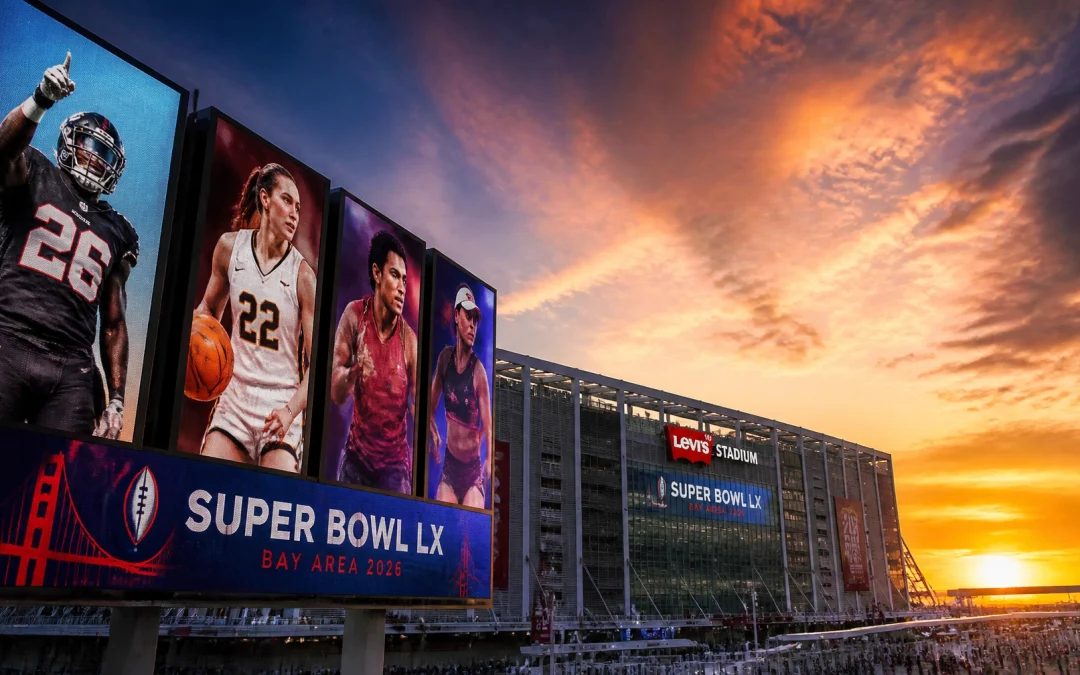
Super Bowl 2026 is set to transform the San Francisco Bay Area into the epicentre of the sports marketing world. As Levi’s Stadium in Santa Clara prepares to host Super Bowl LX on February 8, 2026, media buyers and brand managers are looking for innovative ways to cut through the noise. The traditional advertising playbook is being rewritten by the Name, Image, and Likeness (NIL) revolution. This guide explores how to leverage a network of over 20,000 authentic student-athlete voices combined with precision digital out-of-home (DOOH) targeting to dominate the big game weekend.
Objective and Strategy
The primary objective for any brand during the Super Bowl is to capture the attention of a highly engaged, transient audience. With millions of fans descending upon Santa Clara and San Francisco, the challenge lies in localizing national reach. The strategy involves a two-pronged approach: digital influence through NIL athletes and physical presence via a 10-mile stadium perimeter DOOH network.
By connecting with 20,000 student-athletes, brands can generate a groundswell of authentic content. These athletes act as "creator-athletes," producing relatable, high-engagement content on TikTok, Instagram, and Reels. This digital layer is then amplified by OOH Sports' physical network, which places brand messaging on screens in sports bars, gyms, office buildings, and quick-service restaurants (QSRs) within a 10-mile radius of Levi’s Stadium.
The NIL Advantage: Authentic Student Voices
Traditional celebrity endorsements often lack the raw authenticity that Gen Z and Millennial audiences crave. Student-athletes, however, possess a deep, localized connection with their followers. In the context of Super Bowl 2026, leveraging West Coast and Bay Area college athletes provides an immediate regional tie-in.
The OOH Sports NIL platform allows media planners to access a massive pool of 20,000 voices simultaneously. This scale is unprecedented. Instead of relying on a single pro-athlete whose impact might be diluted, a brand can deploy a fleet of student-athletes to share game-day rituals, watch-party setups, and behind-the-scenes content. This creates a surround-sound effect where the brand is seen as a natural part of the fan experience.

Precision Targeting Around Levi’s Stadium
Geography is the most critical variable during Super Bowl week. The OOH Sports network operates on a precise geo-fencing model. By focusing on a 10-mile perimeter around Levi’s Stadium, advertising spend is concentrated where the highest density of fans, influencers, and decision-makers are located.
Strategic Location Categories
- Sports Bars and Casual Dining: Capturing fans during pre-game and post-game celebrations.
- Gyms and Fitness Centers: Reaching active consumers in their daily routines.
- Transportation and Highway Signs: Ensuring visibility during the commute to and from the stadium.
- Urban Panels and QSRs: Maintaining brand presence in high-traffic city centers like downtown San Jose and San Francisco.
Technology Partners and Execution
The execution of a Super Bowl NIL and DOOH campaign relies on sophisticated programmatic technology. Campaigns can be scheduled to run exclusively on game days or throughout the entire Super Bowl week. A key feature of the OOH Sports platform is the ability to adjust campaigns in real-time. For example, if there are weather-related shifts, outdoor campaigns can be paused or modified to protect the investment.
The integration of video is essential for modern storytelling. Brands are encouraged to use high-impact video creative that mirrors the content produced by NIL athletes. This creates a cohesive omnichannel experience for the consumer.
https://www.youtube.com/watch?v=l6J-0zileKE
Logistics of an NIL-Driven Campaign
Launching a campaign of this magnitude involves several logical steps to ensure compliance and impact:
- Athlete Selection: Identify athletes within the 20,000-person network who align with the brand's identity and geographical goals.
- Content Briefing: Provide clear, creative guidelines that encourage authenticity while maintaining brand standards.
- DOOH Synchronization: Align the digital content drops with the programmatic DOOH schedule in the 10-mile stadium zone.
- Compliance Review: Ensure all deals satisfy school NIL policies, state laws, and NCAA regulations.
- Real-Time Monitoring: Use the OOH Sports dashboard to track impressions and engagement as the event unfolds.

Measurable Results and Impact
The success of a Super Bowl NIL campaign is measured through both digital engagement and physical attribution. Past data from OOH Sports indicates that brands utilizing proximity-based DOOH near major sporting events see an average ROI increase of 25%.
Key Metrics to Track
- Brand Lift Studies: Measuring the increase in brand awareness and preference among fans in the target zone.
- Social Engagement Rates: Quantifying the likes, shares, and comments generated by the 20,000 student-athletes.
- Foot Traffic Attribution: Using device ID data to track fans who were exposed to a DOOH ad and subsequently visited a retail location or a sponsored event.
- CPM Efficiency: Comparing the cost-per-thousand impressions of the DOOH network against traditional Super Bowl TV spots, which often come with a much higher barrier to entry.
Why 2026 is Different
Super Bowl 2026 will be the first time the NIL market has reached full maturity. With platforms now capable of managing thousands of athlete contracts simultaneously, the scale is no longer a logistical nightmare. Media buyers can now treat NIL as a scalable media buy, similar to programmatic display or social ads, rather than a series of individual talent negotiations.
Furthermore, the Bay Area's tech-forward population makes it the perfect testing ground for interactive DOOH. Using QR codes on billboards to trigger NIL content or exclusive mobile offers is expected to be a standard tactic for the 2026 event.

Summary of Strategic Choices
The path to success at Super Bowl 2026 requires a departure from "business as usual." The most successful campaigns will be those that:
- Prioritize Authenticity: Use student-athletes to tell a story rather than just post an ad.
- Master Proximity: Own the 10-mile radius around the stadium to capture the captive audience.
- Embrace Flexibility: Utilize programmatic DOOH to adjust spend based on real-time event triggers.
- Leverage Scale: Activate hundreds or thousands of voices to create a dominant market presence.
OOH Sports provides the infrastructure to bridge the gap between the digital influence of NIL and the physical power of out-of-home advertising. As the clock ticks toward February 2026, the window for strategic planning is open.
For more information on building a digital out-of-home sports network or accessing the NIL platform, visit OOH Sports. To schedule a consultation regarding your Super Bowl 2026 strategy, contact the team at +1 (970) 703-0102.
Dan Kost, CEO
www.oohsports.com
AI Receptionist: +1 (970) 578-4652
#Motivation #Branding #Strategy #Marketing #AdvertisingAndMarketing #digitalmarketing #Innovation #Sports