
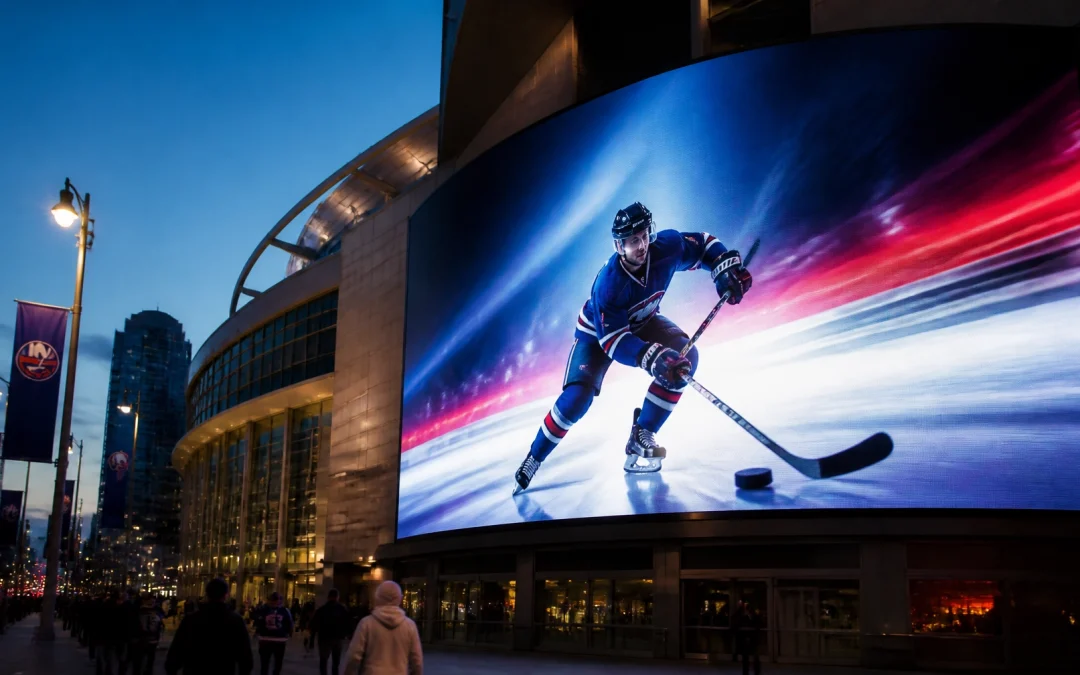
The landscape of sports marketing is undergoing a significant shift as digital out-of-home (DOOH) technology matures into a precision-based performance channel. Media buyers and brand managers are no longer limited to static billboards or broad reach plays. Instead, the focus has moved toward highly targeted, data-driven activations that bridge the gap between physical fan experiences and digital conversion.
Innovation in sports DOOH is defined by the ability to reach fans at high-intent moments, such as the journey to the stadium or the celebration following a victory. By leveraging programmatic platforms and advanced attribution models, brands can now deliver messages that are contextually relevant and measurable.
This post outlines five distinct tactical plays that leverage the OOH Sports network to drive quantifiable outcomes for sports-focused campaigns.
Tactic 1: Perimeter-Based Ecosystem Dominance
The most direct way to engage a sports audience is to dominate the physical environment surrounding the event. A perimeter-based strategy involves saturating digital inventory within a specific radius of a stadium or arena, typically up to 10 miles. This approach ensures that a brand is present throughout the fan's immediate ecosystem.
Objective & Strategy
The primary objective is to achieve maximum frequency and mental availability during the peak hours of an event. By securing all available digital video advertising boards within the perimeter, a brand becomes the unofficial sponsor of the fan's journey. This strategy is particularly effective for brands in the beverage, snacks, or sports betting categories, where immediate purchase intent is high.
Technology & Execution
Execution relies on geographic fencing and programmatic triggers. When a stadium hosts an event, the OOH Sports network activates screens in transit hubs, gas stations, sports bars, and street-level kiosks. This creates a cohesive brand blanket that follows the fan from the parking lot to the concourse.
Results
A perimeter-based approach often results in significant lifts in brand recall. For instance, campaigns focusing on high-density stadium environments have shown the ability to increase positive brand perception by significant margins. Brands utilizing this tactic often see a more direct correlation between screen exposure and localized sales lift at nearby retail points.

Tactic 2: Contextual Journey-Based Targeting
Fans do not exist solely within the stadium gates. Their journey begins hours before kickoff and continues long after the final whistle. A journey-based tactic targets the specific paths fans take, reaching them in diverse environments like gyms, residential elevators, and transit stations.
Objective & Strategy
The goal is to integrate the brand into the daily routine of the sports fan. By identifying key points of interest such as sports bars and transit routes, media planners can ensure messaging is seen during different phases of the day. This turns a one-time event into a multi-touchpoint brand experience.
Technology & Execution
Programmatic DOOH (prDOOH) allows for the selection of screens based on real-world movement data. Media buyers can prioritize screens in neighborhoods with high concentrations of sports enthusiasts or on transit lines leading directly to major sporting complexes. According to the OOH Sports network expansion, access to over 25,000 digital screens nationwide provides the scale necessary for this level of detailed targeting.
Results
Data indicates that following the fan journey leads to higher levels of engagement. Research has shown that nearly 90% of adults who see an OOH ad for a major sporting event take a secondary action, such as discussing the brand or searching for more information.
Tactic 3: Dynamic Creative and Real-Time Optimization
Static creative is often overlooked in fast-paced sports environments. Dynamic DOOH allows brands to update their messaging in real-time based on live data feeds, such as scores, weather, or betting odds.
Objective & Strategy
The objective is to maximize relevance. A message that references a live score or a specific game moment is significantly more likely to capture attention than a generic brand advertisement. This tactic aligns the brand with the emotional highs and lows of the game.
Technology & Execution
Dynamic Creative Optimization (DCO) technology links digital screens to live data APIs. This allows for automated messaging changes. If a team wins, the creative can instantly switch to a celebratory "congratulations" message with a specific promotional code. This level of automation is a core component of AI and programmatic trends currently revolutionizing the industry.
Results
Dynamic creative has a profound impact on awareness. Statistics suggest that dynamic DOOH can drive a 52% increase in brand awareness compared to static executions. By staying relevant to the current match status, brands maintain a "live" presence that resonates with the urgency of sports.

Tactic 4: Cross-Channel Synergy and Retargeting
DOOH serves as a powerful catalyst for omnichannel campaigns. By capturing the anonymous device IDs of fans exposed to a digital billboard, brands can retarget those same individuals on their mobile devices or through social media.
Objective & Strategy
The objective is to close the loop between the physical world and the digital world. Retargeting ensures that the brand remains top-of-mind even after the fan has left the vicinity of the screen. This tactic is essential for driving lower-funnel actions like app downloads or website visits.
Technology & Execution
Using privacy-compliant location data, media buyers identify devices that were within the viewing cone of a DOOH screen. These device IDs are then used to serve coordinated ads across social platforms. This synergy is particularly effective for product launches. For example, White Claw used programmatic DOOH to drive a 74% lift in purchase consideration by integrating DOOH with broader digital efforts.
Results
Omnichannel integration significantly improves ROI. When DOOH is paired with mobile retargeting, the conversion rate often exceeds that of single-channel campaigns. Fans who see a message both on a large-format screen and on their personal device are more likely to perceive the brand as a dominant player in the space.

Tactic 5: Data-Driven Attribution and Measurement
The final tactic is the implementation of robust measurement frameworks. Modern sports DOOH allows for the tracking of foot traffic, brand lift, and even direct sales increases.
Objective & Strategy
The goal is to move beyond "estimated impressions" and provide concrete evidence of campaign success. Media buyers need to prove that their OOH investment resulted in real-world actions, such as visits to a retail partner or a lift in purchase intent.
Technology & Execution
Measurement is conducted through a combination of foot traffic analysis and brand lift studies. By comparing an "exposed" group of fans (those who passed the screens) with a "control" group, analysts can calculate the incremental lift caused by the campaign. For example, Ab InBev’s Mike’s Hard Iced Tea saw a 119% lift in positive brand image through a targeted programmatic DOOH campaign.
Results
Attribution studies provide the transparency required for modern marketing budgets. Whether it is a 144% increase in purchase consideration, as seen in Sea-Doo’s first DOOH campaign, or a direct increase in foot traffic to a sports bar, the results are quantifiable.

Strategy and Success in Sports DOOH
The evolution of digital out-of-home advertising has provided media buyers with a sophisticated toolkit for sports marketing. By utilizing perimeter dominance, journey-based targeting, dynamic creative, omnichannel retargeting, and precise measurement, brands can engage fans in ways that were previously impossible.
The OOH Sports network provides the infrastructure to execute these tactics at scale, ensuring that every campaign is both impactful and measurable. As the industry continues to integrate real-time data and advanced attribution, sports DOOH will remain a cornerstone of successful brand strategies.