
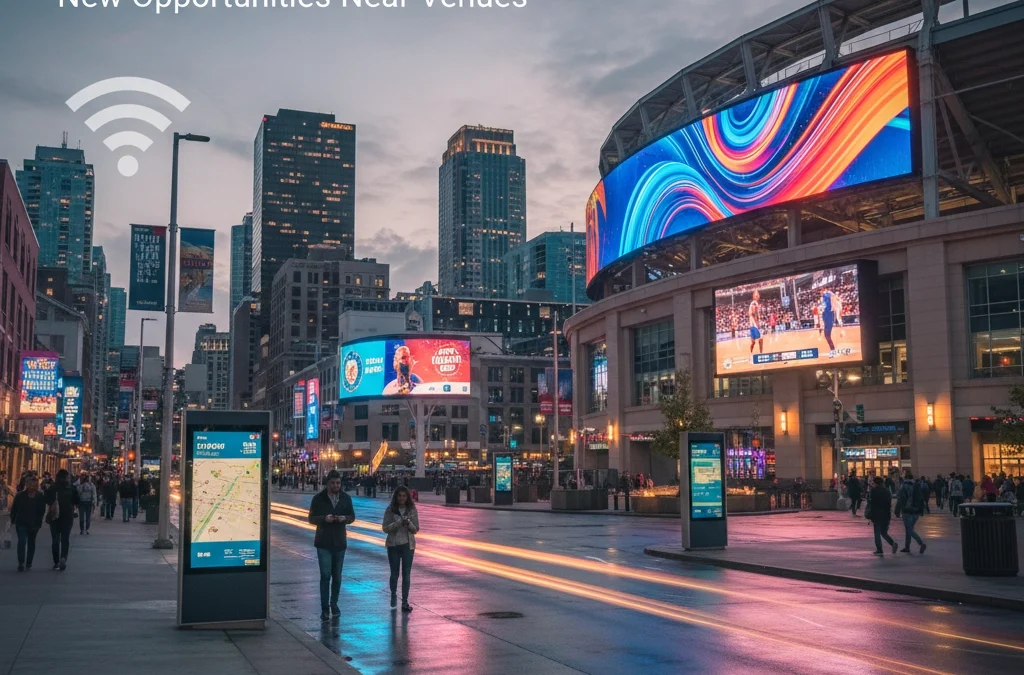
Sports venues represent just the starting point for digital out-of-home advertising opportunities. The real value lies in the ecosystem surrounding these destinations, where engaged audiences spend significant time before, during, and after events. Brands that expand their focus beyond stadium walls discover a rich inventory of digital screens positioned strategically throughout fan journey touchpoints.
Strategic Location Categories Near Venues
Transportation Corridors and Transit Hubs
Transit areas surrounding major venues offer substantial advertising inventory with captive audiences. Digital screens in subway stations, bus terminals, and rideshare pickup zones capture fans during peak travel times. These placements benefit from extended dwell times as audiences wait for transportation, creating opportunities for deeper message engagement.
Taxi and rideshare vehicle displays provide mobile inventory that moves with fan traffic patterns. This dynamic placement strategy ensures continuous exposure as vehicles navigate between residential areas, entertainment districts, and venue locations. The mobility factor extends campaign reach beyond fixed geographic boundaries.
Hospitality and Entertainment Districts
Bars and restaurants within venue proximity zones represent prime digital advertising real estate. These establishments experience concentrated fan traffic during pre-game warm-ups, halftime periods, and post-game celebrations. Digital screens in these locations benefit from heightened audience attention during moments of peak excitement and social engagement.

Entertainment districts surrounding major venues contain dense concentrations of digital inventory across multiple venue types. Restaurants, bars, retail locations, and entertainment venues each contribute screens to the available inventory pool. This diversity enables advertisers to maintain consistent messaging across varied environments while reaching fans throughout their extended venue experience.
Community Gathering Spaces
Neighborhood viewing parties and community spaces provide additional touchpoints for reaching sports audiences. Fan festivals, outdoor viewing areas, and community centers equipped with digital displays extend campaign reach to audiences who may not attend events in person but remain highly engaged with team content and related messaging.
These community-focused placements often generate strong local resonance, particularly when campaigns incorporate team-specific messaging or celebrate local sports culture. The community context enhances message authenticity and can drive stronger emotional connections with advertised brands.
Technology-Driven Targeting Strategies
Geo-Fencing Implementation
Advanced geo-fencing technology enables precise targeting of digital screens within defined proximity zones around venues. Campaign managers can establish multiple concentric zones with varying radius distances, allowing for customized messaging based on audience proximity to the venue. This approach ensures relevant content delivery while optimizing budget allocation across different distance-based audience segments.
Geo-fencing systems can trigger dynamic content changes based on real-time audience movement patterns. Screens closer to venues might display event-specific messaging, while displays in outer zones focus on broader brand awareness objectives. This graduated approach maximizes relevance while maintaining campaign cohesion.
Real-Time Content Optimization
Digital screens near venues benefit from real-time content management capabilities that respond to game developments, weather conditions, and crowd dynamics. Advertisers can deploy dynamic creative optimization to adjust messaging based on current events, team performance, or local conditions affecting fan behavior.

Weather-responsive content represents a particularly effective strategy for near-venue placements. Campaigns can automatically switch to indoor venue promotions during inclement weather or highlight outdoor activities during favorable conditions. This responsive approach demonstrates brand awareness of local conditions while providing relevant value to audiences.
Measurement and Scale Analysis
Inventory Volume and Distribution
Major metropolitan areas contain substantial digital screen inventory concentrated near sports and entertainment venues. Analysis of inventory distribution reveals thousands of digital screens across venue-adjacent locations, delivering billions of available impressions throughout event seasons.
Transit screens typically represent the largest inventory category, with subway stations, bus stops, and transportation hubs contributing significant impression volume. Entertainment venue screens follow as the second-largest category, encompassing bars, restaurants, and nightlife establishments. Retail and community spaces provide additional inventory depth across diverse location types.
Audience Engagement Metrics
Near-venue digital placements demonstrate measurably higher engagement rates compared to standard outdoor advertising locations. The heightened emotional state of sports audiences, combined with extended dwell times in entertainment environments, creates favorable conditions for message retention and brand recall.
Studies indicate that DOOH campaigns targeting venue-adjacent locations achieve brand lift measurements 15-25% higher than campaigns using traditional outdoor placements. This performance differential stems from the emotional intensity associated with sports experiences and the extended time audiences spend in venue proximity areas.
Campaign Integration Strategies
Omnichannel Coordination
Effective near-venue DOOH campaigns integrate seamlessly with broader omnichannel marketing strategies. Brands can introduce messaging through connected TV or social media channels, reinforce key messages through high-impact digital screens during peak venue activity, and complete the cycle through retargeting across mobile and digital audio platforms post-event.
Sequential messaging strategies prove particularly effective in venue-adjacent environments. Campaigns can build anticipation through early touchpoints, deliver peak-moment activation during event periods, and extend engagement through post-event follow-up messaging. This approach maximizes the emotional journey associated with sports experiences.
Dynamic Creative Sequencing
Near-venue digital screens enable sophisticated creative sequencing that adapts to fan journey stages. Morning commuter screens might feature anticipation-building creative, while afternoon placements shift to game-specific messaging. Post-event screens can celebrate victories or provide comfort messaging following defeats, demonstrating brand awareness of fan emotional states.

This dynamic approach requires robust creative asset libraries and automated content management systems. Successful campaigns develop multiple creative variations for different time periods, audience emotions, and situational contexts. The investment in creative diversity typically yields significant improvements in campaign effectiveness and audience connection.
Targeting Precision and Budget Efficiency
Cost-Per-Impression Optimization
Near-venue digital placements often deliver superior cost-per-impression ratios compared to in-venue advertising options. While venue-specific placements command premium pricing due to limited inventory, surrounding area screens provide comparable audience quality at reduced cost points.
Budget allocation strategies can leverage this cost differential by concentrating higher volumes in near-venue locations while maintaining presence in premium venue-specific placements. This approach maximizes total impression delivery while maintaining access to the most engaged audience segments.
Audience Quality Considerations
Despite lower individual screen costs, near-venue audiences maintain high engagement levels due to their proximity to sports and entertainment experiences. These audiences demonstrate elevated attention levels, emotional investment, and purchase consideration rates compared to general outdoor advertising audiences.
The combination of lower cost and maintained quality creates favorable return-on-investment scenarios for brands willing to expand beyond traditional venue-specific placements. Campaign performance data consistently demonstrates that near-venue strategies achieve comparable or superior results at reduced overall investment levels.
Near-venue DOOH represents a strategic evolution in sports marketing, extending brand presence throughout the complete fan experience while optimizing budget efficiency. As digital inventory continues expanding around major venues, opportunities for sophisticated targeting and engagement will continue growing, making this approach essential for comprehensive sports marketing strategies.