

Sports venue marketing represents a $50+ billion opportunity, yet most campaigns fail to capture their full potential. According to industry research, 73% of sports marketing campaigns underperform due to fundamental targeting errors that stadium perimeter data can easily fix.
Dan Kost, CEO of OOH Sports, explains: "The biggest mistake marketers make is treating sports venues like traditional advertising spaces. Stadium environments require precision targeting that responds to real-time fan behavior and movement patterns."
Mistake #1: Generic Geographic Boundaries
Most campaigns rely on broad geographic targeting that treats all areas around a stadium equally. This approach misses critical audience segments and wastes budget on irrelevant impressions.
The Problem: Traditional geofencing creates large, imprecise boundaries that capture random foot traffic rather than engaged sports fans. Campaigns targeting "within 5 miles of the stadium" reach commuters, local residents, and non-sports audiences who have minimal conversion potential.
The Stadium Perimeter Data Solution: Advanced stadium perimeter targeting creates precise micro-zones based on actual fan movement patterns. This technology maps high-traffic areas like parking lots, concession routes, and entrance queues to deliver targeted messages to verified sports attendees.

Implementation Strategy:
- Define micro-geofences around stadium entrances, concession stands, and parking areas
- Layer demographic data to identify high-value fan segments within each zone
- Create time-based targeting that activates before, during, and after games
- Use Wi-Fi and beacon data to track actual attendance patterns
Mistake #2: Ignoring Critical Game Moments
Campaign timing disconnected from game events results in irrelevant messaging that fans ignore during peak engagement moments.
The Problem: Static campaign schedules fail to capitalize on emotional high points like scoring plays, halftime shows, or championship moments when fan engagement peaks. Research shows fan purchase intent increases 300% during these critical moments.
The Stadium Perimeter Data Solution: Real-time event integration allows campaigns to trigger personalized offers based on live game data. When a team scores, geofenced fans receive instant promotions. During halftime, concession-specific offers activate for fans near food vendors.
Dynamic Moment Triggers:
- Scoring events trigger celebration-themed promotions
- Halftime activates concession and merchandise offers
- Post-game moments drive traffic to nearby restaurants and bars
- Weather conditions adjust outdoor vendor messaging
Mistake #3: Poor Audience-Event Alignment
Campaigns fail when brand messaging doesn't match the specific sporting event demographics and fan psychographics.
The Problem: Generic sports marketing assumes all sports fans share identical interests and behaviors. A luxury car campaign at a college football game targets completely different demographics than the same campaign at a professional golf tournament.
The Stadium Perimeter Data Solution: Historical venue data reveals detailed fan profiles for each event type, enabling precise audience matching and message customization.

Audience Segmentation Framework:
- Professional vs. college sports fan behavior analysis
- Income level targeting based on ticket pricing and concession spending
- Age demographic mapping through device data and purchase history
- Brand affinity scoring through historical engagement patterns
Mistake #4: Inadequate Permission Management
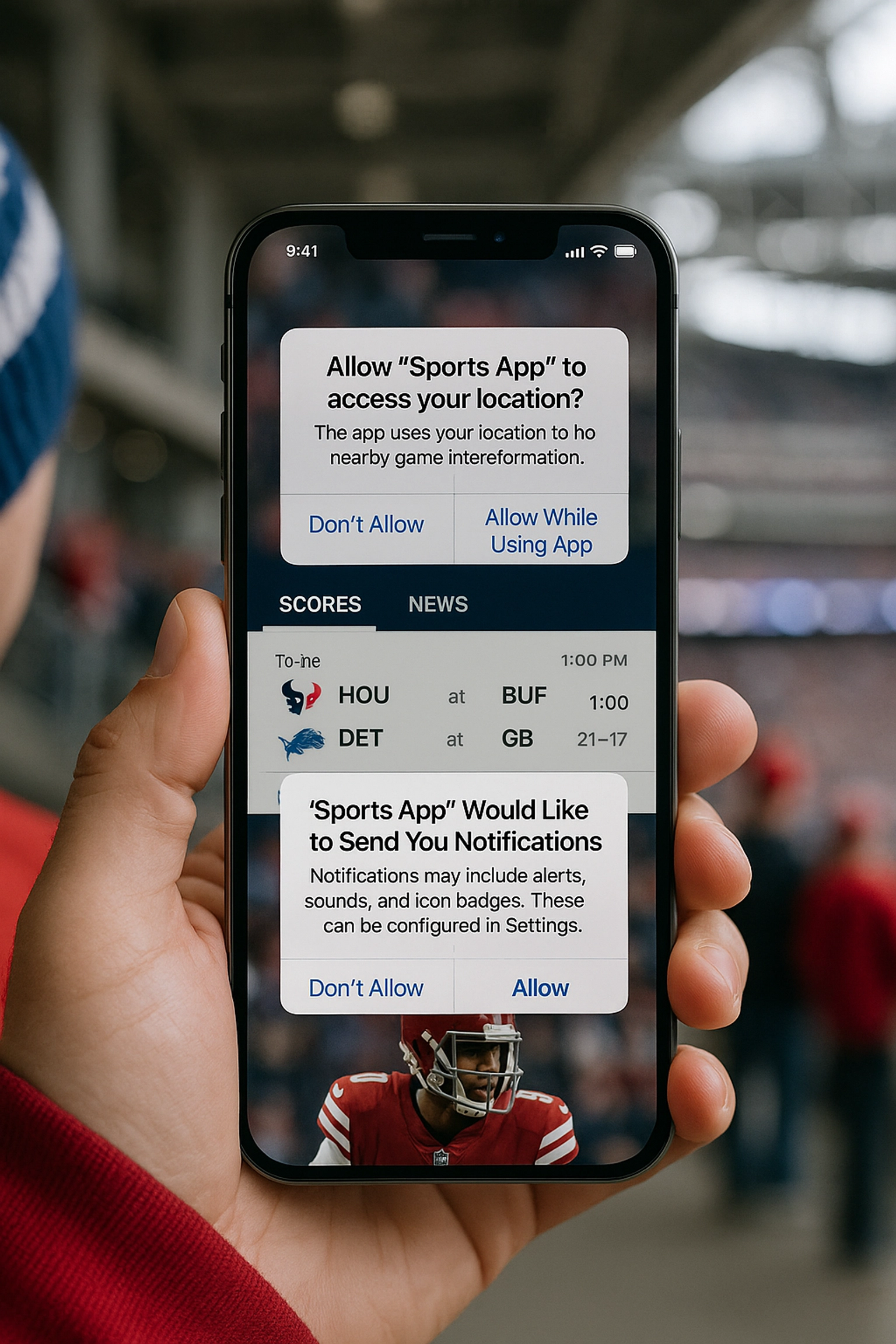
Location-based campaigns fail when users haven't opted into notifications or disabled location services, creating fundamental reach barriers.
The Problem: Up to 60% of potential audiences cannot receive location-triggered messages due to permission settings. Campaigns proceed without addressing this critical barrier, resulting in dramatically reduced reach and effectiveness.
The Stadium Perimeter Data Solution: Multi-channel permission acquisition strategies maximize audience opt-in rates through value-exchange propositions and seamless onboarding processes.
Permission Optimization Tactics:
- Pre-game email campaigns encouraging location service activation
- In-venue Wi-Fi access requiring notification permissions
- Value-driven opt-in messaging highlighting exclusive fan benefits
- Progressive permission requests during natural interaction points
Mistake #5: Static Campaign Distribution
Fixed messaging schedules ignore real-time fan movement and behavioral changes throughout game experiences.
The Problem: Campaigns deliver identical messages regardless of fan location within the venue or game progression. Fans near concession stands receive parking promotions while fans in parking lots see food offers, creating irrelevant experiences that reduce engagement rates.
The Stadium Perimeter Data Solution: Dynamic message distribution adapts content based on real-time fan positions and contextual factors like weather, game score, and time remaining.

Dynamic Distribution Strategy:
- Entrance zones receive welcome messages and venue information
- Concession areas activate food and beverage promotions
- Parking areas focus on transportation and post-game dining
- Weather-triggered messaging adjusts outdoor vendor promotions
Mistake #6: Revenue Optimization Failures
Stadiums fail to maximize revenue opportunities from concentrated foot traffic during sporting events and concerts.
The Problem: Venues generate revenue primarily through ticket sales while missing opportunities to monetize fan journey touchpoints. Research indicates stadiums capture less than 40% of available revenue from their massive audience concentrations.
The Stadium Perimeter Data Solution: Comprehensive revenue optimization through targeted vendor partnerships, dynamic pricing, and behavior-based upselling creates multiple revenue streams beyond ticket sales.
Revenue Enhancement Framework:
- Partner vendor integration for commission-based promotions
- Dynamic pricing alerts for surge demand periods
- Cross-selling opportunities based on fan purchase history
- Post-game experience monetization through local business partnerships
Contact OOH Sports at +1 (970) 703-0102 to explore revenue optimization strategies for your venue.
Mistake #7: Measurement and Optimization Gaps
Most campaigns lack proper success measurement frameworks and continuous refinement processes, resulting in repeated targeting errors.
The Problem: Traditional sports marketing relies on broad metrics like reach and impressions without connecting campaign performance to actual fan behavior and business outcomes. Without granular measurement, campaigns repeat ineffective targeting strategies across multiple events.
The Stadium Perimeter Data Solution: Advanced analytics platforms provide detailed performance measurement and automated optimization based on fan behavior patterns, purchase conversions, and engagement metrics.
Measurement Framework:
- Real-time engagement tracking through device interaction data
- Conversion attribution linking campaigns to actual purchases
- Fan journey mapping to identify optimization opportunities
- A/B testing for message timing, content, and targeting parameters
Key Performance Indicators:
- Fan engagement rates by venue zone and game moment
- Conversion tracking from impression to purchase
- Revenue attribution per targeted segment
- Cost per acquisition compared to traditional sports marketing channels
Implementation Strategy for Stadium Perimeter Data
Stadium perimeter data implementation requires strategic technology integration and operational alignment across multiple vendor partnerships.
Technology Requirements:
- Advanced geofencing platforms with sub-meter accuracy
- Real-time game data integration APIs
- Customer data platform integration for audience segmentation
- Analytics dashboards for campaign performance monitoring
Partnership Framework:
- Stadium technology teams for Wi-Fi and beacon deployment
- Sports data providers for live game integration
- Payment processing partners for conversion tracking
- Local vendor networks for revenue optimization
Companies implementing comprehensive stadium perimeter data strategies report average ROI improvements of 400% compared to traditional sports marketing approaches. The key lies in treating stadium environments as dynamic, data-rich ecosystems rather than static advertising locations.
Ready to Transform Your Sports Venue Targeting?
Stadium perimeter data represents the evolution of sports marketing from broad demographic targeting to precision audience engagement. As the sports marketing landscape becomes increasingly competitive, campaigns that leverage real-time fan behavior data will dominate market share and revenue generation.
For comprehensive stadium perimeter data strategies and implementation support, visit OOH Sports or explore our proven case studies demonstrating measurable campaign improvements across diverse sporting events and venue types.
Share this article:
#Motivation #Branding #Strategy #Marketing #AdvertisingAndMarketing #digitalmarketing #Innovation #Sports