
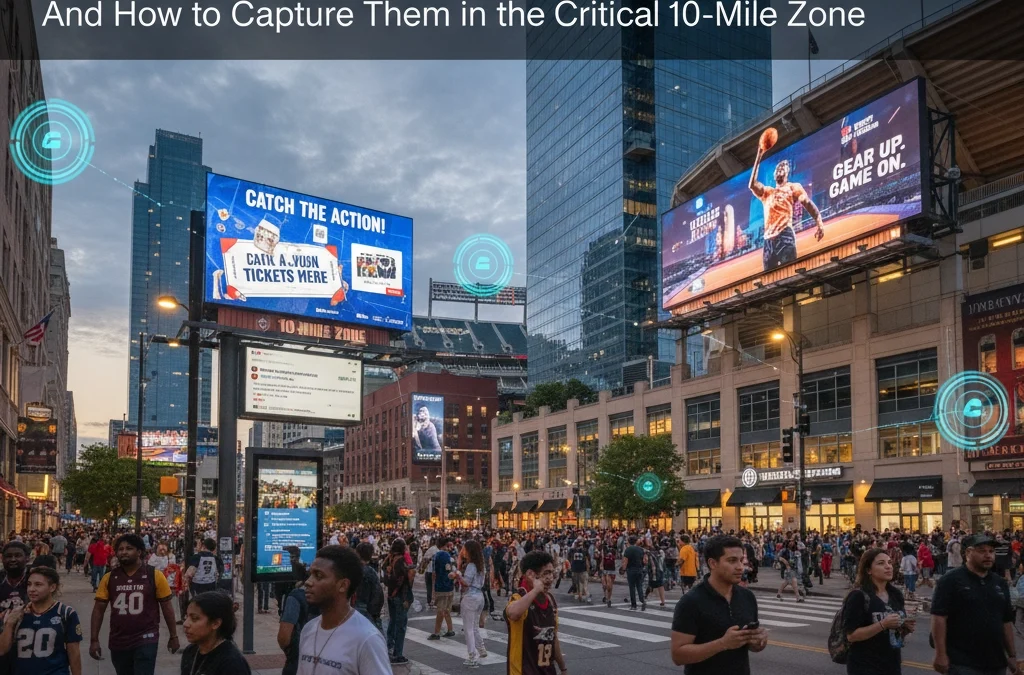
Sports fans represent one of the most responsive audiences in digital out-of-home advertising, with research revealing that 90% take measurable action after viewing DOOH advertisements. This extraordinary engagement rate positions sports marketing as a critical opportunity for brands seeking to drive real-world behavior and measurable business outcomes.
The phenomenon extends beyond simple awareness generation. When fans encounter DOOH messaging related to sporting events, their actions translate into significant economic activity. A remarkable 99% of fans who attended games following OOH ad exposure spent money locally on hotels, restaurants, and transportation, demonstrating the direct correlation between strategic placement and revenue generation.

The Psychology Behind Peak Fan Engagement
Sports fans demonstrate heightened receptivity to DOOH advertising due to their emotional state during exposure periods. Unlike routine advertising encounters during daily commutes, sports-related DOOH reaches audiences during peak anticipation phases when fans actively seek information about schedules, ticketing options, and event details.
The social amplification factor significantly multiplies initial impressions. Research indicates that 61% of sports fans who view DOOH advertisements engage on social media, sharing content with friends and online communities. This organic extension transforms single ad exposures into multi-touchpoint campaigns that leverage existing social networks for message propagation.
Brand affinity research supports this behavioral pattern. Studies show that 81% of consumers maintain more positive feelings toward brands that sponsor sports they follow, while 66% express increased purchase intent for such brands. DOOH advertising capitalizes on this pre-existing loyalty by connecting with established emotional connections rather than building awareness from baseline levels.
Geographic Targeting and the Critical Proximity Zone
Strategic placement within proximity zones surrounding sports venues creates maximum impact for event-specific messaging. The critical radius extends beyond stadium perimeters to include transit corridors, parking areas, and surrounding commercial districts where fans make pre-game and post-game decisions.
Programmatic DOOH capabilities enable precise geographic targeting that adapts to real-time conditions. Campaigns can focus on venue attendees who have recently visited stadiums, supporters of specific teams, or audiences engaged with major sporting events dominating current news cycles. This precision transforms broad sports advertising into locally relevant experiences.
Geographic data integration allows brands to serve dynamic, location-specific creative to fans in major sports markets. Cities with established sports cultures demonstrate higher engagement rates, with targeted messaging resonating more strongly when aligned with local team loyalties and venue-specific experiences.

Real-Time Data Integration and Dynamic Messaging
The incorporation of live sports data elevates DOOH from static advertising to dynamic storytelling platforms. Research shows that 77% of sports viewers notice brands around sporting events, with a 33% increase in brand preference after exposure to sports-related DOOH advertisements.
Real-time integration creates powerful brand associations by positioning advertisers as active participants in sports narratives. Live scores, player statistics, predictions, and excitement ratings allow creative teams to match message intensity to game momentum, connecting brand identity to unfolding sporting drama.
The Icelandic Premier League demonstrates this approach by using real-time sports data on billboards throughout the country. This strategy keeps fans informed while generating revenue streams for brand partners, eliminating the need for audiences to check social media or broadcasts for current information.
Campaign Execution and Measurable Results
Strategic DOOH campaigns targeting sports fans generate substantial performance metrics across multiple categories. A football-themed campaign targeting adult males achieved a 39% lift in convenience store visits among exposed audiences, demonstrating direct attribution to physical location visits.
FanDuel experienced a 41% increase in website and app visits with an 87% lift in new user registrations through strategic DOOH placement during sports seasons. These results highlight the platform's effectiveness for driving both digital engagement and conversion behaviors.
The measurement capabilities extend to brand perception metrics. Nearly 6 in 10 U.S. adults recall seeing OOH advertisements for major sporting events, with 90% of those exposed audiences taking subsequent real-world actions such as watching games, discussing events with friends, or engaging on social media platforms.

Strategic Timing and Journey-Based Approaches
Successful sports DOOH campaigns recognize that fan engagement begins well before venue arrival. Effective strategies create repeated exposure along familiar routes from residential areas to airports, transit systems, and finally to stadium locations. This journey-based approach builds message recall through high-intent touchpoints.
Digital capabilities enable moment-specific targeting that responds to evolving game conditions. Pre-game anticipation requires different creative approaches than post-game celebration periods. DOOH platforms allow brands to pivot messaging instantly based on game outcomes, location data, and timing considerations.
When UFC needed to relocate a major fight from Las Vegas to Los Angeles within six days, DOOH creative updates occurred within minutes. This agility ultimately contributed to selling out all 16,000 seats days ahead of the rescheduled event, demonstrating the platform's responsiveness to changing conditions.
Local Economic Impact and Spending Behavior
The economic implications of sports fan DOOH exposure extend throughout local business ecosystems. Fans who attend games following ad exposure demonstrate consistent spending patterns that benefit restaurants, hotels, parking facilities, and retail establishments within venue proximity zones.
Local businesses particularly benefit from strategic proximity placement. Messages delivered along fan travel routes create natural associations between brands and game-day experiences. Practical information about parking availability, dining options, merchandise locations, or post-game entertainment resonates most effectively when delivered at decision-making moments during the journey.
This spending behavior validates the critical 10-mile zone concept for venue-adjacent businesses. Strategic placement within this radius captures fans during peak decision-making periods when practical needs align with available commercial options.

Technology Partnerships and Platform Integration
Modern DOOH sports campaigns leverage sophisticated technology partnerships to maximize targeting precision and creative relevance. Programmatic platforms enable automated optimization based on game schedules, team performance, weather conditions, and audience demographics.
Device ID targeting capabilities allow campaigns to reach fans who have previously visited specific venues or engaged with sports-related content. This behavioral targeting creates more precise audience segments than traditional demographic approaches.
Attribution measurement through mobile device tracking provides comprehensive performance data. Campaigns can measure store visits, website engagement, app downloads, and social media interactions directly attributable to DOOH exposure events.
Future Opportunities and Market Evolution
The approaching 2026 FIFA World Cup represents a significant opportunity for DOOH advertisers targeting sports audiences. Research indicates that 62% of U.S. adults want to see OOH advertisements connected to the tournament, with 96% of interested viewers indicating they would take further action such as researching more information, discussing content with friends, or engaging on social media.
This data demonstrates that sports fans actively seek DOOH advertising rather than merely tolerating it. The platform functions as an information source and engagement catalyst rather than an interruption to the fan experience.
The evolution toward dynamic, data-integrated campaigns positions DOOH as an increasingly sophisticated sports marketing channel. Brands that invest in journey-based strategies and real-time optimization capabilities will capture the greatest share of the 90% action rate that defines sports fan engagement.
Strategic proximity placement, combined with dynamic creative capabilities and precise targeting, creates sustainable competitive advantages for brands seeking to connect with one of advertising's most responsive audiences.
For more information about sports DOOH advertising strategies, visit OOH Sports or contact Dan Kost, CEO, at +1 (970) 703-0102.
Keywords: #Motivation #Branding #Strategy #Marketing #AdvertisingAndMarketing #digitalmarketing #Innovation #Sports