
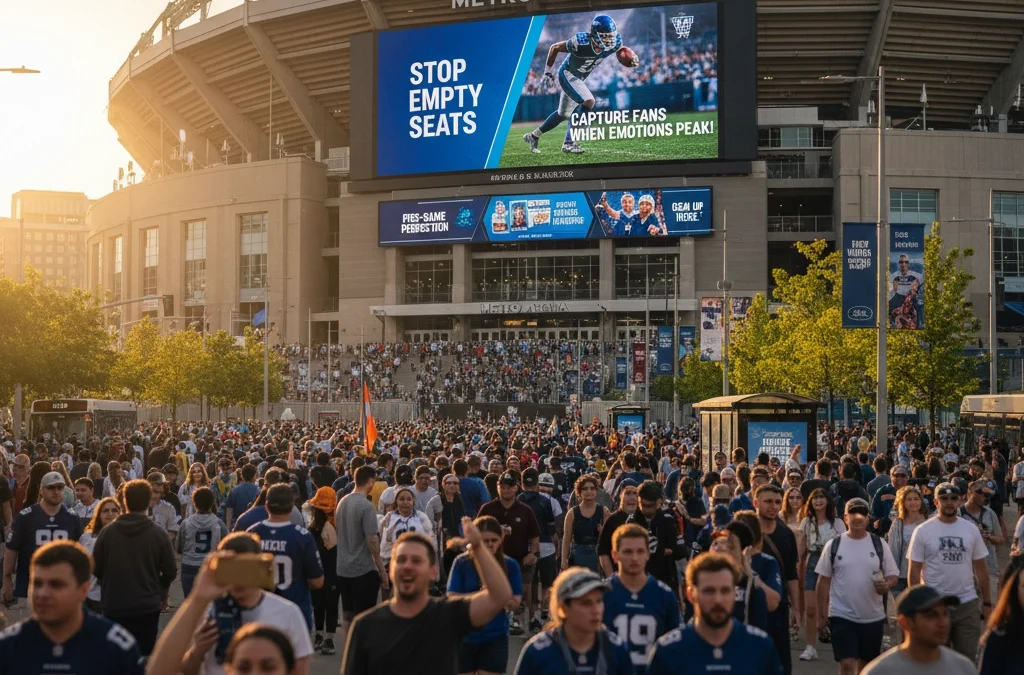
Stadium advertising suffers from a fundamental timing flaw. By the time fans settle into their seats, the most valuable engagement window has already closed. The real opportunity exists during pre-game periods when anticipation peaks and emotional investment reaches maximum levels. Digital out-of-home (DOOH) targeting during these critical moments delivers exponentially better returns than traditional in-venue placements.
The Pre-Game Advantage: When Fan Psychology Peaks
Sports fans experience distinct emotional phases throughout the game day experience. Pre-game periods represent the optimal engagement window, characterized by heightened anticipation, social activity, and receptiveness to brand messaging. Research indicates that 70% of consumers actively seek out big game commercials before events begin, creating a captive audience primed for brand engagement.

Younger demographics particularly drive this behavior shift. These audiences actively consume branded content in the days and hours leading up to major sporting events, extending the valuable engagement window far beyond traditional broadcast windows. This pre-game consumption pattern creates multiple touchpoints for brand messaging during peak emotional states.
The psychological advantage stems from anticipation psychology. Fans experience maximum excitement and emotional investment before games begin, when outcomes remain uncertain and possibilities feel limitless. This heightened emotional state creates ideal conditions for brand message reception and memory formation.
DOOH Performance Metrics vs Traditional Stadium Advertising
Digital out-of-home campaigns demonstrate superior performance across key metrics compared to traditional stadium advertising approaches. A month-long DOOH campaign delivers 7.5 times greater reach and 10 times better cost-per-thousand (CPM) value than a 30-second Super Bowl commercial placement in the top 25 U.S. markets.
The reach differential proves particularly striking. DOOH campaigns generate nearly 1 billion impressions across extended timeframes, compared to Super Bowl viewership estimates of 123 million viewers during single broadcast windows. This expanded reach occurs at significantly lower per-impression costs, creating substantial efficiency advantages.
Consumer action rates further validate DOOH effectiveness:
- 76% of consumers report taking action after viewing DOOH advertisements
- 74% of mobile users engage with devices following DOOH exposure
- 86% ad recall rate, representing the highest performance among major media formats
These engagement rates exceed traditional stadium advertising performance, which faces attention fragmentation from live action, crowd noise, and competing visual stimuli.

Strategic Targeting During Emotional Peak Windows
Sports fans demonstrate exceptional brand loyalty characteristics. Research shows 81% of sports fans develop more positive attitudes toward brands that sponsor sports they follow, while 66% increase purchase likelihood from such sponsors. Pre-game DOOH targeting capitalizes on this loyalty during maximum emotional availability.
Location intelligence platforms enable precise audience segmentation based on real-world movement patterns and venue attendance history. Brands can target specific fan demographics including major event enthusiasts, loyal team supporters within geographic regions, and recent sports venue visitors. This precision ensures advertising spend reaches highly engaged audiences during optimal psychological states.
Dynamic creative capabilities allow real-time message adaptation based on pre-game developments, weather conditions, social media trends, and breaking sports news. This agility enables brands to align messaging with evolving fan sentiment and capture attention during unexpected viral moments.
Multi-Platform Amplification Strategy
Modern sports consumption extends across multiple platforms simultaneously. Approximately one-third of viewers browse social media during games, requiring brands to ensure advertisements become part of online conversations. Pre-game DOOH campaigns create shareable content opportunities before game-time distractions begin.
Social sharing behavior patterns reveal specific content preferences. Humor drives the highest viral engagement rates among consumers who overwhelmingly prefer sharing entertaining content. Pre-game timing provides optimal conditions for humor-based messaging, when fans possess attention availability for content discovery and social sharing.

Cross-platform integration amplifies DOOH campaign impact through coordinated messaging across digital channels. Brands can create consistent narrative threads from DOOH placements through social media, mobile advertising, and broadcast integrations, maximizing total campaign reach during peak engagement periods.
Geographic and Venue-Based Targeting Strategies
Successful pre-game DOOH targeting requires strategic location selection based on fan behavior patterns. High-performance placement categories include:
Transportation Hubs: Airports, train stations, and major transit centers capture traveling fans during peak anticipation periods. These locations provide extended dwell times and captive audiences actively planning game day experiences.
Entertainment Districts: Bars, restaurants, and entertainment venues near stadiums experience significant pre-game traffic. Fan gatherings at these locations create social viewing environments ideal for brand message amplification.
Retail Corridors: Shopping centers and commercial districts along routes to venues capture fans during pre-game preparation activities. These locations enable product promotion during active purchase consideration periods.
Residential Areas: Strategic placement in fan-dense neighborhoods reaches audiences during daily routines leading up to games, extending engagement windows beyond immediate pre-game hours.
Technology Integration and Real-Time Optimization
Advanced programmatic DOOH platforms enable automated optimization based on real-time performance data. Machine learning algorithms analyze engagement rates, weather conditions, traffic patterns, and social media sentiment to adjust creative delivery and placement strategies dynamically.
Geofencing technology creates precise audience targeting around sports venues, fan gathering locations, and competitor establishments. These virtual boundaries trigger specific creative messages when target audiences enter designated areas, ensuring maximum relevance and timing accuracy.

Attribution measurement capabilities track consumer actions from DOOH exposure through purchase completion. Device ID matching connects outdoor advertising exposure to mobile engagement, in-store visits, and online conversions, providing comprehensive campaign performance insights.
Implementation Timeline and Budget Allocation
Effective pre-game DOOH campaigns require strategic timeline planning extending weeks or months before major sporting events. Budget distribution should prioritize peak anticipation periods rather than concentrating spend during brief in-game moments.
Recommended timeline structure:
- 8-12 weeks pre-event: Initial brand awareness and anticipation building
- 4-6 weeks pre-event: Enhanced messaging frequency and creative variety
- 1-2 weeks pre-event: Maximum intensity campaigns with countdown elements
- Game day: Sustained presence during pre-game hours with real-time adaptations
This extended approach captures fans during multiple high-engagement touchpoints while avoiding the premium pricing and attention competition characteristic of game-time advertising placements.
Measuring Success: KPIs and Attribution Methods
Pre-game DOOH campaign success requires comprehensive measurement frameworks encompassing brand awareness, engagement rates, and conversion attribution. Key performance indicators include:
- Brand lift measurements: Pre and post-campaign surveys measuring brand awareness, consideration, and preference changes
- Engagement tracking: Mobile device interaction rates, social media mentions, and website traffic increases
- Conversion attribution: Sales lift analysis, store visit increases, and online purchase tracking
Third-party measurement partners provide independent verification of campaign reach, frequency, and demographic delivery accuracy. These partnerships ensure measurement credibility and enable optimization based on verified performance data rather than estimated metrics.
Conclusion: Maximizing ROI Through Strategic Timing
Pre-game DOOH targeting represents a strategic shift from reactive advertising approaches to proactive fan engagement during optimal psychological windows. By capturing audiences during peak emotional investment periods, brands achieve superior engagement rates, enhanced brand loyalty, and measurable conversion improvements compared to traditional stadium advertising approaches.
The combination of precise audience targeting, dynamic creative capabilities, and comprehensive measurement frameworks creates sustainable competitive advantages for sports marketing campaigns. Brands that recognize and capitalize on pre-game emotional peak windows position themselves for maximum return on advertising investment while building lasting connections with highly engaged sports audiences.
Ready to capture fans during their peak emotional moments? Contact OOH Sports today to discover how strategic pre-game DOOH targeting can transform your sports marketing ROI.
Dan Kost, CEO
Phone: +1 (970) 703-0102
Website: www.OOHSports.com
Share this article:
- Facebook | Twitter | LinkedIn | Email
Tags: #Motivation #Branding #Strategy #Marketing #AdvertisingAndMarketing #digitalmarketing #Innovation #Sports