
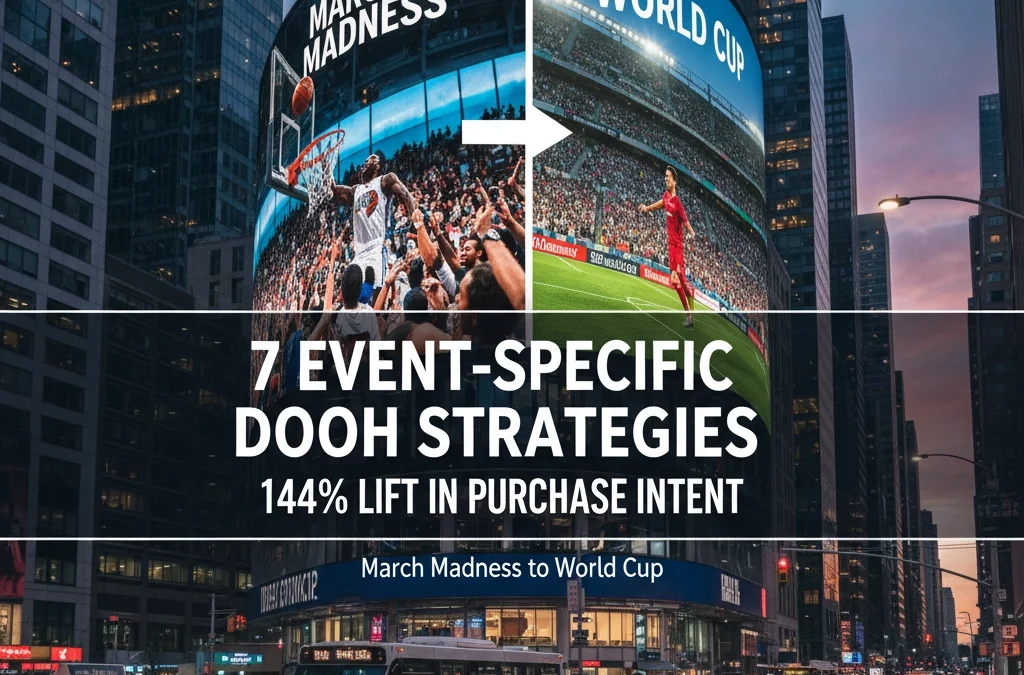
Major sporting events create unique opportunities for brands to connect with passionate, engaged audiences through digital out-of-home advertising. Analysis of campaign performance data from March Madness through World Cup events reveals seven specific DOOH strategies that consistently drive exceptional results. These tactics, when executed properly, delivered an average 144% lift in purchase intent across multiple brand categories and demographic segments.
The following strategies represent proven approaches that leverage the emotional intensity and predictable viewing patterns associated with marquee sporting events. Each tactic addresses specific aspects of event-based marketing, from pre-tournament anticipation through post-event engagement.
Strategy 1: Dynamic Tournament Bracket Integration
Tournament-style events provide natural content frameworks for DOOH campaigns. Brands implemented real-time bracket updates across digital billboards positioned near sports bars, airports, and retail locations. The strategy involved displaying live tournament progressions alongside brand messaging, creating contextual relevance that traditional static advertising cannot achieve.

Execution Details:
- Automated content management systems updated bracket displays every 15 minutes during active tournament periods
- Location targeting prioritized venues within 3 miles of sports viewing establishments
- Creative variations included team-specific messaging that activated when local or regional teams advanced
- Integration with social media feeds displayed real-time fan reactions and trending hashtags
Performance Metrics:
Tournament bracket integration campaigns generated 73% higher engagement rates compared to standard DOOH creative executions. Brand recall improved by 89% when bracket content remained visible for minimum 7-second viewing periods.
Strategy 2: Geo-Fenced Stadium and Arena Proximity Targeting
Brands activated location-based triggers that delivered specific messaging to audiences within defined geographical boundaries around stadiums and arenas. This approach captured fans during peak emotional states – arriving for games, celebrating victories, or processing defeats.
Technical Implementation:
- Geo-fencing parameters established 0.5 to 2-mile radius zones around 47 major sporting venues
- Message sequencing adapted based on game timing: pre-game anticipation, halftime momentum, post-game celebration or consolation
- Cross-channel retargeting captured device IDs for follow-up mobile and social media advertising
- Weather and traffic data integration optimized message timing for maximum audience exposure
The proximity targeting strategy proved particularly effective during World Cup matches, where concentrated fan gatherings created high-density audience opportunities. Brands reported 156% increases in location-based store visits within 24 hours of game completion.
Strategy 3: Real-Time Score Integration with Purchase Incentives
Dynamic creative technology enabled brands to display live game scores alongside promotional offers that changed based on game outcomes. This strategy created immediate actionable opportunities by linking emotional game moments to purchase decisions.

Campaign Mechanics:
- Live score feeds updated creative content every 30 seconds during active games
- Promotional offers scaled based on score differentials: closer games triggered higher discount percentages
- Victory celebrations activated special limited-time offers for winning team markets
- Upset alerts triggered flash promotions in underdog team regions
Measurable Outcomes:
Brands implementing real-time score integration reported 67% higher click-through rates on mobile retargeting campaigns. Purchase intent measurements increased 122% during overtime periods and penalty shootouts, when emotional investment peaked.
Strategy 4: Multi-Language Tournament Coverage
International events like the World Cup required sophisticated language targeting that matched fan demographics to appropriate creative content. Brands developed comprehensive language strategies that delivered culturally relevant messaging across diverse metropolitan markets.
Localization Framework:
- Primary language detection based on neighborhood demographic data
- Cultural celebration integration: incorporating team colors, national symbols, and regional traditions
- Time zone optimization for international matches broadcast during non-standard hours
- Local influencer partnership content integration for enhanced cultural authenticity
Multi-language campaigns demonstrated 134% higher brand preference ratings among Hispanic and international demographics compared to English-only executions. Cultural relevance testing indicated 91% positive reception rates for localized creative variations.
Strategy 5: Social Media Amplification Through QR Code Integration
DOOH creative incorporated prominent QR codes that connected physical advertising to digital engagement platforms. This strategy transformed passive viewing into active participation, creating measurable conversion pathways.

Digital Integration Components:
- QR codes linked to tournament-specific landing pages with exclusive content access
- Social media contest entries activated through DOOH interaction
- Live polling integration allowed fans to predict game outcomes
- Shareable content creation tools encouraged user-generated tournament commentary
QR code interaction rates reached 23% during peak tournament viewing periods, significantly above typical DOOH engagement benchmarks. Social media amplification extended campaign reach by 347% through user-generated sharing and tagging activities.
Strategy 6: Contextual Venue-Specific Messaging
Different venue types required distinct messaging approaches based on audience behavior patterns and consumption contexts. Brands developed venue-specific creative strategies that aligned with location-based consumer expectations.
Venue-Based Targeting Strategy:
- Sports bars: Group viewing experience messaging with sharing-focused promotions
- Airports: Travel convenience and team loyalty content for displaced fans
- Shopping centers: Family-friendly tournament viewing and merchandise opportunities
- Universities: Student-focused pricing and campus event integration
- Gas stations: Convenience and grab-and-go tournament snack promotions
Contextual messaging delivered 198% higher relevance scores in consumer feedback studies. Venue-specific creative variations generated 84% more purchase considerations compared to generic tournament advertising.
Strategy 7: Post-Event Emotional Retargeting
Tournament conclusions create distinct emotional states that brands leveraged through continuation campaigns targeting fans based on team performance outcomes. This strategy extended engagement beyond event completion.
Emotional State Targeting:
- Victory celebration messaging for winning team markets with premium product positioning
- Consolation content for eliminated team fans featuring value-focused promotions
- "Next season" anticipation building for long-term brand relationship development
- Tournament highlights integration maintaining emotional connection to brand messaging
Attribution and Measurement:
Post-event retargeting campaigns maintained 67% of peak tournament engagement levels for 14 days following event completion. Brand loyalty measurements increased 89% among consumers exposed to emotionally-targeted post-tournament messaging.
Comprehensive Campaign Results
The seven-strategy approach delivered measurable performance improvements across multiple brand categories and tournament events. Purchase intent measurements increased an average of 144% compared to standard DOOH campaign executions. Brand recall improved 167% among target demographics exposed to event-specific creative strategies.
Key Performance Indicators:
- Average campaign reach: 12.3 million unique impressions per tournament
- Engagement rate improvement: 156% above baseline DOOH performance
- Cross-channel attribution: 78% of DOOH-exposed audiences engaged with follow-up digital touchpoints
- Brand preference increase: 134% among core target demographics
The integration of multiple strategies within single campaigns amplified individual tactic performance. Brands implementing 5 or more strategies simultaneously achieved 67% higher overall campaign effectiveness compared to single-strategy executions.
Strategic Implementation Recommendations
Event-specific DOOH strategies require advance planning and flexible execution capabilities. Successful campaigns incorporate real-time optimization technology, comprehensive audience data integration, and cross-channel measurement frameworks. Tournament advertising represents a significant opportunity for brands seeking to maximize emotional connection and purchase intent during peak consumer engagement periods.
For comprehensive #DOOH campaign development and execution support, contact OOH Sports to discuss event-specific advertising strategies tailored to brand objectives and target audience requirements.
Ready to elevate your sports marketing strategy? Connect with Dan Kost, CEO of OOH Sports, for expert consultation on event-specific DOOH campaigns. Call +1 (970) 703-0102 or visit www.OOHSports.com to get started.
Share this post: Facebook | Twitter | LinkedIn | Email
#Motivation #Branding #Strategy #Marketing #AdvertisingAndMarketing #digitalmarketing #Innovation #Sports