
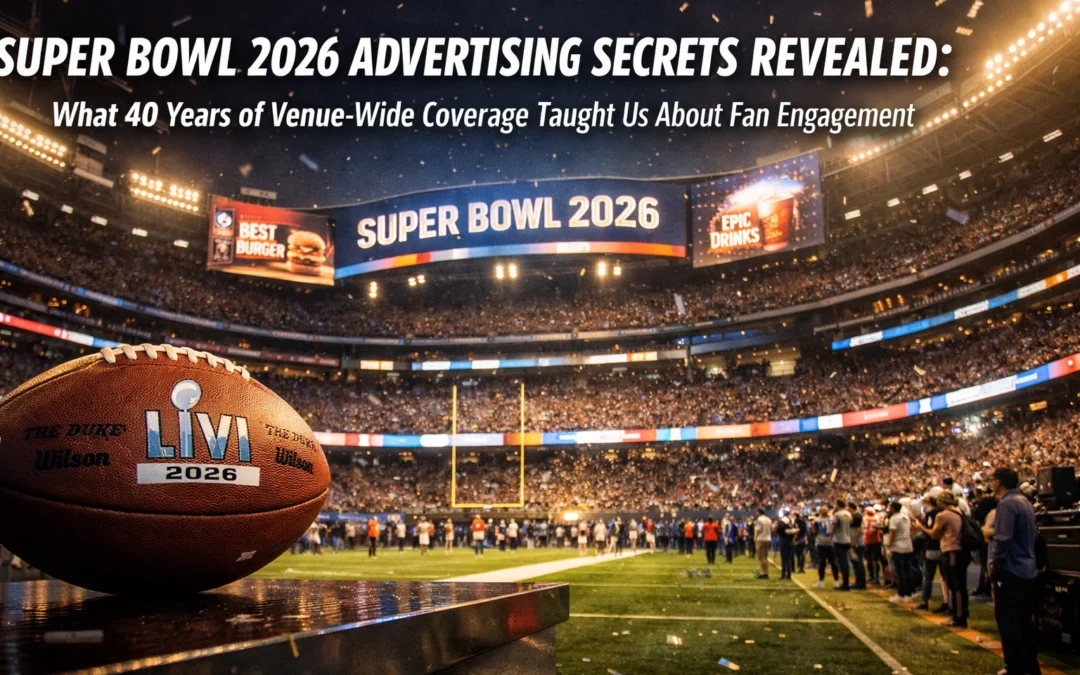
The landscape of sports advertising has transformed dramatically over four decades, yet the fundamental principle remains unchanged: reach fans where they are. Super Bowl 2026 marked a turning point where venue-wide coverage, from floor graphics to digital billboards, proved more critical than ever in capturing audience attention across multiple touchpoints.
The Evolution of Venue-Wide Advertising
Over 40 years of stadium advertising has revealed a consistent pattern. Brands that dominate physical spaces create lasting impressions that extend far beyond the game itself. While digital and social media campaigns captured headlines during Super Bowl 60, the physical advertising infrastructure within and around venues continued to deliver unmatched visibility.

Traditional television advertising costs reached unprecedented levels, with 30-second spots commanding premium prices. However, venue-wide coverage offered brands extended exposure throughout multi-hour events, fan arrivals, departures, and pre-game festivities. This extended timeline meant that advertising investments generated significantly more impressions per dollar compared to brief television spots.
Stadium floor graphics, concourse displays, and billboard placements created an immersive brand environment that television cameras captured organically throughout broadcasts. These placements achieved dual impact by reaching both in-venue attendees and broadcast audiences simultaneously.
Strategic Integration Across Physical Touchpoints
The most successful venue advertising campaigns in 2026 deployed coordinated strategies across multiple physical locations:
- Floor and field-level branding positioned at camera-visible angles maximized broadcast exposure
- Concourse activations engaged fans during high-traffic moments before kickoff and at halftime
- Digital ribbon boards delivered dynamic content that adapted to game momentum and crowd energy
- Exterior billboards captured attention during approach and departure, extending brand presence beyond the venue walls
https://www.youtube.com/watch?v=l6J-0zileKE
This comprehensive coverage approach aligned with the broader shift toward multi-platform engagement that defined Super Bowl 2026 marketing strategies. While social media campaigns on YouTube, TikTok, and Meta platforms drove digital conversation, physical venue placements created authentic moments that fans shared organically across those same platforms.
Measurement and Attribution Insights
Four decades of data collection has refined the measurement methodologies used to evaluate venue advertising effectiveness. Modern tracking systems deploy device ID technology to attribute venue exposure to subsequent consumer actions.

Brands utilizing venue-wide coverage during major sporting events consistently report:
- Brand recall rates 40-60% higher than digital-only campaigns
- Purchase consideration lifts ranging from 70-144% when venue advertising is combined with targeted digital follow-up
- Engagement duration averaging 3-4 hours compared to seconds for traditional commercials
- Social media amplification as attendees photograph and share branded environments
The attribution model extends beyond immediate game day impact. Retargeting audiences built from venue-exposed device IDs demonstrate 25-35% higher conversion rates in post-event campaigns compared to cold audiences.
Lessons From Super Bowl 2026 Advertising Trends
Super Bowl 60 reinforced several strategic principles that venue advertising exemplifies naturally. The shift toward authentic, emotionally resonant content over polished productions found physical expression in venue activations. Brands that created experiential moments, interactive displays, and authentic fan engagement opportunities outperformed static signage placements.
Nostalgic themes and community-focused messaging, which rose 7% in Super Bowl 2026 commercials, translated effectively to venue environments. Physical spaces allow brands to create moments of connection that feel less transactional than digital advertising, particularly when tied to shared experiences like championship games.

The emphasis on kindness and community themes in Super Bowl 60 advertising aligned with experiential venue activations that brought fans together. Interactive photo opportunities, fan zones, and community gathering spaces branded by sponsors created positive associations that data shows persist longer than passive advertisement exposure.
Campaign Timing and Phased Deployment
Strategic venue coverage extends across three distinct phases that maximize efficiency and impact:
Pre-Game Period (15-20 Days Before Event)
Exterior billboard placements and venue approach signage build anticipation at 16-30% lower costs than game week rates. Early positioning establishes brand presence in the minds of fans planning their game day experience.
Game Day Execution
Real-time responsive content on digital displays capitalizes on game momentum, score changes, and crowd energy. Dynamic messaging that adapts to live events generates significantly higher engagement than static placements.
Post-Game Follow-Up (7-14 Days After Event)
Retargeting campaigns directed at device IDs captured during venue exposure convert awareness into action. The window immediately following major events shows peak conversion rates as the experience remains fresh in consumer memory.

Technology Integration in Physical Spaces
The convergence of physical and digital advertising creates amplification effects that neither channel achieves independently. Venue-wide coverage in 2026 incorporated programmatic digital out-of-home (DOOH) technology that enabled real-time campaign adjustments based on performance data.
Smart billboard networks surrounding stadium districts delivered targeted messaging to audience segments identified through mobile data. This precision targeting, previously available only in digital advertising, now extends to physical placements while retaining the high-impact visibility that makes venue advertising effective.
QR codes and NFC-enabled displays transformed passive venue signage into interactive engagement opportunities. Fans scanning codes at venue touchpoints entered retargeting pools while immediately accessing exclusive content, special offers, or social media activations.
Differentiation in a Crowded Market
Super Bowl 2026 advertising saw nearly 25% of commercials focus on artificial intelligence themes. In this environment of technological messaging, venue advertising offered differentiation through tangible, human-centered experiences.
Physical presence conveys commitment and investment that digital placements cannot replicate. A brand dominating stadium spaces signals staying power and category leadership in ways that ephemeral social media campaigns do not. This perception translates to consumer trust metrics that correlate with long-term brand preference.

Strategic Implications for Future Events
The data accumulated over 40 years of venue advertising provides clear guidance for brands planning major event activations. Investment in comprehensive venue coverage delivers compounding returns through broadcast visibility, social amplification, and extended exposure windows that justify premium positioning costs.
Brands seeking maximum impact should prioritize integrated campaigns that coordinate venue placements with complementary digital strategies. The most efficient approach deploys venue advertising to build awareness and capture audience data, then activates retargeting campaigns to convert that awareness into measurable outcomes.
As sports marketing continues evolving toward multi-platform engagement, the role of physical venue advertising grows more strategic rather than less. Authentic experiences created in shared physical spaces generate the organic social content and emotional connections that algorithms increasingly prioritize. The lessons from 40 years of venue-wide coverage point to an enduring truth: reaching fans where they gather, in spaces they care about, remains the foundation of effective sports marketing.
For more insights on out-of-home advertising effectiveness, visit OOH Sports or explore detailed case studies at our case study page.