
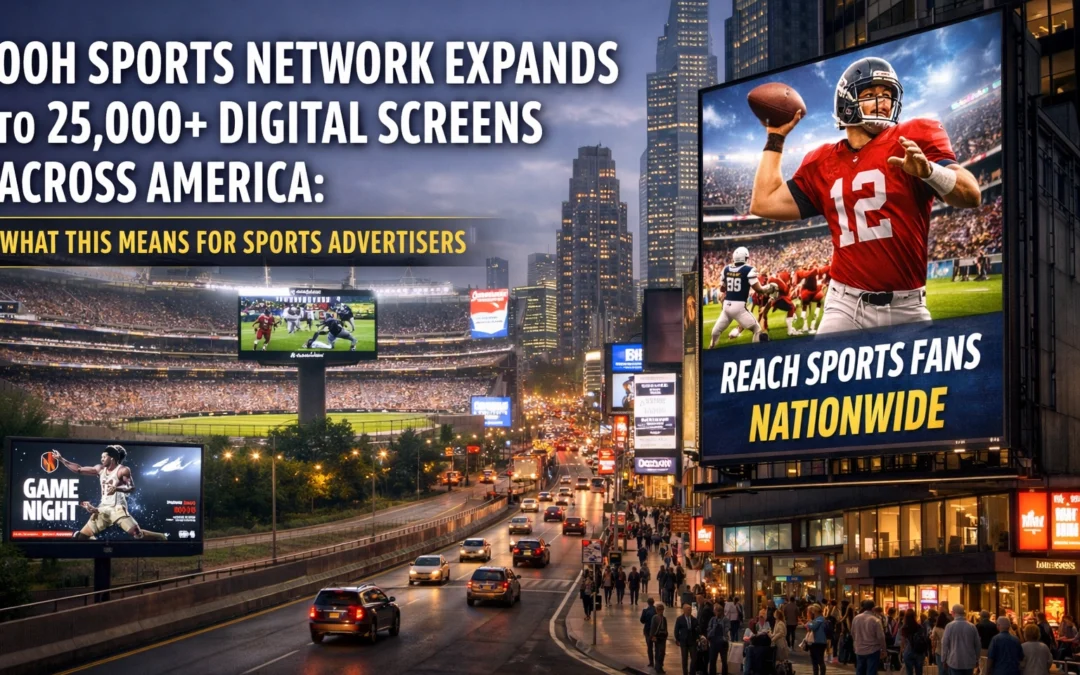
The sports advertising landscape has reached a new threshold. OOH Sports Network has expanded its digital infrastructure to more than 25,000 screens positioned throughout sporting venues, transit hubs, and high-traffic corridors across the United States. This expansion represents a fundamental shift in how advertisers can reach sports audiences, transforming stadium perimeter advertising from static placements into a programmable, data-responsive channel.
Network Scale and Strategic Positioning
The 25,000-screen network encompasses multiple touchpoints throughout the sports fan journey. Digital displays occupy strategic positions in venue approaches, parking facilities, concourses, and departure routes. This comprehensive coverage enables advertisers to maintain visibility from the moment fans confirm attendance through their final departure from the venue.

The network architecture supports both proximity-based targeting and event-synchronized messaging. Screens positioned near venue entrances activate different content than those in parking areas or transit stations. This geographic layering allows advertisers to deploy location-specific messaging that corresponds to fan behavior patterns at each stage of the event experience.
Programmatic Capabilities and Real-Time Flexibility
The digital infrastructure operates on programmatic platforms that enable automated campaign deployment and real-time optimization. Advertisers access inventory through demand-side platforms, applying the same targeting parameters and bidding strategies used in other digital channels. This integration positions sports venue advertising within broader omnichannel strategies rather than as an isolated tactical buy.
Campaign parameters can shift throughout a single event day. A quick-service restaurant brand might promote breakfast offerings during morning hours, transition to game-day specials as crowds arrive, then highlight delivery options during the post-game departure window. All messaging rotations execute automatically based on predetermined schedules or triggered by specific conditions such as crowd density or proximity to game time.
The programmatic framework also supports audience-based targeting through integration with first-party and third-party data sources. Advertisers can align screen placement with demographic profiles, purchase behavior segments, or geographic origin data. A regional automotive dealer, for example, might concentrate messaging on screens positioned along routes serving specific zip codes within their trade area.
Engagement Architecture and Conversion Pathways
Digital screens within the network incorporate direct response mechanisms that connect physical exposure to immediate digital action. QR codes embedded in creative units enable instant mobile transitions to branded experiences, whether that involves app downloads, reservation systems, or social media platforms. The friction between ad exposure and conversion collapses to seconds rather than days.

This engagement architecture also generates measurable data streams. The network tracks scan rates, dwell times, and interaction patterns across different creative variations and placement contexts. Campaigns can optimize creative rotation mid-flight based on actual engagement metrics rather than waiting for post-campaign analysis. If one message variant drives 40% higher QR code scans than another, the system can automatically increase its rotation frequency while the campaign is still active.
Interactive capabilities extend beyond basic QR functionality. Certain venue installations support mobile device detection and retargeting through device ID matching. Fans exposed to messaging within the venue can subsequently receive coordinated messages on mobile and connected TV platforms, creating sequential touchpoint experiences that span physical and digital environments.
Performance Advantages Over Broadcast Channels
The sustained visibility timeline of venue-based digital networks differs fundamentally from broadcast advertising constraints. A 30-second television spot concentrates all impact into a brief window during a specific program segment. The OOH Sports Network maintains presence across extended timeframes, from championship announcement through fan arrival, in-venue circulation, and departure.
This temporal advantage enables sequential storytelling techniques. Early exposures during fan arrival can introduce brand positioning or product attributes. Messages displayed during venue circulation add layers of information or emotional appeal. Post-game messaging can reinforce calls to action or direct fans toward next-step engagement opportunities. The same campaign benefits from multiple impression opportunities per attendee rather than a single exposure window.
The attention environment also differs from broadcast contexts. Television commercials compete with second-screen distractions and rely on viewers remaining in the room during commercial breaks. Digital screens in transit corridors and venue approaches capture attention during active movement through space when mobile device usage patterns shift. Fans walking toward entrances or navigating concourses demonstrate higher visual engagement with environmental messaging than audiences in passive viewing scenarios.
Industry Trajectory and Competitive Context
The expansion to 25,000 screens aligns with broader sector momentum in digital out-of-home advertising. Industry projections indicate that digital formats will account for 45.2% of total out-of-home spending by 2028, compared to 22.0% in 2016. Global digital out-of-home investment is on pace to reach $50 billion, driven by programmatic capabilities that enable the automation, measurement, and precision targeting that major advertisers increasingly require from all media channels.

Sports venue environments represent particularly valuable inventory within this expanding sector. Audience composition skews toward high-value demographics with above-average household incomes and purchase intent across multiple categories. The contextual relevance of sports environments also enhances message receptivity for categories aligned with athletic performance, entertainment, and lifestyle positioning.
Advertiser Access and Campaign Development
Brands seeking to activate campaigns across the OOH Sports Network can access inventory through multiple pathways. Direct partnerships enable customized integrations for advertisers requiring specific venue coverage or extended campaign durations. Programmatic platforms provide self-service access for advertisers operating within established digital buying workflows.
Campaign development begins with objective definition and audience specification. Advertisers identify target demographics, geographic parameters, and desired venue types. The network then maps available inventory against these criteria, proposing screen combinations that optimize reach and frequency within budget constraints.
Creative specifications accommodate standard digital formats while allowing for venue-specific customization. A single campaign might deploy consistent brand messaging across all screens while varying specific offers, store locations, or calls to action based on geographic proximity. The creative management system handles these variations automatically once parameters are established.
Measurement Framework and Attribution Models
The digital infrastructure supports multiple measurement approaches depending on campaign objectives. Impression delivery metrics track total exposures, unique reach, and frequency distribution across the screen network. Engagement metrics quantify interaction rates for campaigns incorporating QR codes or other direct response mechanisms.
Attribution models connect venue exposure to downstream conversion events through device ID matching and location visit measurement. Brands can track store visits, website traffic, or app installations among audiences exposed to messaging within the venue environment compared to control groups without exposure. These attribution studies provide lift calculations that quantify incremental impact attributable specifically to the venue-based campaign component.

Brand lift studies measure shifts in awareness, consideration, preference, and purchase intent through survey methodologies deployed to exposed and unexposed audience segments. These studies quantify attitudinal changes that may not translate to immediate conversion events but indicate movement through longer purchase consideration cycles.
Strategic Implications for Sports Marketers
The 25,000-screen threshold transforms venue-based advertising from a supplementary tactic into a platform capable of anchoring comprehensive sports marketing strategies. The combination of scale, programmatic access, engagement capabilities, and measurement frameworks positions the channel alongside established digital media for budget allocation and strategic planning purposes.
Advertisers can now construct integrated campaigns where venue exposure drives awareness and consideration while coordinated digital retargeting converts interest into action. The physical and digital components function as complementary elements within a unified strategy rather than disconnected tactics managed by separate teams with different objectives.
The expansion also creates opportunities for advertisers previously unable to access venue-based inventory due to minimum spend requirements or limited availability. Programmatic access and flexible budget parameters enable testing and optimization across different venue types, markets, and campaign durations. Regional brands can activate targeted campaigns in specific markets without committing to national footprints, while national advertisers can concentrate investment in priority designated market areas based on sales performance or competitive dynamics.
For the sports advertising sector, the milestone represents both validation of category growth and acceleration of capabilities that align venue-based channels with the targeting, automation, and measurement standards that define modern media planning. The infrastructure now exists to execute sophisticated campaigns that were conceptually possible but practically challenging just a few years earlier.