
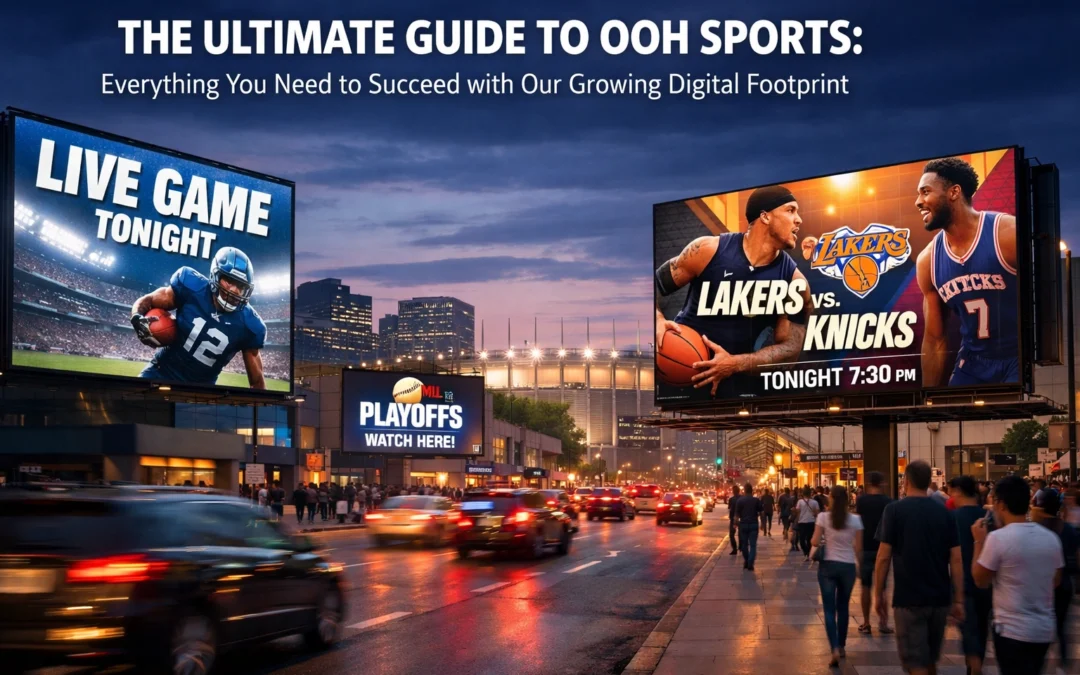
The landscape of sports marketing is undergoing a significant transformation. As traditional media becomes increasingly fragmented, brand managers and media buyers are looking for high impact ways to reach captive audiences. OOH Sports has emerged as a leader in this space, recently expanding its digital footprint to over 25,000 screens across the United States. This growth represents a major milestone in the ability to connect brands with fans at every touchpoint of the sporting experience.
For industry news outlets and media buyers, this expansion is not just about quantity. It is about the strategic placement of assets and the technological infrastructure that allows for real-time, data-driven campaign execution. This guide outlines the mechanics of the OOH Sports network and how advertisers can leverage this massive digital footprint to drive measurable results.
The Strategy Behind Network Expansion
The primary objective of the OOH Sports network expansion is to bridge the gap between high-energy sporting events and the brand messaging that fuels the industry. By placing digital screens in venues ranging from professional stadiums to local high school gyms, the network ensures that advertisers can reach fans regardless of the level of play.
The strategy focuses on three core pillars:
- Ubiquity: Being present where the fans are, from the parking lot to the premium lounge.
- Flexibility: Allowing brands to swap creative content instantly based on game outcomes or real-time events.
- Measurement: Providing hard data on impressions and audience engagement that traditional static billboards cannot offer.

Strategic Placements and Audience Reach
A successful Out-of-Home (OOH) campaign relies on placement. OOH Sports has optimized its screen locations to maximize dwell time and visibility. Unlike traditional television ads that viewers might skip, digital signage in a sports venue is part of the environment.
Venue Exteriors and Parking Lots
The fan experience begins long before the first whistle. Screens located in parking lots and exterior entryways capture fans during tailgating and arrival. This is a prime time for beverage and snack brands to reinforce purchase intent.
Concourse and Concession Areas
Dwell time is highest in the concourse. Whether fans are waiting for food or navigating to their seats, digital kiosks and video screens provide a high frequency of impressions. OOH Sports utilizes these areas to integrate branded content into the natural flow of the game day experience.
Playing Surfaces and Jumbotrons
Digital perimeter boards and Jumbotron integrations offer the highest level of visibility. These placements are often captured in social media posts and broadcast highlights, extending the reach of a campaign far beyond the physical walls of the stadium.

The Shift from Traditional to Programmatic DOOH
Traditional stadium sponsorships often require multi-million dollar investments and long-term commitments. For many brands, this level of entry is prohibitive. OOH Sports has disrupted this model by implementing programmatic Digital Out-of-Home (DOOH) technology.
Programmatic DOOH allows media buyers to purchase inventory in a way that is similar to online display ads. This means:
- Lower Barriers to Entry: Brands do not need a ten-million dollar budget to have a presence in major venues.
- Real-Time Optimization: If a specific creative is not performing, it can be changed in under 24 hours.
- Data-Driven Targeting: Campaigns can be triggered by specific events, such as a home team win or a change in weather conditions.
According to industry reports, programmatic DOOH sports campaigns are expected to hit massive valuations by 2030, proving that the industry is moving toward this flexible, high-tech model.
Technology Partners and Logistics
The backbone of the OOH Sports network is its partnership with leading Demand-Side Platforms (DSPs). By integrating with platforms like StackAdapt, OOH Sports enables omnichannel campaigns that follow the fan from their mobile device to the big screen in the arena.
The logistics of managing 25,000 screens involve a sophisticated Content Management System (CMS) that ensures uptime and creative integrity. Every screen in the network is monitored to ensure that the right ad plays at the right time. This level of precision is what separates OOH Sports from smaller, localized providers.

Proven Results: Measuring Success
Data is the ultimate currency in modern advertising. OOH Sports focuses on delivering transparent results through brand lift studies and attribution modeling. Several recent campaigns highlight the effectiveness of the digital footprint.
- Beverage Sector: A campaign for a leading hard iced tea brand saw a 119% lift in positive brand image by utilizing programmatic DOOH across the network. Details on this surge in brand perception can be found in the case study regarding AB InBev's Mike’s Hard Iced Tea.
- Consumer Goods: White Claw utilized the network to launch a new vodka product, resulting in a 74% lift in purchase consideration. This was achieved by targeting specific high-traffic areas where the target demographic was most active.
- Outdoor Recreation: Sea-Doo launched its first DOOH campaign through OOH Sports and reported a 144% increase in purchase consideration.
These numbers demonstrate that the combination of sports enthusiasm and digital precision creates a powerful environment for conversion.
Why Fan Engagement Matters
Sports fans are a unique demographic. They are emotionally invested, attentive, and highly likely to share their experiences on social media. OOH Sports taps into this "fan-centric" mindset by providing content that enhances the game day experience rather than interrupting it.
Research suggests that stadium perimeter ads capture hearts and wallets better than social media because they are viewed in a high-excitement, communal environment. When a fan sees a brand on a massive digital screen while celebrating a goal, that brand becomes associated with that positive emotion.

Future-Proofing the Network
As OOH Sports continues to grow, the focus remains on innovation. The integration of AI-powered analytics is the next step in the evolution of the network. AI allows for even more granular targeting, such as identifying the mood of a crowd and adjusting ad creative to match.
For media buyers, the message is clear: the era of "set it and forget it" billboards is over. The future of sports advertising lies in the 50 billion dollar DOOH market, and OOH Sports is providing the infrastructure to lead that charge.
Conclusion: A New Standard for Sports Marketing
The expansion to 25,000 screens is more than just a milestone for OOH Sports. It is an invitation for brands to rethink how they engage with the modern sports fan. By combining the massive reach of traditional advertising with the precision and flexibility of digital technology, the network offers a scalable solution for any marketing objective.
Whether the goal is to drive immediate purchase consideration or to build long-term brand equity, the OOH Sports digital footprint provides the necessary tools for success. As the network continues to expand, the opportunities for creative, high-impact storytelling will only increase.
For more information on the current state of the network and how to integrate these assets into a media plan, visit the OOH Sports homepage. The future of sports marketing is digital, it is programmatic, and it is happening now.