
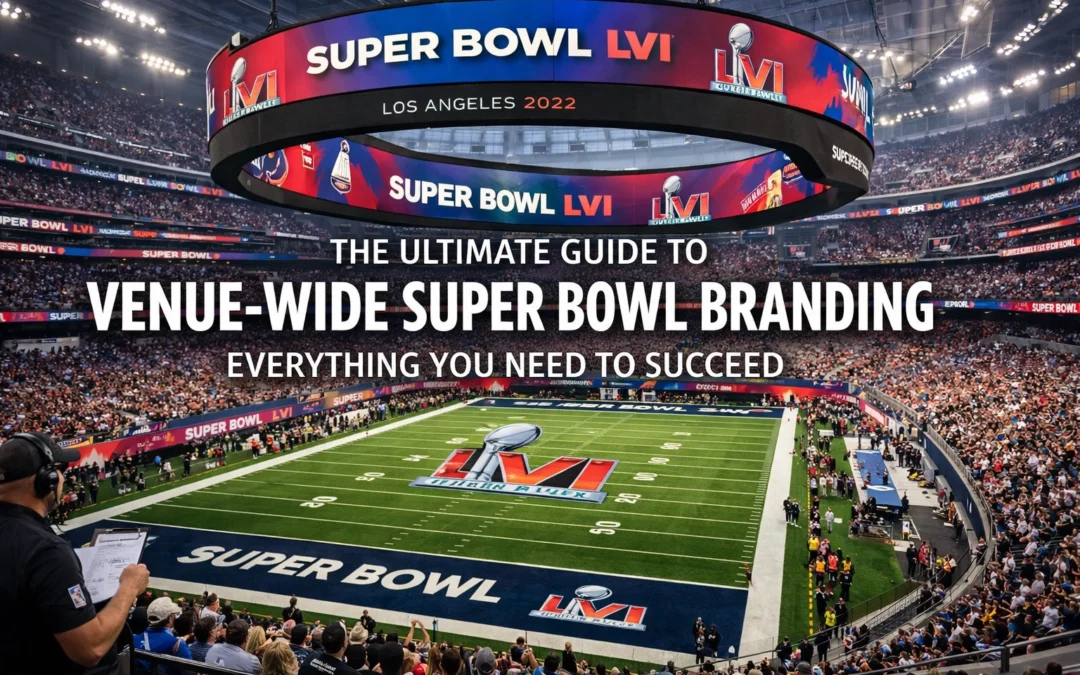
The Super Bowl remains the pinnacle of American sports and advertising. As the 2026 season reaches its height, the competition for consumer attention has moved far beyond the television screen. Achieving true impact requires a venue-wide approach that blankets the entire fan experience. OOH Sports, with 40 years of leadership in the advertising space, has mastered the art of turning stadiums into immersive brand ecosystems.
Successful branding at this level is not about a single billboard or a 30-second spot. It is about a cohesive strategy that starts at the airport, follows the fan to the hotel, and dominates every square inch of the stadium from the floors to the rafters.
https://www.youtube.com/watch?v=l6J-0zileKE
Forty Years of Advertising Leadership
Experience matters when the stakes are this high. For four decades, the leadership at OOH Sports has navigated the evolution of out-of-home advertising. The transition from static paper billboards to a network of 25,000 digital screens across America represents a massive shift in how brands communicate.
Over 40 years, the strategy has shifted from simple visibility to high-tech engagement. In the early days, a single stadium sign was the goal. Today, OOH Sports utilizes programmatic technology to ensure that messaging is dynamic, relevant, and measurable. This long-standing expertise allows the organization to secure premium placements that newer entrants simply cannot access.
The Strategy of Ground-Level Domination
One of the most overlooked aspects of stadium branding is the ground itself. Ground-level floor graphics create immediate impressions the moment a fan steps onto the property. These graphics are not just decorative; they are strategic touchpoints.
Research indicates that floor graphics at main entrances can generate thousands of exposures per hour during peak entry times. Because fans must look down to navigate crowds and stairs, the floor becomes prime real estate. Vinyl wraps on stairs and escalators extend this messaging vertically, ensuring that the brand is part of the physical journey into the venue.

By utilizing high-durability, slip-resistant materials, OOH Sports transforms mundane transit areas into high-value advertising zones. This ground-up approach ensures that the brand is the first and last thing a fan sees.
Concourse Integration and Dwell Time
Once inside the gates, the focus shifts to the concourse. The average fan spends between 60 to 90 minutes navigating the stadium before kickoff and during halftime. This dwell time is a goldmine for advertisers.
Concourse integration involves a mix of static and digital media:
- Column Wraps: These transform structural elements into 360-degree brand statements.
- Digital Screens at F&B: Placements near food and beverage stations capitalize on long lines where fans are looking for entertainment.
- Hanging Banners: Large-scale banners provide high visibility across long stretches of the concourse.
This environment is where fan engagement truly matters. Unlike social media, where a user can scroll past an ad in a millisecond, stadium concourse ads are part of the physical environment. They capture hearts and wallets by being present during moments of high emotion and excitement.
Perimeter Presence and Broadcast Synergy
The stadium perimeter is where in-person attendance meets global broadcast reach. LED displays that rotate messages during commercial breaks and between plays provide a dual benefit. They engage the 70,000 plus fans in the seats while also appearing in the background of television coverage viewed by millions.
Modern perimeter advertising is no longer static. Through programmatic DOOH (Digital Out-of-Home), brands can change their creative in real-time. If a specific player makes a game-changing play, an advertiser can update their perimeter message within minutes to reflect the current state of the game. This level of agility was impossible just a decade ago.

Data-Driven Results: The Power of Programmatic
Success in Super Bowl branding is measured by more than just "cool" visuals. It is measured by brand lift and purchase intent. OOH Sports has documented significant success through programmatic campaigns that prove the effectiveness of this venue-wide approach.
Consider these industry results:
- White Claw: A programmatic digital out-of-home campaign drove a 74% lift in purchase consideration for their vodka launch.
- AB InBev’s Mike’s Hard Iced Tea: This campaign saw a 119% lift in positive brand image.
- Sea-Doo: Their first digital OOH campaign resulted in a 144% increase in purchase consideration.
These numbers demonstrate that when a brand is integrated into the sports environment effectively, the ROI is substantial. Whether it is a holiday shopping destination in New York City or the Super Bowl, the strategy remains the same: use data to drive placement and creative.
Planning for Super Bowl LX and Beyond
For Super Bowl LX in 2026, the venue is SoFi Stadium in Los Angeles. This stadium is a marvel of modern advertising technology, featuring over 2.5 million square feet of digital display surfaces. The Oculus videoboard alone covers 70,000 square feet.
Planning for an event of this magnitude should ideally begin 12 to 18 months in advance. However, for brands looking to enter the space closer to the event, a lead time of at least 3 to 4 weeks is necessary to build a retargeting audience. This allows the brand to capture device IDs of fans at the stadium and follow up with digital ads on their mobile devices later.

The future of sports advertising is massive. It is estimated that DOOH sports advertising will hit $50 billion by 2030. Brands that fail to adopt a venue-wide, tech-forward approach will be left behind by those who understand the power of environmental immersion.
Avoiding Common Pitfalls
While the opportunities are vast, there are common mistakes that can derail a campaign. One major error is failing to maintain consistency across different formats. A floor graphic requires a different design philosophy than a 40-foot LED display, yet the brand message must remain unified.
Another mistake is neglecting the legal landscape. Unless a brand is an official NFL sponsor, they must navigate strict rules regarding the use of the term "Super Bowl," team logos, and even specific color schemes. Professional guidance from an experienced partner like OOH Sports ensures that a campaign remains impactful without crossing legal boundaries.
For those comparing programmatic DOOH versus traditional stadium ads, the data consistently points toward the flexibility and higher ROI of programmatic. The ability to launch real-time sports betting campaigns or update creative based on the score gives advertisers a level of control that static signage cannot match.
Conclusion: A Citywide Footprint
The ultimate goal of venue-wide branding is to create a citywide footprint. This means reaching the consumer at the airport, on the highway, in the concourse, and finally at their seat. By turning an entire metropolitan area into a branded canvas, a company ensures that its message is inescapable and memorable.
As sports marketing continues to evolve, the integration of physical and digital touchpoints will only deepen. With 40 years of history and a forward-looking approach to technology, OOH Sports remains at the forefront of this transformation. The Super Bowl is the ultimate stage, and with the right strategy, every floor, wall, and screen can become a powerful tool for success.

To learn more about how to capture your share of the sports marketing market, explore the OOH Sports sitemap or check out our latest insights on AI-powered DOOH vs traditional ads.