
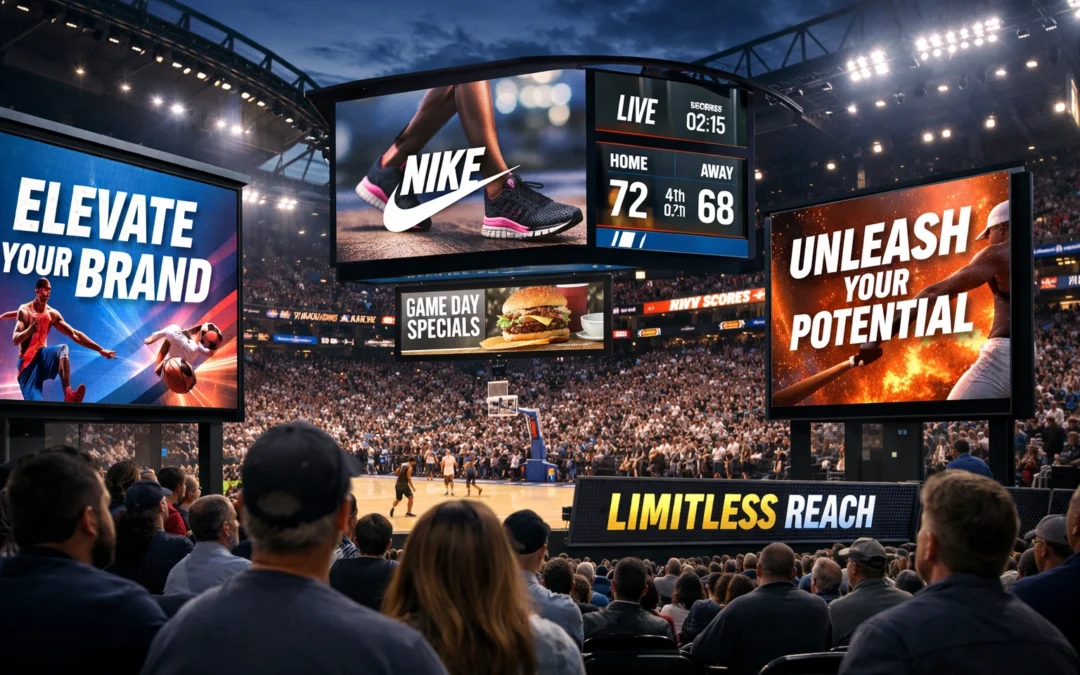
Traditional branding strategies often rely on a wide net and a lot of hope. For years, media buyers and brand managers looked at sports marketing as a binary choice. A brand could either pay for a massive stadium sponsorship or run a standard television commercial. While both have merits, they often lack the precision and flexibility required in a modern digital landscape.
The rise of Digital Out of Home (DOOH) advertising within the sports vertical has fundamentally shifted this dynamic. By merging the emotional power of live sports with the technical precision of programmatic buying, sports DOOH is changing how brands communicate with their audiences. This evolution is not just a new tool in the kit. It is a total overhaul of the branding strategy.

The Shift From Static to Dynamic Engagement
In the past, out of home advertising was defined by its permanence. A vinyl billboard stayed up for weeks or months regardless of what happened on the field. If a key player got injured or a team went on a losing streak, the brand message remained frozen.
Sports DOOH innovation has removed these barriers. Today, branding strategies are built around "authentic moment capture." This means brands can participate in shared cultural moments when fan engagement is at its peak. Whether it is a championship buildup or the excitement of an opening day, DOOH allows for real-time adjustments.
This level of agility ensures that a brand stays relevant. When a brand reacts to a live game score or a specific play through a digital screen, it creates an emotional resonance that static ads cannot match. This approach turns a passive viewer into an engaged participant in the brand story.
Capturing the Full Fan Journey
A common mistake in traditional sports marketing is focusing solely on the time fans spend inside the stadium. However, the fan experience begins long before the first whistle and continues long after the game ends. Modern branding strategies now utilize DOOH to activate across the entire fan journey.
Strategic placements reach fans at multiple touchpoints:
- Digital screens along commute routes to the venue.
- Placements in high-traffic transit hubs like airports or train stations.
- Screens inside sports bars and restaurants where fans gather.
- Digital signage in retail environments near the stadium.
This multi-touchpoint approach increases dwell time and repeated brand exposure. Fans in sports bars, for example, often stay for several hours. This provides a unique opportunity for repeated impressions in a high-excitement environment. By blanketing the ecosystem rather than just the venue, brands can achieve a much higher frequency of contact. For more on how this works in major hubs, one can look at how New York City serves as an ultimate destination for such campaigns.

Data-Driven Precision and Targeting
One of the biggest hurdles for media buyers has always been measurement. Traditional OOH was often viewed as an awareness play with limited hard data. Sports DOOH innovation has fixed this by introducing programmatic capabilities.
Media planners can now use dayparting, demographics, and location data to trigger ads. This ensures that the message is only shown when the target audience is most likely to see it. For instance, a brand might choose to trigger ads only when certain weather conditions are met or when specific betting odds shift.
The ability to track footfall attribution and conduct brand lift studies brings DOOH in line with other digital channels. This transparency allows brand managers to see exactly how their spend is translating into action. Research into programmatic DOOH vs traditional stadium ads highlights that the ROI often favors the digital approach due to this reduction in wasted impressions.
Quantifiable Results in Sports DOOH
The success of these strategies is not just theoretical. Data from recent campaigns shows significant lifts across various brand metrics. When brands move away from a one size fits all approach and toward a targeted DOOH strategy, the numbers tell the story.
Consider the following benchmarks:
- White Claw: A programmatic DOOH campaign for a vodka launch drove a 74% lift in purchase consideration. Detailed results of this campaign can be found in the White Claw case study.
- AB InBev: The Mike’s Hard Iced Tea campaign saw a 119% lift in positive brand image.
- Sea-Doo: This brand achieved a 144% increase in purchase consideration through its first digital OOH campaign.
These results are possible because DOOH targets the consumer when they are in a "ready to buy" mindset. Whether they are at a bar or near a retail outlet, the proximity to the point of purchase is a critical factor in these high percentage gains.

Omnichannel Integration and the Multiplier Effect
Branding strategies are most effective when they do not exist in a vacuum. Sports DOOH innovation allows for seamless integration with other channels like social media, connected TV (CTV), and mobile advertising.
A fan might see a digital billboard on their way to a game, see a different creative on a screen in a sports bar, and then receive a retargeted ad on their mobile device or social feed the next day. This creates a unified experience that mirrors how modern fans consume content.
This synergy is why many media planners are shifting their budgets. By 2026, it is estimated that 67% of media planners will have shifted budgets toward these more flexible and integrated formats. It allows for a "top of funnel" awareness play that leads directly into "bottom of funnel" conversion tactics.
Breaking the Barrier to Entry
For a long time, premium sports advertising was the playground of brands with multi-million dollar sponsorship budgets. Innovation in the DOOH space has democratized this access. Local and regional brands can now access the same high-value audiences without the need for long-term stadium contracts.
Using programmatic platforms, brands can buy inventory on a flexible basis. This allows for testing and optimization that was previously impossible. A brand can launch a campaign, monitor performance, and adjust the creative or the targeting parameters in real time. This agility is vital for launching real-time sports betting campaigns where odds and game states change by the minute.

Driving Real World Fan Action
The ultimate goal of any branding strategy is to drive action. Sports fans are a unique demographic because they are highly active and likely to spend money during game days. Research shows that 90% of sports fans who see OOH ads take some form of action. This might include a search for the brand, a social media mention, or a direct purchase.
Furthermore, nearly all fans (99%) attending games after being exposed to OOH ads spend money locally. This demonstrates the medium's significant economic impact and its ability to drive foot traffic to nearby businesses. This local impact is why many brands are focusing on stadium perimeter targeting to capture fans when they are most likely to spend.
Future Outlook for Sports Branding
As we look toward the future, the integration of AI and more sophisticated data sets will only increase the power of sports DOOH. The ability to analyze audience movement patterns and sentiment in real time will allow for even more personalized brand experiences.
With the sports DOOH market projected to reach 50 billion by 2030, the infrastructure for these campaigns is expanding rapidly. New stadiums and transit hubs are being built with digital signage as a core component, creating thousands of new opportunities for brands to connect with fans.
Branding strategies that fail to account for these innovations risk falling behind. The shift from "spraying and praying" to precision-targeted, real-time engagement is not a trend. It is the new standard for excellence in the advertising industry. By leveraging the scale of 25,000 digital screens and the power of programmatic buying, brand managers can ensure their message is not just seen, but felt and acted upon.
Strategically, the move toward sports DOOH represents a transition from buying "space" to buying "moments." For any media buyer looking to maximize impact and ROI, this innovation is the key to building a branding strategy that actually moves the needle in a crowded marketplace.