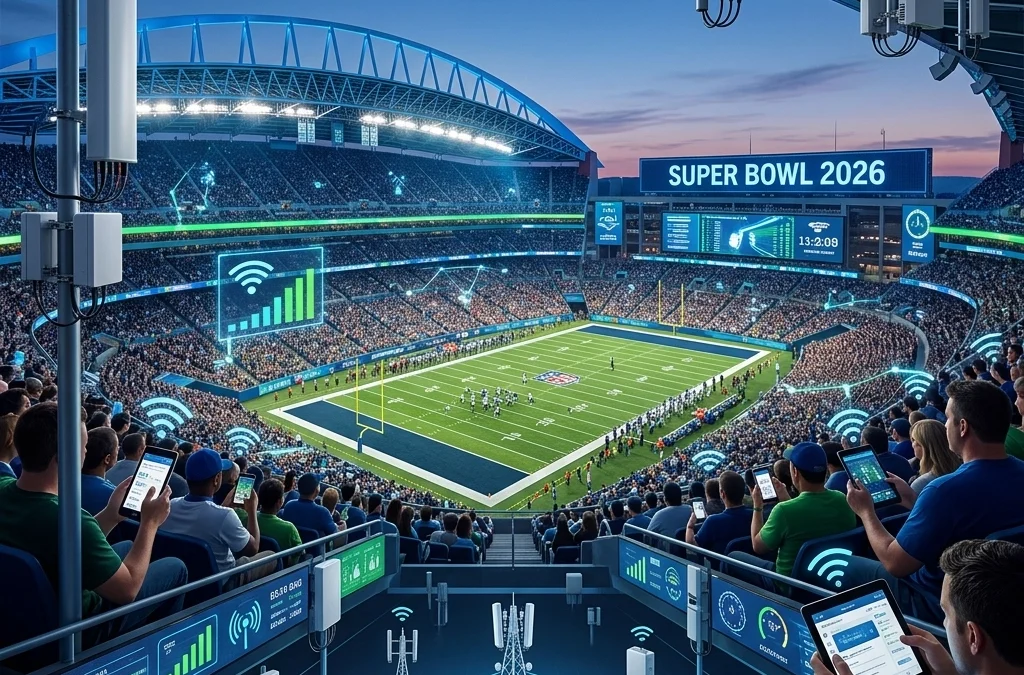
The conclusion of Super Bowl LX at Levi’s Stadium in Santa Clara marked a pivotal moment in the history of sports marketing. As of March 31, 2026, the industry is still analyzing the data from a game that combined high stakes athletics with an unprecedented level of advertising integration. With forty years of leadership in the advertising space, OOH Sports monitored the shift from traditional static placements to a fully immersive, venue-wide digital ecosystem.
The 2026 championship was not just a game. It was a masterclass in how modern infrastructure and strategic out-of-home (OOH) placements can turn a stadium into a cohesive brand experience. By leveraging a 200 million dollar renovation at Levi’s Stadium, brands moved beyond simple commercials to occupy every square inch of the fan journey, from the floors of the concourse to the massive 4K video boards towering over the field.
Objective and Strategy: The $200 Million Transformation
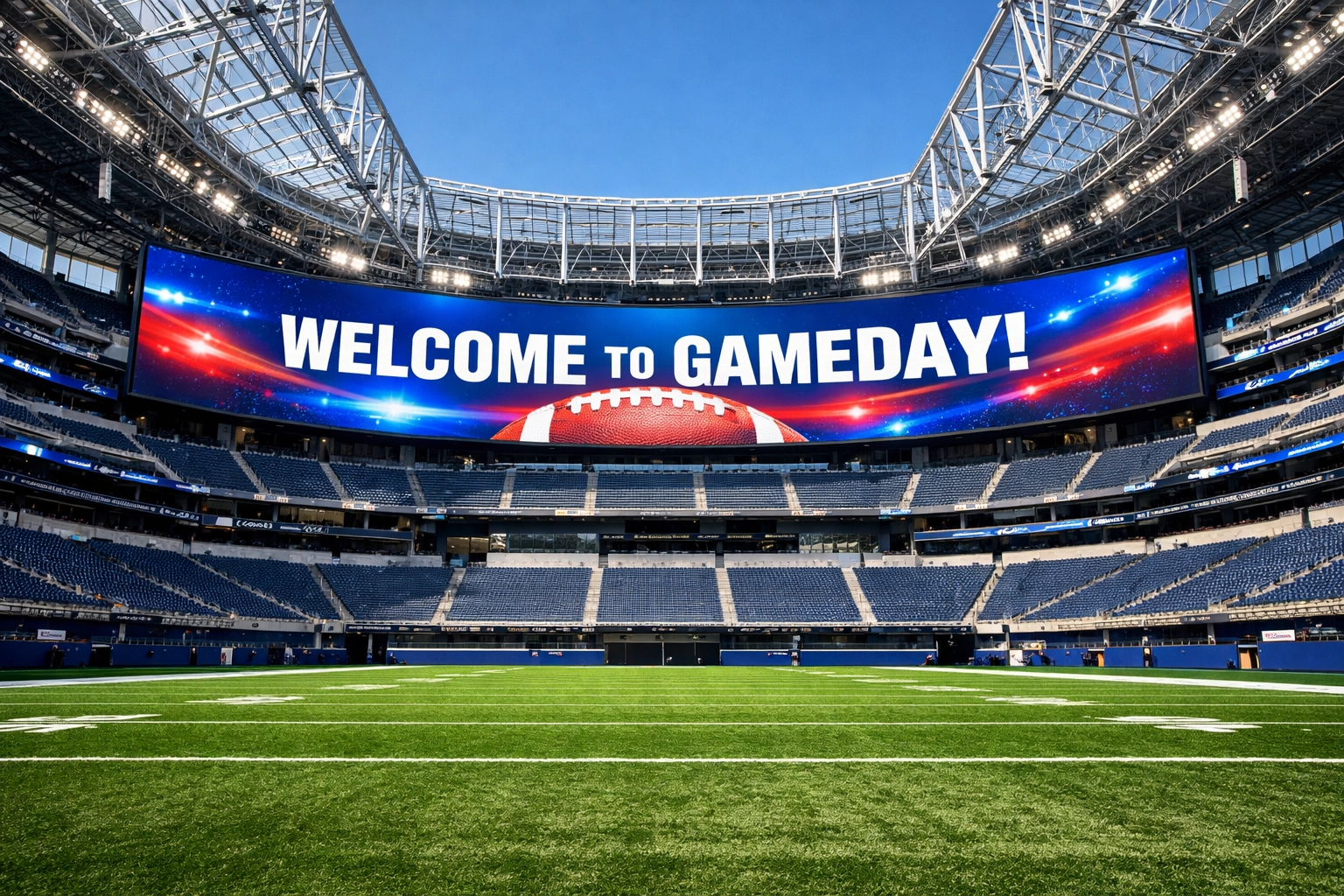
The primary objective for major advertisers in 2026 was to achieve 100 percent visibility within the host venue. This was made possible by the extensive upgrades at Levi’s Stadium. The renovation introduced 4K video boards measuring 48 feet tall by 200 feet wide, currently the largest in the NFL. These screens provided the canvas for high definition brand storytelling that could be seen from every seat in the house.
The strategic approach shifted from "spot buying" to "venue dominance." Instead of competing for a single 30 second television slot, brands utilized programmatic digital out-of-home (DOOH) to maintain a constant presence. This included:
- Synchronized messaging across all 25,000 digital screens within the stadium perimeter.
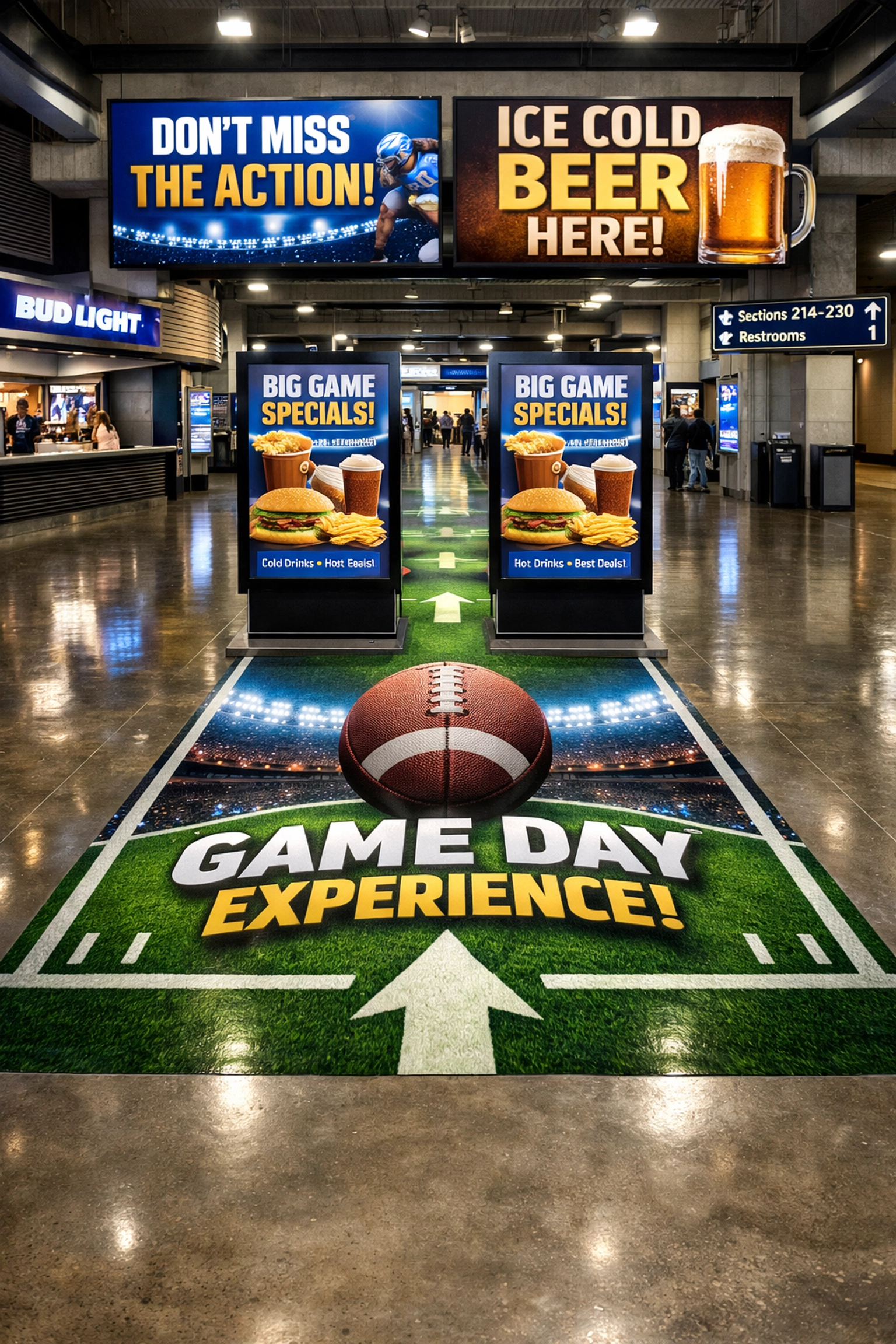
- Floor graphics and physical installations that guided fans through the concourse.
- Real-time triggers that updated creative content based on game play and score changes.
By reducing seating capacity to 65,000 to accommodate an expanded media footprint, the NFL created a more concentrated environment for brand exposure. The massive electrical infrastructure, including 6,000 kVA of internal load, ensured that these digital displays operated without interruption, even during the peak energy demands of the Apple Music Halftime Show headlined by Bad Bunny.
40 Years of Advertising Leadership: From Billboards to Ecosystems
OOH Sports has observed the evolution of sports marketing over four decades. In the 1980s, stadium advertising consisted primarily of static signage and fence banners. Today, the landscape is defined by connectivity and data. The "secrets" revealed in 2026 center on the concept of the "omnichannel stadium."
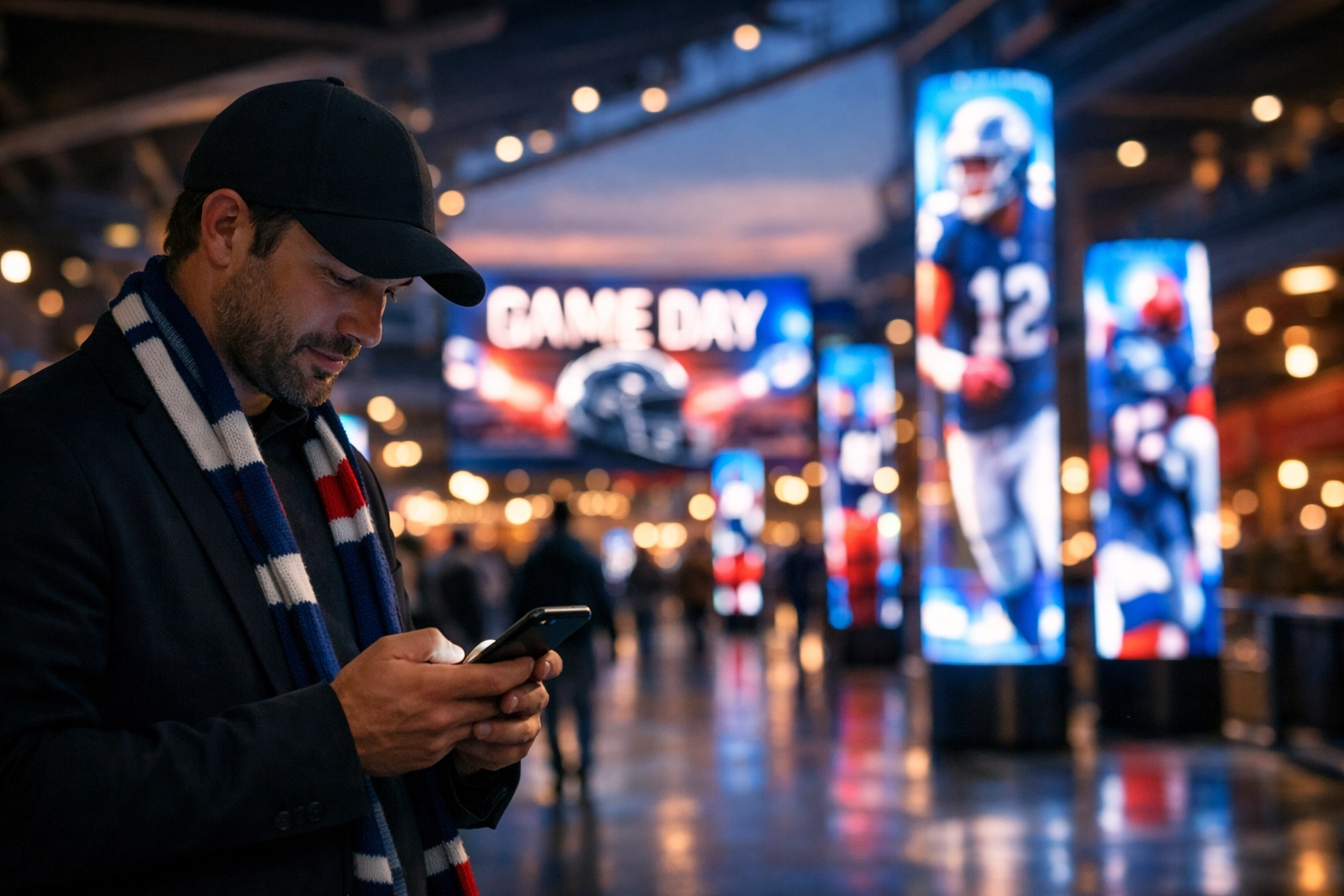
Successful brands in 2026 did not treat OOH as a standalone medium. Instead, they integrated it with mobile and social strategies. For example, a fan seeing a digital billboard on the way to the stadium would see a similar creative on the stadium floor, followed by a targeted ad on their mobile device via local geofencing. This repetitive, multi-touchpoint strategy is proven to drive results. Previous studies indicated that programmatic DOOH campaigns can lead to a 74 percent lift in purchase consideration, a figure that was likely surpassed during the 2026 championship.
Technology Partners and Infrastructure
The technical execution of Super Bowl LX relied on a sophisticated web of partners and infrastructure. The deployment of tournament-grade natural grass and upgraded drainage systems might seem unrelated to advertising, but these facility improvements ensured a flawless broadcast environment. A perfect field leads to more high-quality replays, which in turn leads to more eyes on the perimeter digital boards.
The use of programmatic platforms, such as the StackAdapt DSP, allowed advertisers to bid on screen time in real-time. This eliminated the guesswork associated with traditional sponsorships. Rather than committing to a fixed image months in advance, brands adjusted their creative based on the live atmosphere of the game.
https://www.youtube.com/watch?v=l6J-0zileKE
Tactics: Floor-to-Ceiling Coverage
The most successful campaigns at Super Bowl LX utilized a "floor-to-ceiling" tactic. This means the brand was visible at every eye level:
- Floor Level: High-traffic areas in the concourse featured durable, non-slip floor wraps that directed fans to concessions or activated augmented reality (AR) experiences.
- Eye Level: Digital screens at eye level in the lounges and suites provided detailed product information during game breaks.
- Sky Level: The massive 4K video boards handled the "hero" content, delivering cinematic advertisements that captured the attention of both the live crowd and the global broadcast audience.
This layered approach ensures that even when a fan looks away from the main action, the brand remains in their field of vision. This strategy addresses one of the major mistakes made with sports DOOH campaigns, which is focusing only on a single screen rather than the entire fan environment.
The Halftime Effect and Real-Time Engagement
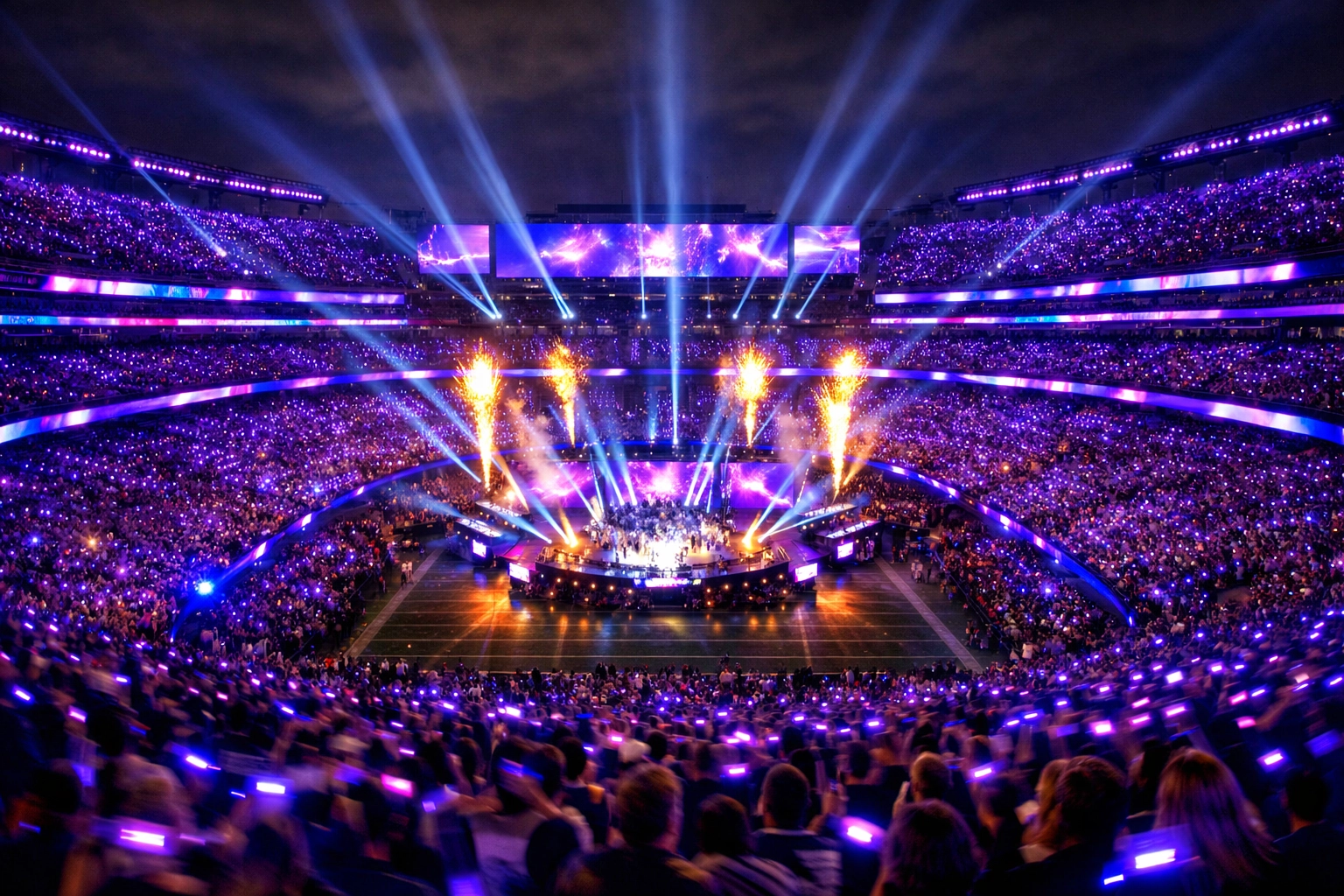
The Apple Music Halftime Show, featuring Bad Bunny, presented a unique opportunity for venue-wide integration. While the world watched the performance, brands used the stadium’s 5,200 kVA of external electrical load to power surrounding light shows and synchronized digital displays.
The strategy was to complement the performance rather than compete with it. For instance, brands used the stadium's external LED ribbons to pulse in time with the music, creating a unified sensory experience. This level of coordination is a significant leap from the days of simple 30 second TV spots. By 2030, sports advertising is expected to hit 50 billion dollars, and the 2026 Super Bowl served as the blueprint for how to capture a share of that market.
Results: Measuring the Impact of Venue-Wide Coverage
While traditional TV ratings are often the headline, the real story of Super Bowl 2026 is found in the data from the stadium itself. AI-powered analytics now allow for the measurement of "dwell time" and "engagement" for physical ad placements. By tracking device IDs and movement patterns, advertisers could see exactly how many people interacted with a floor wrap or paused to watch a digital board.
The data suggests that venue-wide coverage delivers a superior return on investment (ROI) compared to traditional, isolated stadium sponsorships. Brands that utilized the stadium perimeter and concourse displays saw significantly higher brand recall than those that relied solely on a single jumbotron spot. This shift is why 67 percent of media planners are moving budgets toward programmatic and venue-wide DOOH as we head toward the late 2020s.
Key performance indicators (KPIs) from the 2026 event included:
- A notable increase in positive brand image, similar to the 119 percent lift seen in previous programmatic campaigns.
- Increased purchase consideration driven by real-time betting ads and "click-to-buy" mobile integrations triggered by stadium displays.
- Enhanced fan engagement through interactive floor graphics that linked to social media filters.
Logistics and Execution: The Backbone of Success
The success of Super Bowl LX advertising was as much about logistics as it was about creative. The coordination required to manage thousands of digital assets across a 200 million dollar renovated facility is immense. OOH Sports highlights the importance of the technical infrastructure, such as the 11,200 kVA total power capacity, which allowed for complex, high-draw digital installations without risking the integrity of the game's broadcast.
Furthermore, the decision to reduce seating to accommodate media crews ensured that every angle of the stadium was broadcast-ready. This "media-first" stadium design meant that the ads placed within the venue were not just for the 65,000 people in attendance, but for the hundreds of millions watching at home. Every camera pan across the crowd or the sideline was an opportunity for a brand to appear organically within the frame.
Conclusion: Lessons for the Future
As the dust settles on Super Bowl 2026, the advertising industry is left with a clear message: the future of sports marketing is venue-wide and digitally integrated. The "secrets" of Levi’s Stadium are now the standard for major events, including the upcoming 2026 FIFA World Cup.
Brands that want to win in this new era must look beyond the screen and consider the entire physical environment. From the drainage systems that ensure a perfect field to the massive 4K boards that dominate the skyline, every element of the stadium is a potential touchpoint. By combining 40 years of industry knowledge with cutting-edge DOOH technology, OOH Sports continues to lead the way in showing brands how to dominate the biggest games of the year.