
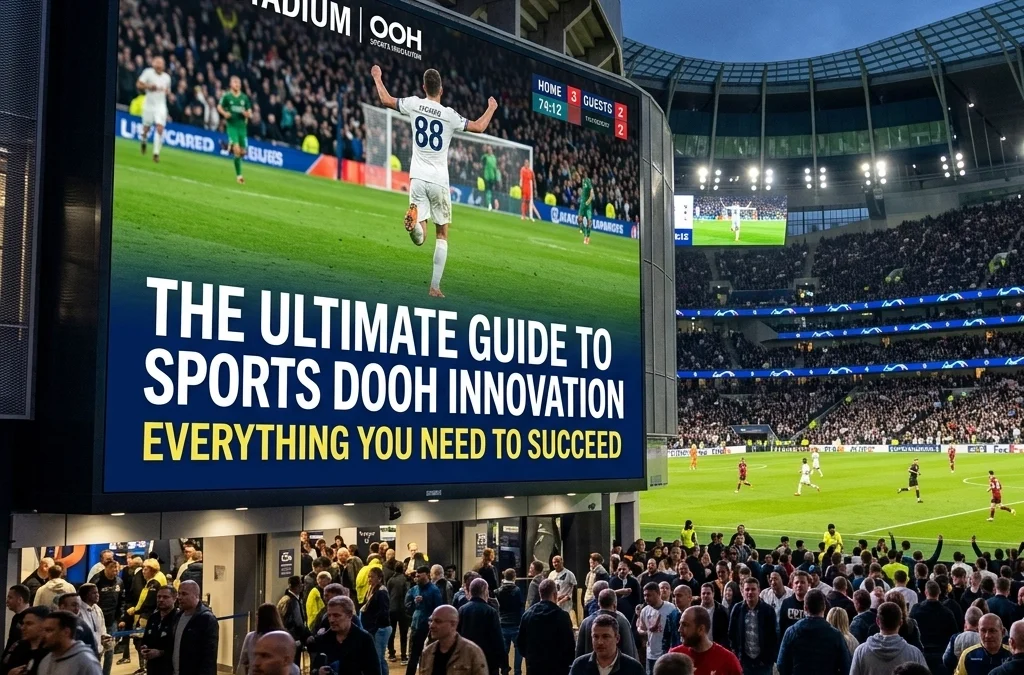
Sports marketing has undergone a fundamental transformation. The traditional model of relying solely on stadium signage and television spots is no longer sufficient to capture the attention of modern fans. Success in the current landscape requires a routine-based strategy that engages fans throughout their entire journey, from the moment they leave their homes to the moment the final whistle blows. Digital Out-of-Home (DOOH) advertising stands at the center of this innovation, offering brands the ability to be present in the everyday spaces where fans live, work, and play.
The Strategic Evolution of Sports Marketing
The modern fan experience is fragmented across multiple platforms and physical locations. Research indicates that a significant majority of fan attention exists outside the arena. Consequently, effective marketing strategies have shifted from venue-centric approaches to fan-centric models. This shift is defined by three primary pillars: hyper-personalization, direct engagement, and year-round community presence.
Instead of viewing DOOH as a series of isolated placements, top-tier media buyers now treat it as a coordinated narrative. This approach ensures that a brand follows the fan across different touchpoints, creating a sense of ubiquity and relevance that static media cannot replicate. By utilizing platforms like OOH Sports, brands can bridge the gap between digital excitement and physical presence.
Dynamic Creative Optimization: The New Standard
Static creative assets are increasingly viewed as obsolete in the high-stakes world of sports advertising. Dynamic Creative Optimization (DCO) has turned DOOH into a responsive storytelling tool. This technology allows advertisements to change automatically based on real-time data triggers.
Common triggers for sports-themed DCO include:
- Live game scores and play-by-play updates.
- Local weather conditions affecting game attendance or beverage choices.
- Social media trends and fan sentiment.
- Time of day relative to the event schedule.
- Geographic proximity to specific sports bars or stadiums.
For example, a sports apparel brand can switch its creative to feature rain gear the moment a storm is detected near a stadium. Similarly, a beverage company can trigger specific messaging for "cold drinks" when the temperature exceeds a certain threshold. This level of relevance ensures that the message is not just seen but is actually useful to the consumer in that specific moment.

The Multi-Moment Activation Framework
Successful campaigns typically follow a three-phase framework designed to maximize impact across the entire event lifecycle.
The Pre-Game Phase
The 48-hour window before a game is critical for building anticipation. During this time, fans are planning logistics, checking betting lines, and consuming sports media. DOOH screens in transit hubs, office buildings, and retail centers are ideal for providing practical value. Brands often use this phase to display countdown clocks, broadcast schedules, or real-time betting odds to capture the attention of fans as they prepare for the event.
The During-Game Phase
While the action is happening, the goal is to drive excitement and maintain brand presence. This is achieved by displaying live scores and game highlights on street-level screens and digital billboards. By providing real-time value to fans who may not be watching a live stream, brands establish themselves as a primary source of information.
The Post-Game Phase
The period immediately following a game is often overlooked but provides a unique opportunity for relevance. Messaging can be automatically adjusted based on the outcome of the game. A brand might run celebratory creative in a winning city and supportive or "next game" messaging in the city that lost. This reactivity demonstrates a deep connection to the fan base and the emotional stakes of the sport.
Data-Driven Targeting and Programmatic Precision
The rise of programmatic DOOH has replaced general broadcasting with precision targeting. Modern screens are powered by location intelligence and mobility data. This allows brands to understand the behavioral patterns of the people passing a screen.
Media buyers can now leverage geospatial technology to activate media based on audience movement patterns. This includes:
- Proximity Targeting: Activating screens within a specific radius of key points of interest such as stadiums, fan zones, or airports.
- DMA Surrounding: Strategically placing messaging in specific designated market areas based on geographic team allegiance.
- Real-time Bidding: Programmatically bidding on inventory only when target audiences are present in the vicinity of the screen.
Because of this agility, a large portion of media planners are shifting budgets toward DOOH. It provides the scale of traditional out-of-home advertising with the flexibility and data-rich environment of digital marketing.
Synchronized Format Strategy
The most effective sports DOOH campaigns do not rely on a single screen type. Instead, they distribute investment across a variety of formats to create a narrative progression.
- Digital Billboards: Used along major highways to establish initial brand presence and reach traveling fans.
- Transit Advertising: Reinforces the message during commutes to and from the venue.
- Airport Displays: Captures out-of-town fans arriving for major tournaments or championships.
- Street-Level Installations: Provides the final touchpoints before fans enter the stadium area.
- Sportrons: Specialized digital units that offer high-impact visuals in prime sports environments. More information on these units can be found at https://oohsports.com/sportrons.

Quantifiable Results and Measurement
Measurement in DOOH has moved far beyond simple "impressions." Brands now use brand lift studies and device ID tracking to measure the real-world impact of their campaigns. Several high-profile campaigns have demonstrated the effectiveness of this approach.
For instance, a programmatic DOOH campaign for White Claw's vodka launch resulted in a 74 percent lift in purchase consideration. This success was attributed to the ability to target consumers in the right context with relevant messaging. Similarly, Mike's Hard Iced Tea saw a 119 percent lift in positive brand image by utilizing a programmatic approach that aligned with consumer routines.
Another notable example is Sea-Doo, which utilized its first digital OOH campaign to increase purchase consideration by 144 percent. These results highlight a consistent trend: when brands use data to inform their DOOH placement, the return on investment is significantly higher than traditional, non-digital methods. Detailed breakdowns of these outcomes are available in the OOH Sports case study section.
Implementation Checklist for Media Buyers
To achieve success in sports DOOH innovation, brand managers and media buyers should follow a structured execution process:
- Define Live Triggers: Determine which data points (scores, weather, odds) will trigger specific creative variations.
- Map the Fan Journey: Identify the physical locations fans frequent before, during, and after a game.
- Secure Programmatic Access: Use platforms that allow for real-time bidding and optimization to maintain flexibility.
- Align Creative with Context: Ensure that the visual assets make sense for the specific environment, such as high-contrast designs for roadside billboards and detailed content for pedestrian-level screens.
- Establish Measurement Protocols: Work with partners to track brand lift, foot traffic, or purchase intent to validate the campaign's success.
- Coordinate with Other Channels: Ensure the DOOH messaging is consistent with social media, connected TV, and mobile advertising efforts.
The Economics of Modern Sports Advertising
Scale and cost-effectiveness are major drivers of DOOH adoption. With tens of thousands of digital screens available across the country, brands can scale their presence for a fraction of the cost of official stadium sponsorships. While official sponsorships are often locked into multi-year contracts with limited flexibility, DOOH allows for short-term, high-impact activations that can be adjusted on the fly.
Brands are no longer just buying a static piece of inventory. They are buying a specific moment in a fan's daily life. This routine-based approach acknowledges that the sports experience does not start at the gate. It starts when the fan wakes up and checks the schedule, and it ends when they are discussing the highlights the next day.

Conclusion of Strategy
Innovation in sports marketing is currently defined by the integration of live data, programmatic flexibility, and strategic geographic placement. By moving beyond the stadium and into the streets, transit hubs, and retail centers, brands can create a continuous connection with fans. The ability to measure these interactions through advanced data analytics ensures that every dollar spent is optimized for maximum brand lift and purchase consideration. For those looking to implement these strategies, the resources at oohsports.com/marketing provide a roadmap for navigating this complex but rewarding landscape.