
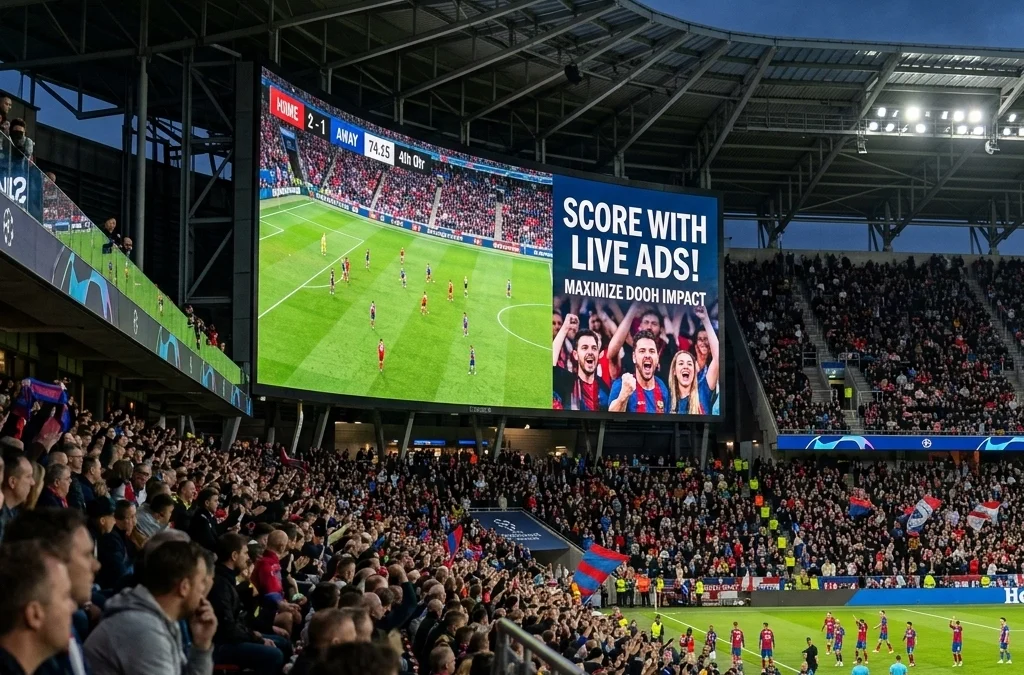
Digital Out-of-Home (DOOH) advertising has completely changed the way brands connect with sports fans. It is no longer just about buying a billboard and hoping for the best. Today, it is about data, timing, and engagement. However, even the most seasoned marketing teams fall into common traps that drain budgets and lower ROI.
At OOH Sports, we see these mistakes every day. The good news? They are all easy to fix if you have the right strategy and tools in place. Whether you are targeting fans at the stadium, in transit, or at the local sports bar, here are the seven biggest mistakes brands make with sports DOOH and how to turn them into wins.
1. Treating Digital OOH Like a Static Billboard
The biggest mistake many brands make is the "set it and forget it" mentality. They take a static image designed for a traditional vinyl billboard and run it on a high-definition digital screen for an entire month. This completely ignores the "digital" part of DOOH.
When you treat a digital screen like a static one, you miss out on the ability to swap creative based on the time of day, the score of the game, or even the weather. Fans are looking for fresh, relevant content. A static ad that stays the same for four weeks quickly becomes part of the background noise.
The Fix: Use dynamic creative. Digital screens allow you to rotate multiple versions of an ad. You can highlight different products, change your messaging to match the pre-game versus post-game mood, or use Sportrons to ensure your message is hitting the right eyes at the right time.
2. Ignoring the Hyper-Local Atmosphere
Sports are deeply rooted in local culture. A fan in Chicago has a very different emotional connection to their team than a fan in Los Angeles. Many brands run a generic national campaign that feels cold and disconnected from the local energy of the host city or venue.
If your ad is running outside a stadium in Philadelphia but features generic imagery that could be anywhere, you are failing to build a bond with the audience. Fans want to feel like you are part of their community.
The Fix: Tailor your messaging to the local vibe. Mention the local team colors, use local slang, or reference specific landmarks near the venue. Context is everything. When you acknowledge the environment the fan is currently standing in, your brand feels more authentic and less like a corporate intrusion.

3. Missing the "Second Screen" Integration
One of the biggest missed opportunities in sports DOOH is the lack of a bridge between the physical screen and the fan's mobile device. We know that sports fans are multi-taskers. They are watching the game, checking stats on their phones, and posting to social media all at once.
If your DOOH ad is a one-way street with no way for the fan to interact, you are losing valuable engagement data. You are also missing a chance to move them further down the sales funnel while their excitement is high.
The Fix: Integrate "second screen" triggers. Use QR codes, custom URLs, or social media prompts that encourage fans to take an immediate action. This turns a passive viewing experience into an active one. We have seen this work exceptionally well in campaigns like the Sea-Doo digital OOH launch, which saw a massive 144% increase in purchase consideration by effectively capturing audience interest.
4. Overcomplicating the Creative
In the world of sports, things move fast. Whether people are walking into a stadium, driving past a digital display, or standing in a crowded bar, you only have a few seconds to grab their attention. A common mistake is trying to cram too much information into one ad.
Too much text, multiple calls to action, and cluttered graphics will cause a viewer to tune out. If they cannot understand what you are selling and why it matters in under three seconds, the ad has failed.
The Fix: Stick to the "one-three-five" rule. One clear image, three words for the headline (if possible), and no more than five total elements on the screen. Keep it simple and punchy. Your goal is to create a visual "gut punch" that sticks in the fan's memory long after they have moved past the screen. For more tips on creative excellence, check out our marketing resources.
5. Over-Reliance on Social Media for Live Engagement
Many brands think that if they want to reach fans during a game, they should put all their money into social media ads. While social is important, it has a major flaw: during the most exciting moments of a game, fans are looking up, not down.
When a touchdown is scored or a home run is hit, fans aren't scrolling Instagram; they are cheering and looking at the big screens. If your brand is only on their phone, you are missing the peak emotional moments of the event.
The Fix: Balance your spend between social and physical DOOH. Use perimeter ads and large-format digital displays to capture that "eyes up" attention. By being present on the physical screens during high-emotion moments, you associate your brand with the thrill of the game. You can see how brands like Nike navigated this during major events on our blog.

6. Failure to Synchronize with Game-Day Triggers
Timing is the difference between a viral success and a total flop. A common mistake is running a "celebration" ad when the home team is losing by thirty points, or promoting a cold beverage when an unexpected rainstorm has fans shivering.
Tone-deaf messaging can actually hurt your brand reputation. If you aren't reacting to what is happening in real-time, you are just another noisy advertisement.
The Fix: Use programmatic DOOH to set triggers. Programmatic technology allows your ads to change automatically based on live data feeds. You can set triggers for a win, a loss, a specific player's performance, or even the temperature outside. This ensures your message is always contextually relevant. Brands like AB InBev have seen a 119% lift in positive brand image by using these types of smart, programmatic strategies.
7. Lack of Real-Time Analytics and Proof of Play
For a long time, Out-of-Home was considered a "black box" where you couldn't really measure who saw your ad or if it worked. Some brands still operate this way, relying on outdated estimates and "gut feelings" to measure success.
In 2026, there is no excuse for not having hard data. If you aren't tracking impressions, engagement, and conversion lift, you are essentially guessing with your marketing budget.
The Fix: Demand transparency and real-time analytics. Modern DOOH platforms provide detailed "proof of play" reports and use device ID tracking to measure how many people saw an ad and later visited a website or store. For example, White Claw used programmatic DOOH to drive a 74% lift in purchase consideration for a new product launch. They didn't guess; they used data to prove it worked.

Why These Fixes Matter Right Now
The sports landscape is more competitive than ever. Fans are bombarded with content from every direction. To stand out, your OOH strategy needs to be as agile as the athletes on the field.
By avoiding these seven mistakes, you move from being a background advertiser to being a part of the fan experience. You stop wasting money on generic, static images and start investing in dynamic, data-driven stories that actually move the needle.
At OOH Sports, we specialize in helping brands navigate these complexities. From our Sportrons technology to our deep understanding of programmatic DOOH adoption, we provide the tools you need to win.
Final Thoughts: Your Next Move
If you are looking at your current sports advertising strategy and seeing these mistakes, don't worry. Most of these fixes can be implemented quickly. Start by auditing your creative. Is it too busy? Is it static? Is it generic?
Once you have the creative right, look at your placement. Are you reaching fans where they are actually looking? Finally, make sure you have the data to back up your decisions.
If you're ready to take your sports DOOH to the next level, we’re here to help. You can learn more about our approach on our About page or reach out to us directly through our Contact page. Let's stop making these mistakes and start building campaigns that fans actually care about.
Stay tuned to our blog for more insights into the ever-evolving world of sports advertising. We're constantly tracking the latest trends in New York City, Los Angeles, and every major sports hub in between to ensure our partners stay ahead of the game. Whether it's the holiday shopping season or the heat of the playoffs, the right OOH strategy is your best teammate.