
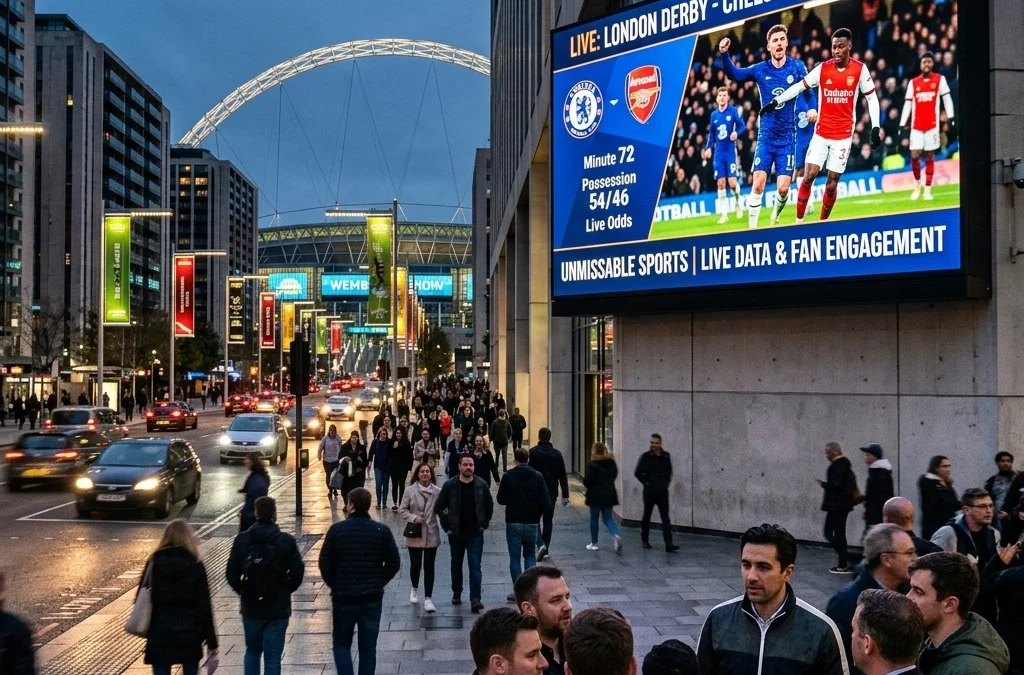

The landscape of sports marketing is shifting rapidly. For media buyers and brand managers, the challenge is no longer just about getting a logo in front of fans. The real goal is to capture attention in an environment where every second counts. Traditional stadium billboards are being replaced by high-tech, flexible solutions. Digital Out-of-Home (DOOH) advertising has emerged as the frontrunner for brands seeking a measurable, high-impact presence.
OOH Sports provides the tools and locations necessary to dominate this space. By moving beyond static images and embracing innovation, brands can create memorable experiences that drive results. Here are 10 sports DOOH innovation secrets that provide a serious competitive edge.
1. Dynamic Creative and Real-Time Data Triggers
One of the most powerful secrets in modern sports advertising is the use of dynamic creative. This technology allows advertisements to change automatically based on what is happening in the physical world. Instead of running a single, unchanging ad for weeks, marketers can set specific triggers.
For example, a creative asset can change instantly when a home team scores a touchdown or a goal. The display can switch from a general brand message to a celebratory "GOAL!" graphic featuring the brand logo. This makes the advertisement feel like a part of the event rather than an interruption. Other triggers include weather conditions, the time of day, or even the current temperature. This level of relevance ensures that the messaging always feels fresh and timely to the fans in attendance.
2. Phygical Experiences and Interactive QR Codes
The term "phygical" refers to the blending of physical and digital experiences. In a sports environment, fans are often looking for ways to engage further with their favorite teams. Media buyers are increasingly using DOOH screens to bridge this gap via interactive capabilities.
By incorporating large-scale QR codes on digital displays, brands can turn a passive viewing experience into an active one. Fans can scan a code to receive instant discounts on merchandise, enter a halftime contest, or download a team-specific app. This tactic does more than just drive engagement, it allows OOH Sports partners to collect valuable first-party data. Understanding who is interacting with the ad and where they are located provides a significant advantage for future retargeting efforts.
3. Synchronized Multi-Screen Strategy (TVOOH)
A major innovation in the industry is TV Out-of-Home (TVOOH) synchronization. This strategy involves coordinating the timing of digital outdoor ads with live television broadcasts or stadium big screens. When a fan sees a brand on the main stadium scoreboard and then sees a reinforced message on a digital screen near the concessions or outside the stadium gates, the impact is multiplied.
This multi-screen approach creates a powerful omnichannel moment. It ensures that the brand remains top-of-mind during high-emotion periods of the game, such as a crucial penalty kick or the final minutes of a championship. By surrounding the fan with consistent messaging across different formats, brands achieve a much higher level of recall.

4. Programmatic Precision and Scalability
The move toward programmatic DOOH (pDOOH) has revolutionized how sports marketing budgets are allocated. Programmatic technology allows media buyers to purchase screen time in real-time through automated platforms. This means a campaign can be scaled up or down instantly based on specific needs.
If a team is performing better than expected and ticket sales are surging, a brand can quickly increase its presence on Sportrons and other digital displays. Conversely, if conditions change, the budget can be shifted to different locations or times. This level of flexibility was impossible with traditional billboard advertising. Brands can now target specific demographics with the same precision they use for web-based ads, ensuring that every dollar spent is optimized for maximum reach.
5. Advanced Audience Measurement and Attribution
For a long time, the biggest hurdle for Out-of-Home advertising was proving the Return on Investment (ROI). Modern DOOH has solved this through advanced measurement and attribution tools. Using mobile location data, sensors, and device IDs, companies can now track exactly how many people were exposed to an ad.
More importantly, marketers can measure what those people did after seeing the ad. Did they visit a nearby retail store? Did they browse the brand website on their mobile device? For instance, a White Claw programmatic campaign recently showed a 74 percent lift in purchase consideration. This type of data-driven proof allows brand managers to justify their spend with hard numbers rather than estimates.
6. Real-Time Sports Updates and Localized Hype
Fans at a game or in a sports bar are constantly looking for updates. One innovation secret is to integrate live league data directly into the ad creative. This includes live scores, player statistics, or upcoming matchup information.
By providing value to the fan through useful information, the brand gains credibility. An ad that shows the live score of a rival game while displaying a subtle brand logo is more likely to be looked at than a standard promotional image. This localized hype builds a connection between the brand and the sports culture of that specific city. It positions the advertiser as a supporter of the fan experience.

7. Strategic Peak-Hour Placement
Timing is everything in sports. Innovation in DOOH allows for precise scheduling that aligns with fan movement. Media buyers can target peak hours when fans are traveling to the stadium, the moments during halftime when they are walking through the concourse, and the period immediately after the game when they are heading home.
By focusing on these high-traffic windows, brands can create a "splash" effect. Large screens on arterial roads and busy intersections near venues are used to build anticipation before the game and reinforce the brand message afterward. This strategy ensures the highest possible visibility during the times when the audience is most active and attentive.
8. 3D and Anamorphic Display Innovation
Visual storytelling has reached new heights with 3D and anamorphic displays. These screens use forced perspective to create an illusion of depth, making it look like objects are popping out of the screen toward the viewer.
These displays are highly "Instagrammable." When fans see a stunning 3D animation of a player or a product, they are likely to take a video and share it on social media. This turns a single physical location into a global viral moment. Research suggests that these innovative visuals can boost conversion rates significantly because they command attention in a way that flat images simply cannot. Brands that invest in high-quality 3D creative often see their reach extended far beyond the street corner where the screen is located.
9. Targeting High-Passion Environments
Not all ad locations are created equal. One of the best-kept secrets is the importance of "high-passion" environments. When fans are at a sporting event, they are in a heightened emotional state. They are engaged, excited, and focused.
Advertising in these venues or in the immediate surrounding areas allows brands to tap into that emotion. A message delivered during a moment of victory is perceived differently than a message seen while stuck in regular commuter traffic. By placing ads where the audience is already emotionally invested, brands can achieve a deeper level of connection. This is why sports marketing innovation continues to focus on stadium-adjacent and in-venue digital placements.

10. Proven Measurable Impact and Scaling
The final secret is the sheer scale of impact that DOOH provides compared to other formats. While a Super Bowl TV ad is famous for its reach, it is also incredibly expensive and fleeting. DOOH offers a way to maintain a high-impact presence over a longer period for a fraction of the cost.
Industry data indicates that DOOH sports advertising is on track to become a massive market, with predictions suggesting it will reach 50 billion dollars by 2030. This growth is driven by the fact that the medium works. Whether it is a Sea-Doo campaign increasing purchase consideration or a beverage brand boosting its image, the results are consistent.
Driving Results with OOH Sports
The competitive edge in sports marketing belongs to those who embrace technology and data. By utilizing dynamic triggers, programmatic buying, and interactive content, brands can move away from the "noise" and start delivering real value to fans.
OOH Sports provides the platform for these innovations to thrive. As the industry moves toward more integrated and measurable solutions, the gap between traditional advertising and digital innovation will only continue to grow. Media buyers who leverage these ten secrets will find themselves ahead of the curve, capturing the attention of fans exactly where and when it matters most.
For more information on how to implement these strategies, explore the OOH Sports blog or view a recent case study to see these principles in action.