
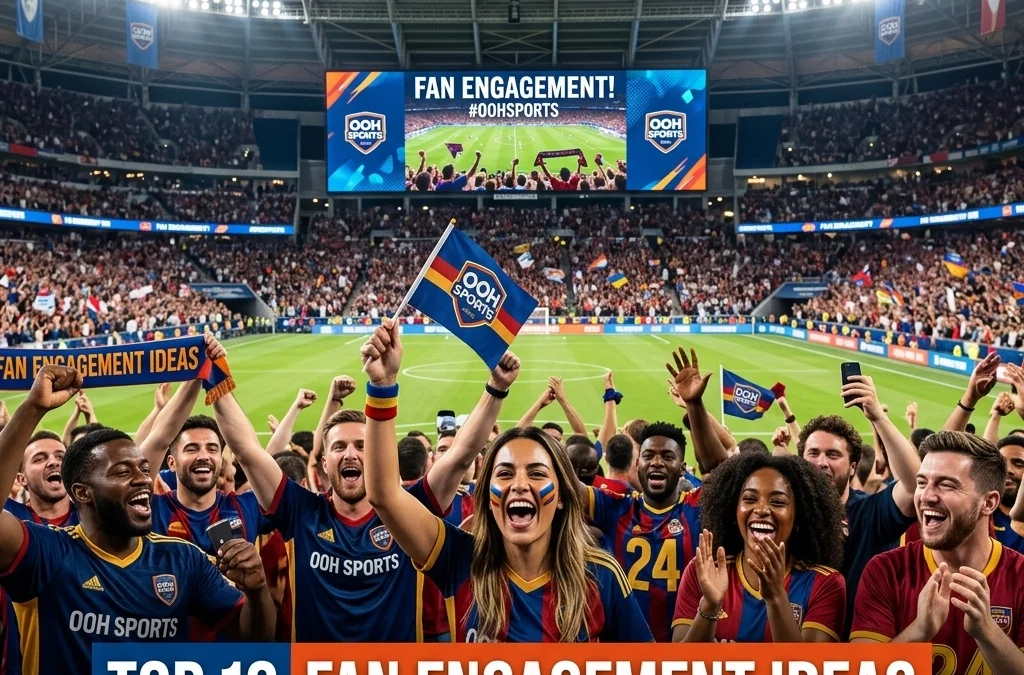
The modern stadium experience has evolved far beyond the game itself. For creative directors and CMOs, these venues represent a high concentration of captive, emotionally charged consumers. Success in this environment requires more than just static logo placement. It demands a strategic blend of physical presence and digital interaction. Stadium perimeter advertising, specifically through advanced platforms like Sportrons, provides a unique foundation for these high impact activations.
The challenge for brands is to break through the noise of the crowd. Traditional advertising often fades into the background, but fan engagement initiatives turn spectators into active participants. This shift from passive viewing to active involvement is where brand loyalty is forged. By leveraging the latest in out of home (OOH) technology and creative strategy, brands can create moments that resonate long after the final whistle.

1. Interactive Skill Challenges with Live Leaderboards
One of the most effective ways to engage fans is to tap into their competitive nature. Brands can set up physical activation zones outside the stadium or in the concourse where fans participate in skill challenges, such as a speed pitch or a football accuracy toss. The key to making this stadium-centric is the integration with perimeter digital boards.
As fans complete their challenges, their names and scores can be pushed to the Sportrons system in real time. Seeing a name on the big screen or the perimeter boards during a break in the action creates a powerful personal connection between the fan and the brand. This strategy utilizes the physical excitement of the game to fuel digital content that is highly shareable on social media.
2. Coordinated Visual Takeovers for Theme Nights
Theme nights are a staple of sports marketing, but they are often underutilized from a branding perspective. A coordinated visual takeover involves syncing all digital assets in the stadium, including the perimeter boards and the main scoreboard, to match a specific brand aesthetic or campaign theme.
When a brand sponsors a "Black Out" or "Neon Night," the perimeter advertising should not just show a logo. It should contribute to the atmosphere with dynamic, ambient motion graphics that reinforce the theme. This level of visual saturation ensures that the brand becomes synonymous with the energy of the event. It is an exercise in brand building that prioritizes atmosphere over traditional messaging.
3. Synchronized Light Shows and Digital Perimeter Displays
Advancements in stadium technology allow for the synchronization of stadium house lights with digital out of home displays. For crucial moments, such as a player introduction or a touchdown, the perimeter boards can pulse in sequence with the stadium lighting.
This creates an immersive 360 degree environment. When the entire stadium flashes in brand colors, the impact is undeniable. This tactic is particularly effective for high stakes evening games where the contrast of digital displays against the dark sky is most vibrant. The objective is to make the brand part of the "spectacle" rather than an interruption to it.

4. Real-Time Digital Integration and Live Polling
The rise of programmatic digital out of home (DOOH) has made it possible to update creative content on the fly. Brands can engage fans by running live polls on the stadium perimeter boards. Questions can range from "Who will be the MVP?" to "What is your favorite game day snack?"
Fans can vote via their mobile devices, and the results are updated instantly on the Sportrons displays. This creates a feedback loop that keeps fans looking at the advertising space for the latest results. It is a simple yet effective way to maintain attention during lulls in the action, such as media timeouts or halftime.
5. Augmented Reality (AR) Portal Activations
Augmented reality offers a bridge between the physical stadium and the digital world. By placing unique QR codes on stadium perimeter advertising, brands can invite fans to unlock exclusive AR experiences. This might include a 3D filter that allows fans to "wear" a virtual team jersey or a portal that shows behind the scenes footage of the locker room.
The perimeter board acts as the call to action, while the fan's smartphone becomes the delivery mechanism. This strategy is highly measurable, as brands can track the number of scans and the duration of the AR engagement. It also provides a direct path to digital conversion or data collection within a physical environment.
6. Dedicated Fan Zones with Branded Content Hubs
While the action happens on the field, significant engagement occurs in the concourse. Creating a branded "Fan Zone" allows for deeper storytelling. These zones should be equipped with high definition screens that mirror the stadium's perimeter advertising, creating a cohesive brand journey from the entrance to the seat.
In these hubs, brands can showcase longer form content, such as athlete interviews or case studies of community impact. By providing a comfortable space for fans to gather, brands can earn minutes of attention rather than seconds. This approach is particularly effective for CMOs looking to communicate complex brand values or new product features.

7. Strategic Halftime Spectacles and Dwell Time Utilization
Halftime represents the peak of dwell time. While some fans leave their seats, many remain, looking for entertainment. Brands can utilize this window to run high production value creative on the perimeter boards.
Instead of a rotating loop of static ads, this is the time for cinematic content that takes advantage of the wide aspect ratio of stadium displays. Effective halftime campaigns often use the perimeter boards to tell a sequential story that moves around the stadium, forcing the eye to follow the movement. This keeps the audience engaged with the brand even when the players are off the field.
8. User-Generated Content (UGC) Showcases
Fans love seeing themselves on the big screen. Brands can facilitate this by running UGC campaigns where fans post photos with a specific hashtag. A curated selection of these photos can then be displayed on the stadium perimeter boards throughout the game.
This strategy leverages social proof and community building. When a fan sees their own photo framed by brand assets on a massive stadium display, it creates a lasting positive association. It also encourages other fans to participate, increasing the brand's reach on social media platforms simultaneously.
9. Athlete-Led Content and Behind the Scenes Glimpses
Authenticity is a key driver of engagement for younger demographics. Using stadium perimeter advertising to show "raw" or behind the scenes footage of athletes can be highly compelling. This might include pre-game rituals, tunnel walks, or post-victory celebrations.
By positioning the brand as the "provider" of this exclusive access, the brand gains credibility. This type of content feels less like an advertisement and more like a part of the sports broadcast. It aligns the brand with the players that the fans have come to see, transferring some of that star power to the brand itself.

10. Direct Response and Gamified QR Triggers
The final idea for maximizing stadium-centric campaigns is the use of gamified direct response. This involves using the perimeter boards to trigger a "flash sale" or a limited time offer. For example, if the home team scores three goals, a QR code might appear on the Sportrons for a 20 percent discount at a local retailer or an online shop.
This creates a "win-win" scenario where the brand's success is tied to the team's performance. It drives immediate action and provides clear attribution for the marketing spend. CMOs appreciate this tactic because it moves the needle on purchase consideration and sales in a tangible, trackable way.
The Strategic Value of Sportrons
The execution of these ideas depends heavily on the quality and flexibility of the display technology. OOH Sports utilizes Sportrons to ensure that brand messages are delivered with high clarity and perfect timing. Unlike traditional signage, these digital systems allow for the rapid deployment of creative assets, making real time engagement possible.
Strategic placement is another critical factor. Perimeter advertising is constantly in the line of sight of both the live audience and the television cameras. This dual exposure provides a significant return on investment. According to various industry analyses, programmatic DOOH campaigns in sports environments can lead to a substantial lift in brand preference and purchase intent. For instance, similar programmatic efforts have seen purchase consideration increases of over 140 percent for specific brands.
Measuring Success in the Stadium
For creative directors, the success of a stadium campaign is measured by visual impact and social resonance. For CMOs, the metrics are often more data driven. Modern OOH platforms allow for sophisticated measurement, including mobile device ID tracking to determine how many fans who were exposed to the stadium ads later visited a website or made a purchase.
By combining the emotional power of live sports with the precision of digital advertising, brands can achieve a level of engagement that is difficult to replicate in any other medium. The stadium is a unique environment where the audience is already primed for excitement. The brands that succeed are those that don't just watch from the sidelines but become a part of the game day experience.
To learn more about how to implement these strategies for your next campaign, visit the OOH Sports contact page to connect with an expert in stadium advertising. Whether it is through high-impact perimeter boards or integrated fan activations, the goal remains the same: creating an unforgettable connection between the brand and the fan.