
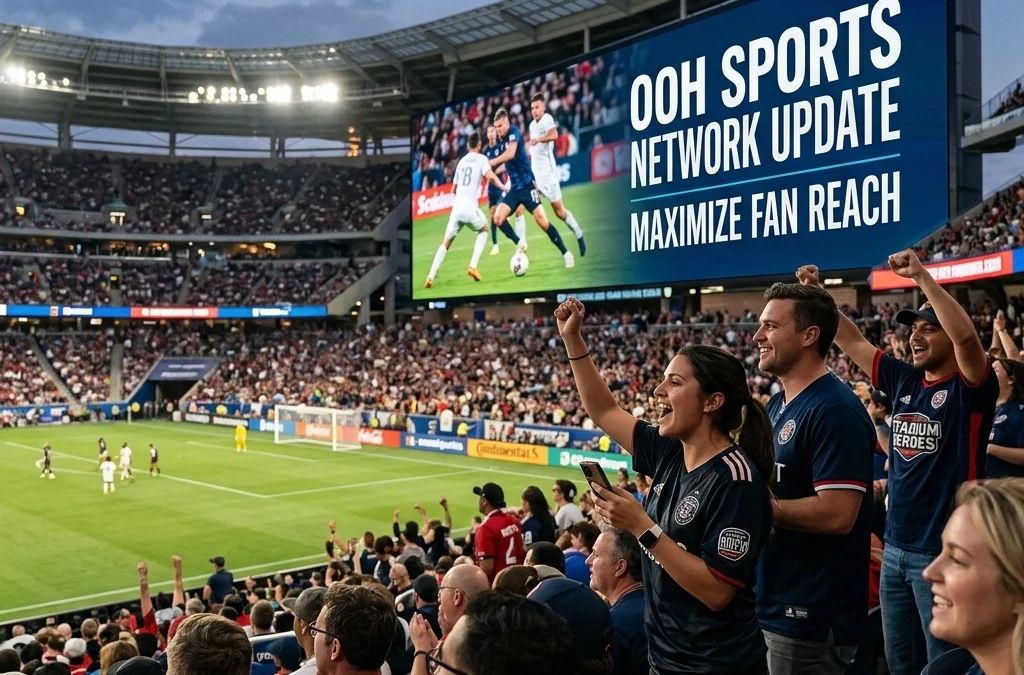
The landscape of sports advertising is shifting toward more integrated, high-frequency touchpoints that follow the fan from their front door to the stadium seat. As traditional broadcast models face fragmentation, the OOH Sports network has expanded its footprint to provide advertisers with a seamless bridge between physical attendance and digital engagement. This update marks a significant milestone in how brands interact with high-value sports audiences.
The growth of the network reflects a broader trend in the advertising industry: the move toward programmatic digital out-of-home (DOOH) solutions that offer the scale of television with the precision of digital targeting. For media buyers and brand managers, understanding the mechanics of this network expansion is critical for optimizing campaign spend and maximizing brand recall.

1. Massive Digital Scale Across the United States
The OOH Sports network now encompasses more than 25,000 digital screens strategically positioned throughout America. This expansion ensures that messaging is not limited to a single venue or city but is distributed across a massive geographical footprint. These screens are located in high-traffic areas where sports fans naturally congregate, including professional and collegiate sports venues, transit hubs, and entertainment districts.
By establishing a presence in these diverse locations, the network provides advertisers with the ability to maintain a consistent brand presence across multiple markets simultaneously. This scale is particularly effective for national product launches or seasonal campaigns that require high visibility within a short timeframe.
2. The Power of Sporttron Technology
Central to the network update is the integration of the Sporttron Digital Network. This proprietary technology serves as the backbone for what is described as "surround-sound" advertising. Rather than relying on a single static display, the Sporttron infrastructure creates an immersive environment for the fan.
The technology allows for synchronized messaging across multiple screens in a single vicinity. This coordinated approach ensures that a brand’s creative is the dominant visual element in a fan’s field of vision at critical moments. The result is an environment where the advertisement feels like a natural part of the game-day experience rather than an interruption.
3. Extended Impression Windows
A significant limitation of traditional sports advertising, such as 30-second broadcast spots, is the narrow window of engagement. The OOH Sports network update focuses on extending the impression window to cover the entire fan journey. This journey begins when a fan leaves home and continues through their arrival at the venue, their time inside the stadium, and their post-game celebrations.
By placing screens in rideshare lots, hospitality locations, and transit points, the network ensures that impressions are accumulated over several hours. This high-frequency exposure reinforces brand messaging and increases the likelihood of the brand being top-of-mind when the fan makes a purchase decision later in the day.

4. Verified Increase in Brand Recall
Data-driven insights from recent network deployments indicate that contextual relevance is the primary driver of advertising effectiveness. When creative messaging is tied to specific sports moments or references the home team, there is a 2.2x increase in brand recall compared to generic advertising.
The OOH Sports network allows for this level of customization at scale. Brands can deploy dynamic creative that updates in real-time based on game scores, weather conditions, or local events. This relevance transforms a standard advertisement into a piece of real-time information that fans are more likely to notice and remember.
5. High Rates of Fan Action and Social Engagement
The effectiveness of the OOH Sports network is not just measured in views, but in subsequent actions taken by the audience. Research into fan behavior reveals that 90 percent of sports fans who are exposed to sports-related OOH ads take some form of action. Furthermore, 61 percent of these fans engage with the brand on social media following the exposure.
This high level of engagement is often driven by creative that utilizes humor, star power, or interactive elements. Because sports fans are already in a state of heightened emotional engagement during a game, they are more susceptible to messaging that aligns with their current experience. This makes the OOH Sports network an ideal platform for driving immediate social conversation.
6. Integration with Omnichannel Strategies
One of the most technically advanced aspects of the OOH Sports network update is its ability to integrate with broader omnichannel campaigns. Through the use of geofencing and device ID capture, the platform can identify specific mobile devices that have been exposed to a digital screen.
Once a device is identified, the audience can be retargeted with follow-up digital messaging on their smartphones or home computers. This creates a closed-loop system where a physical exposure in a stadium leads to a digital conversion online. This methodology provides a clear path for attribution, allowing media buyers to see exactly how their OOH spend is driving digital traffic. For more information on these strategies, industry professionals can visit the marketing section of the website.
7. Strategic Technology Partnerships
The OOH Sports network leverages partnerships with leading demand-side platforms (DSPs) to facilitate programmatic buying. By working with partners like StackAdapt, the network allows advertisers to buy OOH inventory with the same ease and precision as they buy display or video ads.
Programmatic DOOH (pDOOH) adoption is a key component of the network's growth strategy. It allows for automated bidding, flexible budgeting, and precise targeting based on audience demographics and location data. This technical fluency ensures that OOH Sports remains at the forefront of the digital advertising evolution. Readers can learn more about these partnerships in the StackAdapt DSP spotlight.

8. Quantifiable Campaign Results
The effectiveness of the network is supported by a series of high-impact case studies across various product categories. These results demonstrate the platform's ability to drive significant lifts in purchase consideration and brand image.
- Sea-Doo: A recent digital OOH campaign for Sea-Doo resulted in a 144 percent increase in purchase consideration. Detailed metrics on this execution are available in the Sea-Doo case study.
- White Claw: The launch of White Claw’s vodka line utilized programmatic DOOH to drive a 74 percent lift in purchase consideration. The campaign mechanics are detailed in the White Claw report.
- Mike’s Hard Iced Tea: This campaign saw a 119 percent lift in positive brand image by targeting fans during key consumption moments. Further data is provided in the Mike's Hard case study.
These figures represent the tangible impact that a well-executed OOH strategy can have on consumer perception and intent.
9. Driving Local Economic Impact
The OOH Sports network update also highlights the medium's role in supporting local economies. Data shows that 99 percent of fans who attended games after being exposed to OOH advertising spent money locally. This includes expenditures at hotels, restaurants, and local transportation services.
By driving fans to physical locations and encouraging local spending, OOH Sports serves as a vital tool for host cities and local businesses. Advertisers can leverage this by tailoring their messaging to promote local retail partnerships or nearby activations, further rooting the brand in the local sports culture.

10. Centralized Management for Global Scalability
Managing a campaign across 25,000 screens could traditionally be a logistical challenge. However, the OOH Sports platform utilizes a centralized asset management system. This ensures that messaging remains consistent across the entire footprint, regardless of the number of locations involved.
This centralized approach eliminates the complications often associated with regional planning and execution. Media buyers can upload creative once and deploy it across thousands of screens with a single command. This level of efficiency is a major draw for agencies looking to streamline their workflows while maintaining a high level of control over their brand's visual identity.
Strategic Planning for Future Major Events
As the network continues to expand, it is increasingly positioned as the primary channel for reaching audiences during major global sporting events. Research indicates that 62 percent of adults actively want to see OOH advertising connected to major tournaments, such as the FIFA World Cup. These fans are not just passive observers. They are highly motivated consumers who are likely to take further action or increase their engagement with brands that support the events they love.
By providing a robust, scalable, and technically advanced network, OOH Sports offers media buyers a reliable way to capture this enthusiasm. The combination of massive scale, contextual relevance, and measurable results makes the OOH Sports network update a pivotal development for the advertising industry.
For those interested in exploring the full range of opportunities or reviewing current policies, the OOH Sports blog and the about page provide comprehensive resources for planning and execution. The shift toward a more connected and data-driven sports advertising environment is well underway, and the OOH Sports network is established as a central player in that transition.