
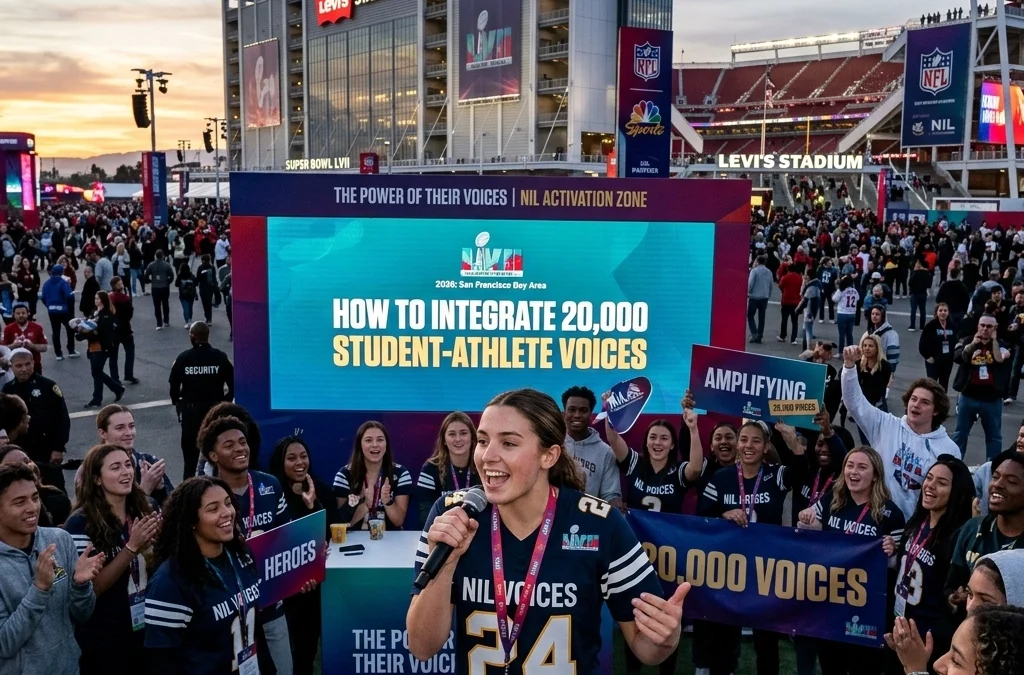
The landscape of sports marketing is undergoing a massive shift as the industry moves toward Super Bowl 2026. While traditional 30 second television spots remain a staple for the world's largest brands, a new frontier is emerging. This frontier is built on the foundation of Name, Image, and Likeness (NIL) and the power of decentralized influence. For media buyers, the challenge is no longer just about reaching the widest possible audience. It is about reaching the most engaged audience through the most authentic voices available.
OOH Sports is leading the charge in this evolution by providing a platform that connects brands with over 20,000 student-athlete voices. These athletes represent the next generation of cultural influencers. They offer a level of authenticity that traditional celebrity endorsements often lack. By integrating these voices into a comprehensive marketing plan, brands can create a multi-layered campaign that resonates across digital and physical spaces.
The Power of Scale in NIL Marketing
When brands think about athlete endorsements, they often focus on the top one percent. However, the true power of the NIL era lies in the aggregate. Integrating 20,000 student-athlete voices allows a brand to saturate the market from the ground up. This approach moves away from a single "hero" spokesperson and instead creates a chorus of authentic voices that reflect the diversity and passion of the sports community.
These student-athletes are not just players. They are content creators, community leaders, and trusted figures within their local ecosystems. For a media buyer, this scale provides a unique opportunity to execute hyper-local campaigns at a national level. Whether the goal is to target specific campus regions or to create a broad national buzz for Super Bowl 2026, the OOH Sports NIL platform provides the infrastructure to manage these relationships efficiently.

Why Authenticity Trumps Production Value
Modern consumers, particularly those in the Gen Z and Millennial demographics, have a high sensitivity to traditional advertising. They value authenticity and peer-to-peer recommendations. A student-athlete sharing their genuine experience with a product on social media often carries more weight than a highly polished studio commercial.
Integrating 20,000 voices ensures that the marketing message is delivered in a way that feels organic. These athletes speak the language of their followers. They understand the nuances of their specific sports and regions. When this authentic content is paired with the strategic reach of OOH Sports marketing, the result is a campaign that feels like a conversation rather than a broadcast.
Strategic Integration with Out-of-Home (OOH) Advertising
The most effective marketing plans for Super Bowl 2026 will be those that bridge the gap between the digital world and the physical world. While student-athletes provide the digital spark, Out-of-Home advertising provides the physical presence.
Imagine a scenario where a fan sees a social media post from their favorite college quarterback talking about a specific brand. Later that day, that same fan sees a high-impact digital billboard featuring that athlete while driving to a local sports bar. This synergy reinforces the brand message and increases the likelihood of purchase consideration.
OOH Sports specializes in this type of omnichannel coordination. By leveraging Sportrons and other digital displays, media buyers can synchronize their NIL efforts with physical placements. This creates a surround-sound effect that is particularly potent during the high-energy weeks leading up to the Super Bowl.
Data-Driven ROI and Sentiment Analysis
A common concern for media buyers moving into the NIL space is the ability to measure results. Scaling to 20,000 athletes requires more than just a spreadsheet. It requires advanced technology that can track engagement, sentiment, and conversion.
The OOH Sports platform utilizes predictive modeling to help brands understand which athlete voices are likely to perform best for their specific goals. This data-driven approach allows for the optimization of campaigns in real-time. By analyzing fan sentiment, brands can adjust their messaging to better align with the audience's mood and preferences.
This level of analytical rigor ensures that every dollar spent on the NIL platform is backed by actionable insights. It moves NIL from a "test-and-learn" tactic to a core component of a sophisticated media buy.
Video: The Future of Sports Marketing Integration
To see how these elements come together in a real-world setting, it is helpful to look at the broader vision of sports media integration. The following video provides a look at how technology and athlete voices are shaping the future of the industry.
https://www.youtube.com/watch?v=l6J-0zileKE
Connecting with Modern Culture
Super Bowl 2026 will be more than just a game. It will be a cultural moment that defines the mid-decade trends. Brands that successfully integrate student-athlete voices are positioning themselves at the center of this culture. These athletes are the ones defining what is cool, what is relevant, and what is worth paying attention to.
By tapping into this network, media buyers are not just buying impressions. They are buying into the cultural capital of the next generation. This is especially important for brands looking to establish long-term loyalty with younger consumers who will be the primary spending power for decades to come.

Lessons from Successful Campaigns
History has shown that blending programmatic DOOH with high-impact storytelling leads to measurable results. For instance, campaigns in the beverage industry have seen significant lifts in purchase consideration by using similar strategic frameworks.
- White Claw’s campaign saw a 74 percent lift in purchase consideration.
- AB InBev’s Mike’s Hard Iced Tea achieved a 119 percent lift in positive brand image.
- Sea-Doo’s first digital OOH campaign increased purchase consideration by 144 percent.
These case studies demonstrate that when digital strategies are paired with powerful, authentic voices and physical visibility, the impact is undeniable. The Super Bowl provides a larger stage, but the fundamental mechanics of success remain the same.
Practical Steps for Media Buyers
Integrating 20,000 voices might seem daunting, but the process is streamlined when using the right tools. Here is how a media buyer can start building their Super Bowl 2026 plan today:
- Define the Audience: Use data to identify which sports, regions, and athlete types resonate most with the target demographic.
- Select the Voices: Leverage the NIL platform to identify athletes who align with the brand’s values and have high engagement rates.
- Coordinate the Creative: Develop a mix of athlete-generated content and professional brand assets that can be used across social media and digital OOH screens.
- Schedule the Rollout: Align the digital posts with physical OOH placements to maximize the frequency and reach during the Super Bowl window.
- Monitor and Optimize: Use real-time sentiment analysis and performance data to tweak the campaign for maximum ROI.
Tangible Fan Experiences
Beyond social media and billboards, the integration of student-athlete voices can extend into physical fan experiences. This includes concession platforms, stadium activations, and community events. When a fan interacts with a brand in a physical space after seeing a trusted athlete endorse it online, the connection is solidified.
OOH Sports helps brands own these touchpoints. Whether it is through youth sports publishing or medical sports travel ecosystems, the goal is to be present wherever the athlete and the fan intersect. This holistic approach ensures that the brand is not just a spectator during the Super Bowl, but an active participant in the sports journey.

The Importance of Early Planning
The competition for attention during the Super Bowl is fierce. Media buyers who wait until the last minute will find themselves paying premium prices for leftovers. By starting the integration of NIL voices early, brands can build momentum and establish a presence that feels earned rather than bought.
Establishing relationships with 20,000 athletes takes time and coordination. The OOH Sports platform simplifies this, but the strategic thinking behind the campaign should begin well in advance of February 2026. This allows for a more nuanced and effective rollout that can adapt to the narrative of the sports season.
Final Considerations
As the industry prepares for Super Bowl 2026, the focus must remain on the human element of marketing. Technology and data are essential tools, but the core of a successful campaign is the connection between the brand and the consumer. Student-athletes provide that connection. They are the authentic voices that fans listen to every day.
By combining the scale of 20,000 voices with the precision of digital OOH and the analytical power of the OOH Sports platform, media buyers can create a marketing plan that is truly revolutionary. It is an opportunity to move beyond traditional advertising and become a part of the cultural fabric of the game.
For those ready to explore the possibilities of NIL and integrated sports marketing, more information can be found at the OOH Sports website. The future of the Super Bowl is decentralized, authentic, and driven by the voices of the athletes themselves.