
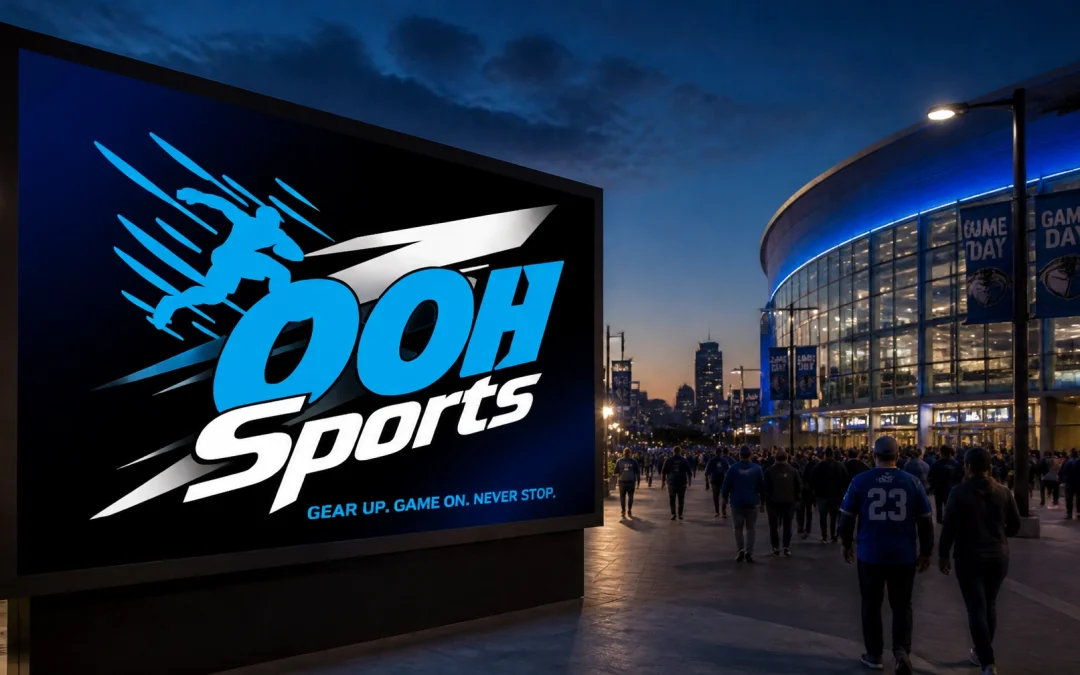
The landscape of sports marketing is undergoing a significant transformation. Traditional static billboards and standard sponsorship packages are no longer the primary way brands capture the attention of high intent audiences. Today, Digital Out-of-Home (DOOH) advertising has emerged as a critical component of any sophisticated sports media plan. By combining the massive reach of physical displays with the precision of digital targeting, sports DOOH provides a unique opportunity to connect with fans during their most emotional and engaged moments.
This guide explores why innovation in DOOH is the "Most Valuable Player" for modern brands. It outlines the strategies, technology, and measurable results that define the new era of sports advertising.
The Strategy: Beyond the Stadium Walls
Innovation in sports marketing is often mistaken for just what happens inside the arena. However, the most successful campaigns recognize that the fan journey begins long before the first whistle and continues long after the final score.
The 10-Mile Perimeter Strategy
A central tactic in modern sports DOOH is the implementation of a 10-mile perimeter around sports venues. This geographic focus allows brands to surround the stadium with a digital presence that captures fans as they commute, shop, and socialize. This strategy targets specific environments where fans naturally congregate, such as:
- Transit and Commute Hubs: Digital billboards on major highways and train stations leading to the arena.
- Social Hubs: High-end sports bars and restaurants where fans gather for pre-game or post-game celebrations.
- Retail Corridors: Malls and shopping centers where last-minute purchases or merchandise shopping occur.
- Wellness and Lifestyle Venues: Gyms and training facilities where sports-minded consumers maintain their daily routines.
By dominating the physical space surrounding an event, a brand becomes an integral part of the atmosphere. This approach ensures that the message is seen multiple times across different touchpoints, building significant brand frequency and recall.

Technology Partners: The Programmatic Edge
The shift from static to digital has introduced the efficiency of programmatic buying to the out-of-home industry. Media buyers and planners can now utilize Demand-Side Platforms (DSPs) to buy DOOH inventory with the same flexibility they apply to social or display advertising.
Agile Budget Allocation
Programmatic DOOH allows for real-time optimization. If a campaign is performing exceptionally well in a specific market or during a specific league’s playoff run, budgets can be shifted instantly. This level of agility was impossible with traditional static contracts that required weeks of lead time and manual installation.
Precision Targeting and Audience Science
Through partnerships with data-driven platforms, brands can now target specific audience segments rather than just buying "bulk" impressions. By analyzing anonymized movement patterns and fan behavior, campaigns can be activated specifically when the target demographic is most likely to be in the vicinity of a screen. This reduces waste and ensures that every impression served has a higher probability of driving a desired action.
For those looking to dive deeper into market projections, research suggests that DOOH sports advertising will hit 50 billion by 2030, making it a vital area for long term investment.

Objective and Strategy: The Power of the Moment
In sports, timing is everything. Innovation in DOOH allows brands to move away from generic messaging and toward "moment-based" activation. This is achieved through the use of live data triggers and dynamic creative optimization.
Live Data Triggers
Modern DOOH screens can be programmed to react to real-world events in real time. This means a creative can change based on a variety of factors:
- Live Scores: An ad can automatically update to congratulate a team on a touchdown or a home run.
- Game Status: Messaging can shift from "Get ready for the game" in the morning to "Celebrate the win" immediately after the final buzzer.
- Weather Conditions: A beverage brand might trigger an ad for a cold drink when temperatures rise or a hot coffee when a winter game becomes chilly.
- Player Milestones: Brands can celebrate individual player achievements the moment they happen, creating an immediate emotional connection with the fan base.
Dynamic Creative Optimization (DCO)
Dynamic creative ensures that the visual content remains fresh and relevant. Instead of showing the same static image for an entire month, DCO allows for hundreds of variations to be served based on the location of the screen, the time of day, and the current sports context. This level of personalization makes the advertisement feel less like an interruption and more like a relevant piece of game-day content.
The Omnichannel Connection: Retargeting the Fan
One of the most significant innovations in the industry is the ability to link physical world exposure to digital world action. Sports DOOH is no longer a siloed channel; it is the physical-world anchor of an omnichannel journey.
Mobile and CTV Integration
When a fan is exposed to a digital billboard or a screen in a sports bar, their anonymized device ID can be captured. This allows media planners to retarget that same individual later on their mobile device or through Connected TV (CTV) ads.
The process typically follows these steps:
- Physical Exposure: A fan sees a brand’s DOOH ad near the stadium.
- Digital Follow-up: Later that evening, the fan receives a mobile coupon or sees a video ad on social media related to the same brand.
- Conversion: The fan uses the coupon to make a purchase, providing a clear path to attribution.
This "surround-sound" effect increases the effectiveness of the entire media mix. It bridges the gap between high-impact brand awareness and direct-response performance.

Results: Measuring the Impact
The ultimate proof of innovation lies in the data. Recent campaigns have demonstrated that a tech-forward approach to sports DOOH delivers measurable increases in brand metrics.
Significant Brand Lift and Consideration
Case studies from industry leaders highlight the effectiveness of programmatic and targeted sports DOOH:
- White Claw: By utilizing a programmatic campaign to launch a new product, the brand saw a 74% lift in purchase consideration.
- Mike's Hard Iced Tea: A targeted DOOH campaign resulted in a 119% lift in positive brand image, showing the power of contextual relevance.
- Sea-Doo: Their first foray into digital out-of-home marketing yielded a 144% increase in purchase consideration.
These results are measured through professional brand lift studies and footfall attribution, providing media buyers with the certainty that their investment is driving tangible business outcomes.
Why Innovation is the New MVP
The brands that will win the future of sports marketing are those that embrace these technological and strategic shifts. Innovation is not just about having a digital screen; it is about how that screen is used to create a meaningful, data-driven, and timely connection with the consumer.
By leveraging the 10-mile perimeter, adopting programmatic buying, and integrating with other digital channels, brands can move beyond simple visibility. They can achieve a level of relevance that matches the passion and energy of the sports themselves. For those looking to explore specific inventory options, viewing professional sportrons and digital video boards is a logical next step in the planning process.
In the fast-paced world of sports, staying stationary is the same as falling behind. Innovation is the strategy that ensures a brand remains at the center of the conversation, turning every game day into a high-performance marketing opportunity.