
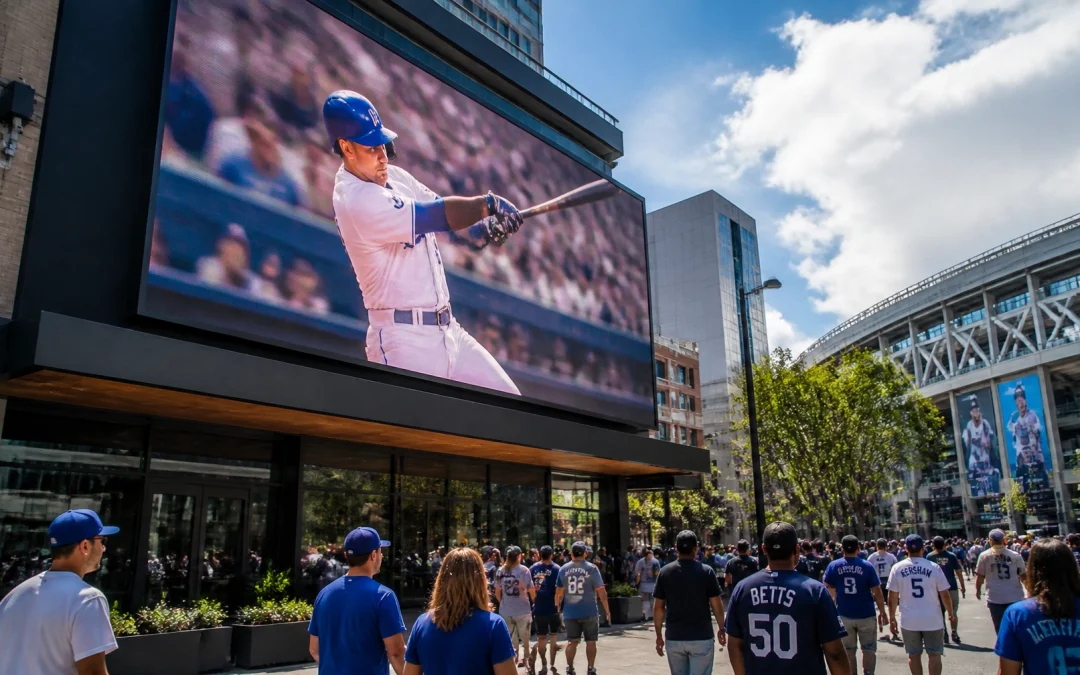
Digital Out of Home (DOOH) advertising has moved beyond simple static images on the side of a highway. In the sports world, it has become a sophisticated, data-driven engine that connects brands with fans during their most passionate moments. This evolution is driven by innovations in programmatic buying, real-time data triggers, and hyper-local targeting. For media buyers and brand managers, understanding these tools is no longer optional: it is the key to winning the attention of an increasingly fragmented audience.
As traditional television viewership shifts and digital ad fatigue sets in, sports remains one of the few environments where live engagement is guaranteed. By leveraging the latest in DOOH technology, brands can insert themselves into the fan journey with precision and impact.
Objective: Reaching the Modern Sports Fan
The primary goal of sports DOOH is to bridge the gap between digital intent and physical action. Fans do not just exist in front of a television. They are moving through cities, gathering in sports bars, working out in gyms, and walking to stadiums. The objective for any innovative campaign is to maintain a consistent brand presence across these touchpoints.
Successful campaigns focus on building mental availability. This means ensuring that when a consumer is ready to make a purchase: whether it is a beverage, a sports bet, or a new pair of shoes: the brand is the first thing that comes to mind. Achieving this requires more than just reach. It requires relevance. Innovation in DOOH allows brands to speak to fans in a way that feels local, timely, and integrated into the excitement of the game.
Strategy: The 10-Mile Fan Perimeter
One of the most effective strategies in sports marketing is the use of perimeter-based targeting. Instead of spreading a budget thin across an entire metropolitan area, smart campaigns focus on a 10-mile radius around sports venues. This zone is where fan density is highest and emotional engagement is at its peak.
Within this perimeter, DOOH screens act as a continuous narrative. A fan might see a brand message on a transit screen while heading to the game, encounter it again on a digital totem outside the stadium, and see it one more time on a screen inside a nearby sports bar. This frequency, concentrated in a specific geographic area, creates an "omnipresent" feel that significantly boosts brand recall.

This strategy is not limited to the hours surrounding a game. It can be utilized to target fans where they "live, sweat, and play" throughout the week. By placing ads in high-traffic environments like Sportrons and community hubs, brands stay relevant during the off-season and mid-week training cycles.
Technology: Programmatic DOOH and AI
The backbone of modern sports DOOH is programmatic buying. This technology allows media buyers to purchase inventory through Demand Side Platforms (DSPs), much like they would for mobile or desktop ads. This shift has brought a new level of flexibility to the industry.
Programmatic DOOH enables:
- Real-Time Optimization: Buyers can shift budgets between locations or creatives based on performance in real-time.
- Automated Pacing: AI-driven tools ensure that ads are delivered at the most impactful times, such as during pre-game rushes or post-game celebrations.
- Audience Planning: Instead of buying a specific billboard, buyers can purchase impressions targeted at specific audience segments, such as "college football fans" or "marathon runners."
The integration of programmatic platforms, such as StackAdapt, has made it easier for brands to include DOOH in their wider omnichannel strategies. This ensures that the message seen on the street is perfectly aligned with the message seen on a smartphone or a Connected TV (CTV) screen.

Innovation: Dynamic Creative and Live Data
Innovation in sports DOOH is most visible in the creative itself. Static images are being replaced by Dynamic Creative Optimization (DCO). This technology allows the content of an ad to change automatically based on external data feeds.
In a sports context, this means an ad can reflect:
- Live Scores: A brand can congratulate a team on a touchdown or a goal seconds after it happens.
- Game Countdowns: Building hype with real-time clocks leading up to tip-off.
- Weather Triggers: Promoting cold drinks when the temperature rises or indoor activities during rain.
- Betting Odds: Displaying the latest lines for fans heading into the arena.
This level of relevance ensures that the ad is not seen as an interruption, but as a valuable part of the fan experience. When a creative matches the immediate reality of the viewer, the likelihood of engagement increases dramatically.

Omnichannel Integration: Connecting DOOH, Mobile, and CTV
Digital Out of Home does not exist in a vacuum. It is often described as the "connective tissue" of a successful marketing plan. By capturing device IDs that have been exposed to a DOOH screen, brands can retarget those same individuals on their mobile devices or through CTV.
This creates a powerful funnel:
- Awareness: A fan sees a high-impact 3D or video ad on a large digital screen near the stadium.
- Reinforcement: Later, they see a related ad while scrolling through a sports news app on their phone.
- Conversion: That evening, they receive a targeted offer or see a commercial on their CTV while watching highlights.
This multi-screen approach ensures that the brand remains top-of-mind throughout the entire fan journey. It moves the needle from simple brand awareness to measurable intent.

Results: Data-Driven Success
The most significant shift in sports DOOH is the ability to measure results with precision. Brands are no longer relying on "estimated views." Instead, they are using brand lift studies and attribution modeling to prove the impact of their spend.
Case studies from OOH Sports demonstrate the effectiveness of these innovative tactics:
- White Claw: A programmatic DOOH campaign for a vodka launch resulted in a 74% lift in purchase consideration. You can read the full breakdown in the White Claw case study.
- Sea-Doo: By focusing on the first digital OOH campaign for the brand, they achieved a 144% increase in purchase consideration. Detailed logistics are available in the Sea-Doo report.
- Mike's Hard Iced Tea: This campaign saw a 119% lift in positive brand image through targeted programmatic placements. Review the results in the Mike's Hard case study.
These numbers prove that when technology and strategy align, the results are quantifiable. Media buyers can now see the direct correlation between a DOOH exposure and a change in consumer behavior.
Conclusion
The landscape of sports advertising is changing, and DOOH is at the forefront of that transformation. By moving away from static, broad-reach tactics and embracing programmatic precision, dynamic creative, and the 10-mile perimeter strategy, brands can achieve unprecedented levels of engagement.
Innovation is not just about having the biggest screen. It is about having the smartest strategy. Whether it is through live data triggers or omnichannel retargeting, the tools are now available to ensure that every impression counts. For those looking to stay ahead, the path forward is clear: integrate, innovate, and measure.