
The landscape of sports marketing is undergoing a significant transformation. As traditional advertising channels face increasing fragmentation, Digital Out-of-Home (DOOH) advertising has emerged as a powerhouse for brands seeking to capture the undivided attention of sports fans. With the global sports market projected to reach new heights, the integration of technology and physical presence has never been more critical. This guide explores the pivotal trends and strategies required to dominate the sports market using DOOH.
The Sports Super-Cycle and the Rise of Digital Screens
The current era of sports is defined by a "super-cycle" of major events, ranging from global tournaments to high-stakes league championships. This surge in live sports consumption creates a unique window for advertisers. Unlike home viewing, where the "second screen" (mobile devices) often competes for attention, DOOH provides a massive, unskippable canvas in the real world. Research suggests that DOOH sports advertising could hit $50 billion by 2030, driven by technological advancements and a shift in how fans engage with their favorite teams.
The effectiveness of these campaigns lies in their ability to meet fans where they are: in the transit corridors, fan zones, and commercial hubs surrounding the arenas. By leveraging digital video advertising boards, brands can maintain a persistent presence throughout the fan journey, from the pre-game commute to the post-victory celebration.
Programmatic DOOH: Precision and Real-Time Agility
One of the most impactful trends in the industry is the shift toward programmatic DOOH (pDOOH). This technology allows media buyers to move away from static, long-term contracts and toward flexible, data-driven activations. Programmatic platforms enable brands to trigger advertisements based on specific conditions such as weather, traffic patterns, or even the live score of a game.
For instance, a beverage brand might trigger creative content specifically when the home team scores or when the temperature at the stadium exceeds a certain threshold. This level of relevance ensures that marketing dollars are spent during the moments of highest fan engagement. Successful implementations, such as the White Claw programmatic campaign, have demonstrated significant lifts in purchase consideration by delivering the right message at the exact moment of peak consumer interest.

The Power of Hyper-Localization: The 10-Mile Radius
In sports marketing, proximity is everything. The most valuable inventory exists within a 10-mile perimeter of the sports venue. This "halo effect" ensures that the brand is visible to the highest concentration of target consumers: those who are physically attending the event or gathered in nearby hospitality venues.
Strategic placements in these zones allow brands to achieve a saturation level that traditional stadium-bound ads cannot match. While stadium signage is confined to the ticket-holding audience, DOOH screens in the surrounding area reach the entire local ecosystem. This strategy is central to tools like Sportrons, which provide access to digital video boards within this critical radius. By dominating the local skyline, a brand effectively "owns" the city's sports atmosphere for the duration of the event.
Immersive Creative: 3D and Anamorphic Displays
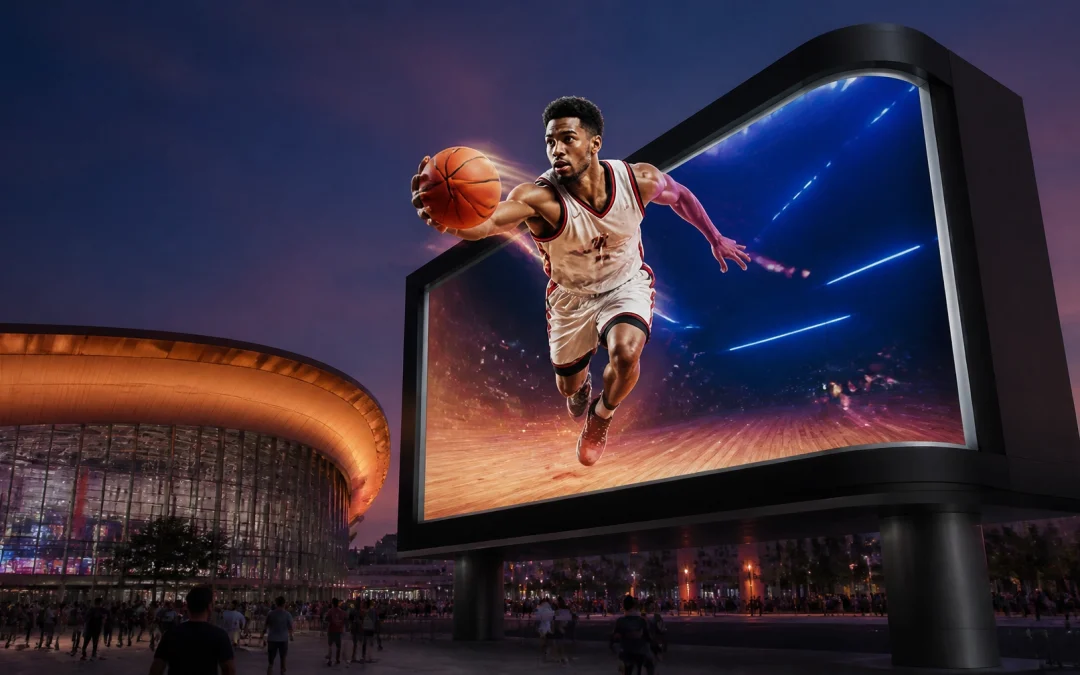
Static images are no longer sufficient to break through the noise of a crowded urban environment. The rise of anamorphic 3D creative has changed the expectations for visual impact. These "forced perspective" displays create the illusion of three-dimensional depth, making athletes or products appear to leap out of the screen toward the audience.
This trend is not merely about visual flair. It is a strategic tool for social amplification. 3D billboards are inherently "viral" content. Fans frequently film these displays and share them across social media platforms, extending the reach of a single physical placement to millions of online viewers. In the 2026-2027 sports cycle, anamorphic creative will likely become the standard for high-profile product launches and team announcements.

Omnichannel Sync: Connecting the Physical and Digital Worlds
Modern sports fans are multi-screen consumers. They check stats on their phones, watch replays on social media, and view live broadcasts on CTV. For a DOOH campaign to be truly effective, it must be integrated into this omnichannel ecosystem.
Partnerships with demand-side platforms (DSPs) like StackAdapt allow for the synchronization of DOOH with mobile and social advertising. When a fan passes a digital billboard near the stadium, they can be retargeted with a mobile ad later that evening. This coordinated approach reinforces brand recall and moves the consumer further down the sales funnel. This methodology transforms DOOH from a standalone awareness play into a key driver of digital conversions.
Measurement and Attribution: Beyond "Eyes on Screens"
Historically, out-of-home advertising was criticized for a lack of precise measurement. However, the current generation of DOOH is highly attributable. By using mobile location data and device IDs, marketers can now track the real-world impact of their campaigns with high accuracy.
Key metrics now include:
- Footfall Attribution: Measuring the number of people who visited a retail location or stadium after being exposed to a specific billboard.
- Brand Lift Studies: Using exposed-versus-control groups to determine the percentage increase in brand favorability or purchase intent.
- Digital Conversions: Tracking app downloads, website visits, or online purchases that occur shortly after exposure to a DOOH ad.
These data points provide the transparency required for modern marketing budgets. When comparing programmatic DOOH to traditional stadium ads, the ability to measure ROI often makes DOOH the preferred choice for data-driven CMOs.

Strategic Implementation: Steps to Win the Market
To capitalize on these trends, brands must approach DOOH with a structured, analytical framework. The following steps outline a professional strategy for sports-centric campaigns:
- Define the Perimeter: Identify the specific sports venues and the 10-mile radius surrounding them to ensure maximum fan density.
- Select Programmatic Triggers: Determine which real-world events (scores, weather, time) should activate the creative content.
- Develop High-Impact Creative: Utilize 3D or dynamic video assets that are optimized for both physical impact and social sharing.
- Integrate Omnichannel Retargeting: Ensure that the audience exposed to the DOOH screens is captured in a digital audience segment for follow-up messaging.
- Establish Measurement Benchmarks: Set clear KPIs for footfall, brand lift, or digital engagement before the campaign launches.
Conclusion
The future of sports marketing is digital, dynamic, and localized. As the industry moves toward the massive sporting events of 2026 and beyond, the brands that succeed will be those that master the intersection of physical presence and technological precision. By leveraging programmatic flexibility, 3D creativity, and robust attribution models, advertisers can move beyond simple visibility and achieve true market dominance in the sports arena.
