
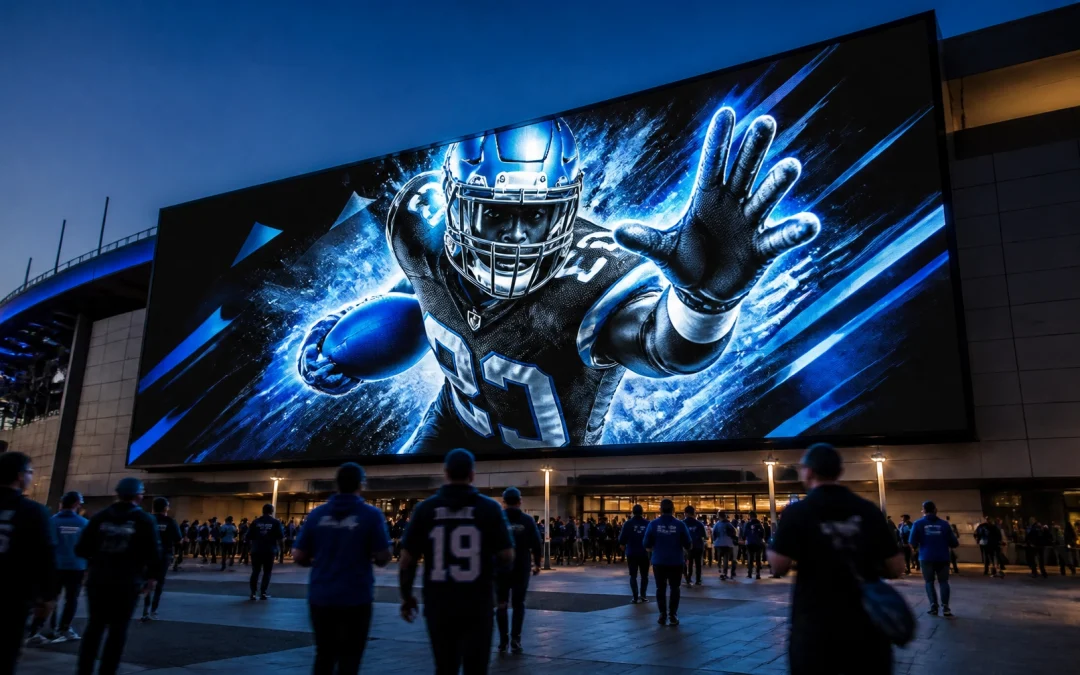
The landscape of sports marketing is undergoing a seismic shift. For decades, the towering vinyl billboards and painted stadium walls were the gold standard for brand visibility. These static assets provided a permanent, unmoving presence during games. However, as consumer attention becomes increasingly fragmented and technology advances, the limitations of static signage have become impossible to ignore. In the modern era of sports advertising, digital out-of-home (DOOH) has emerged as the clear Most Valuable Player (MVP).
Digital innovation is not merely a trend; it is a fundamental transformation in how brands connect with fans. By moving away from fixed images and toward dynamic, data-driven content, advertisers are finding new ways to break through the noise. This article explores why static signage is losing its grip on the market and how digital innovation is redefining the standards for success in the sports arena.
Strategy: The Decline of the Fixed Message
Static signage is built on the principle of permanence. Once a vinyl board is printed and installed, it remains the same for the duration of the campaign. While this provides a consistent background, it lacks the agility required for today's fast-paced sports environment. Static boards are susceptible to "banner blindness," a phenomenon where the human brain learns to ignore unchanging stimuli. Fans who walk past the same static ad every game eventually stop seeing it.
In contrast, digital innovation leverages movement and light to capture attention. Research indicates that digital signage can achieve up to 400% more views than its static counterparts. This is because the human eye is naturally drawn to motion. By utilizing digital displays, OOH Sports provides an environment where brands can rotate messages, use video, and update content in real-time. This flexibility ensures that the advertising remains as engaging as the game itself.
The Limitations of Physical Logistics
The logistical burden of static signage is another factor driving its decline. Every time a brand wants to update a message or change a promotion, a physical board must be printed, shipped, and manually installed. This process is slow, expensive, and environmentally taxing. If a brand wants to react to a sudden event, such as a team winning a championship or a player breaking a record, static signage simply cannot keep up.
Digital out-of-home removes these barriers. Digital content can be updated remotely and instantaneously. This allow advertisers to stay relevant by aligning their messaging with the current cultural moment or specific game-day events. This level of responsiveness is a core component of why digital innovation has become the preferred choice for modern media buyers.

Objective & Strategy: Precision Over Proximity
The goal of sports advertising is no longer just about being seen; it is about being seen by the right people at the right time. Traditional static ads rely on general proximity. If a person is near the stadium, they might see the ad. Digital innovation, however, allows for a more sophisticated strategy based on data and timing.
OOH Sports utilizes a strategy that targets the digital video advertising boards within a 10-mile radius of sports venues. This geographic precision ensures that brands are reaching fans when they are in a "sports mindset." Whether they are tailgating, heading to the arena, or celebrating at a nearby bar, the digital network keeps the brand front and center.
Audience Targeting and Retargeting
The objective is to move the consumer through the sales funnel. Digital innovation facilitates this by allowing for audience retargeting. When a fan is exposed to a digital billboard near a stadium, their mobile device ID can be captured anonymously. This data enables advertisers to follow up with mobile ads later in the day, reinforcing the message and driving action. This omnichannel approach is impossible with static signage, which exists in a silo.
By integrating mobile and digital out-of-home, brands can create a seamless journey for the fan. The strategy is to surround the stadium environment, creating a high-frequency experience that translates into higher brand recall and purchase intent.
Technology Partners: The Programmatic Edge
The backbone of digital innovation in sports marketing is programmatic technology. Through collaborations with specialized platforms and demand-side platforms (DSPs) like StackAdapt, OOH Sports enables brands to buy digital ad space with the same precision as online advertising.
Programmatic DOOH (pDOOH) allows for automated buying and placement based on specific triggers. These triggers can include:
- Weather conditions: Showing an ad for cold drinks when the temperature rises.
- Game scores: Triggering a celebratory ad immediately after a home team win.
- Time of day: Adjusting the creative to suit the pre-game, mid-game, or post-game atmosphere.
- Audience density: Increasing ad frequency when the area is most crowded.
This level of technological integration ensures that every dollar spent is optimized for maximum impact. Technology partners provide the infrastructure necessary to manage these complex variables, making digital advertising more efficient and measurable than static boards could ever be.

Tactics & Execution: Dynamic Creative and Perimeter Targeting
The execution of a digital campaign involves more than just uploading a file. It requires a strategic approach to creative and placement. One of the most effective tactics is the use of sportrons, which are high-impact digital displays designed specifically for the sports environment.
Dynamic Creative Optimization (DCO)
In a digital landscape, the creative can be as smart as the targeting. Dynamic Creative Optimization allows advertisers to serve different versions of an ad based on real-time data. For example, a brand could display a "Good Morning, Fans" message in the early hours and switch to "Final Buzzer Specials" late at night. This ensures that the content is always contextually relevant to the viewer's experience.
Perimeter Targeting Logistics
Executing a campaign that covers a 10-mile radius around an arena involves coordinating hundreds of screens across various categories, including transit hubs, retail locations, and street furniture. The digital network acts as a "perimeter" that captures fans as they migrate toward the game. This tactic ensures that the brand is the first and last thing a fan sees on game day.
The execution process is streamlined through central management. Unlike static signs that require different vendors for different locations, the digital network is controlled via a single interface. This allows for rapid deployment and consistency across the entire geographic area.

Results: Measuring the Impact
The most compelling argument for digital innovation is the data. While static signage impact is often measured by estimated "eyes on" traffic, digital out-of-home provides concrete metrics that demonstrate real-world success.
Case Study: Purchase Consideration Lift
When looking at campaign results, the numbers tell a clear story. For instance, the White Claw programmatic DOOH campaign achieved a 74% lift in purchase consideration for a new product launch. This was accomplished by strategically placing ads near high-traffic sports and entertainment areas and utilizing pDOOH to optimize delivery.
Case Study: Brand Image and Preference
In another example, AB InBev's Mike's Hard Iced Tea saw a 119% lift in positive brand image. By moving away from static placements and embracing the dynamic nature of digital, the brand was able to create a stronger emotional connection with the audience. Similarly, Sea-Doo's first digital OOH campaign increased purchase consideration by 144%, proving that even for high-consideration items, digital innovation drives results.
These results are quantified through brand lift studies and device ID tracking, providing advertisers with a level of transparency that static signage simply cannot provide. The ability to measure intent, consideration, and preference makes DOOH a reliable and accountable investment.

The Future of the Arena
Is static signage dead? Not entirely. It still has a place for permanent wayfinding and building identification. However, as an advertising tool for brands looking to win in the sports sector, it has been surpassed. The future of sports marketing is digital, programmatic, and dynamic.
As digital infrastructure continues to expand, the opportunities for innovation will only grow. Predictions suggest that DOOH sports advertising will reach significant heights by 2030, further cementing its status as the industry standard. Brands that embrace this change will find themselves at the center of the action, while those clinging to the static past risk fading into the background.
Digital innovation is more than a new way to display a logo; it is a new way to tell a story. In the high-stakes world of sports marketing, having the MVP on your side makes all the difference.