
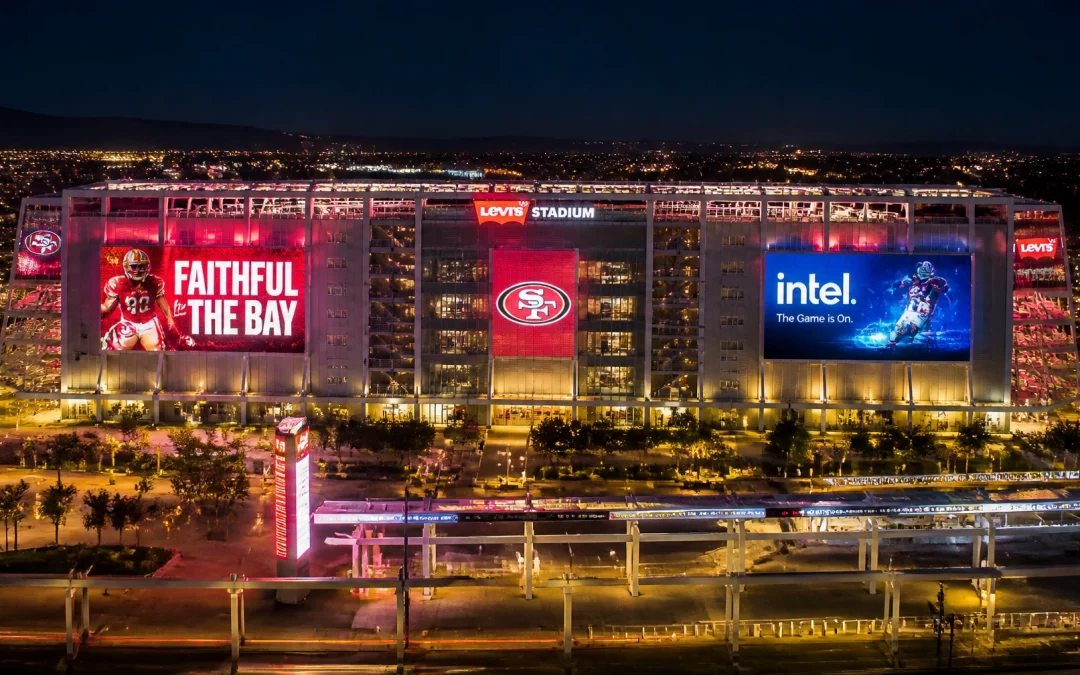
The landscape of sports marketing undergoes a seismic shift every few decades. As the industry approaches Super Bowl LX on February 8, 2026, at Levi’s Stadium in Santa Clara, California, the strategies employed by brands must reflect a sophisticated blend of historical expertise and cutting edge technology. Adopting a framework built on 40 years of advertising leadership provides a distinct advantage in navigating the complexities of the San Francisco Bay Area market during one of the world's most significant sporting events.
OOH Sports, a division of the Sports Media Inc. family, leverages decades of experience to transform how brands interact with fans. The journey from traditional static signage to a fully integrated digital ecosystem represents a total evolution in fan engagement. By focusing on venue-wide coverage, from floor graphics to towering billboards, the approach for 2026 is designed to capture attention at every touchpoint within a critical ten-mile radius of the arena.
Strategy: The Ten-Mile Perimeter Advantage
The primary strategic objective for Super Bowl 2026 centers on proximity and frequency. While traditional television advertising reaches a global audience, the high-value physical space surrounding the stadium is where the most engaged and affluent consumers reside during game week. The ten-mile perimeter strategy involves securing every available digital video advertising board in every category within a ten-mile radius of Levi’s Stadium.
This geographical focus ensures that brand messaging is inescapable for fans, media members, and corporate partners traveling through Santa Clara and the broader San Jose region. The strategy moves beyond simple visibility. It creates a localized saturation that reinforces brand authority. By utilizing a network of digital out-of-home (DOOH) assets, a campaign can follow a consumer from the airport to the hotel, and ultimately to the stadium gates.
Tactical Implementation of Perimeter Advertising
- Transit Hubs: Targeted placements at San Jose International Airport and nearby transit corridors capture the initial influx of visitors.
- Retail and Dining Districts: Digital screens in high-traffic commercial areas like Santana Row or downtown Santa Clara engage fans during non-game hours.
- Commuter Routes: Large-format billboards along Highway 101 and I-880 provide high-frequency impressions for the hundreds of thousands of vehicles moving through the Bay Area.

Objective & Strategy: Total Venue Dominance
Beyond the ten-mile radius, the focus shifts to the internal environment of the sports venue itself. True market leadership requires a comprehensive "floors to billboards" approach. This philosophy ensures that there are no dead zones in the consumer journey.
The objective is to create a seamless visual narrative. When a fan enters the concourse, the advertising should not be a distraction but a part of the premium environment. This is achieved through the integration of digital floor graphics, which utilize high-durability LED or projection technology, and traditional concourse displays.
Execution of Venue-Wide Assets
- Digital Floor Graphics: These innovative placements offer a unique perspective, capturing the gaze of fans as they move through the venue.
- Pillar Wraps and Wall Murals: Large-scale static and digital wraps turn structural elements into canvases for brand storytelling.
- Concourse Screens: Synchronized digital displays allow for real-time content updates, such as live scores or social media feeds, alongside brand messaging.
- Scoreboard and Perimeter LED: The most traditional but still vital component, offering mass-scale visibility during play.

Technology Partners: The Engine of Modern DOOH
The transition from a 1980s advertising model to the 2026 standard is powered by programmatic technology. Collaboration with top-tier technology partners and Demand Side Platforms (DSPs), such as StackAdapt, enables precision that was previously impossible in out-of-home media.
Programmatic DOOH allows for the automated buying and selling of ad space, similar to online advertising but in the physical world. This technology facilitates several key capabilities:
- Dynamic Creative Optimization: Ad content can change based on the time of day, weather conditions, or real-time game events.
- Audience Targeting: By utilizing anonymized mobile location data, campaigns can trigger ads when specific demographic groups are most likely to be in the vicinity of a screen.
- Retargeting Capabilities: Device IDs exposed to a billboard can be captured, allowing the brand to follow up with a mobile or social media ad later, creating a true omnichannel experience.
https://www.youtube.com/watch?v=l6J-0zileKE
Results: Measuring Impact through Data
A hallmark of established ad leadership is the commitment to analytical rigor. Success in 2026 will not be measured by "buzz" alone, but by quantifiable metrics and brand lift studies. Previous executions within the OOH Sports network demonstrate the potential for significant ROI.
For instance, a programmatic DOOH campaign for White Claw saw a 74% lift in purchase consideration for their vodka launch. Similarly, Sea-Doo reported a 144% increase in purchase consideration during their first digital out-of-home campaign. These results highlight the effectiveness of targeting consumers when they are in an active, "out-of-home" state of mind.
Key Performance Indicators (KPIs)
To evaluate a Super Bowl campaign, the following data points are scrutinized:
- Total Impressions: The sheer number of times an ad was potentially seen, calculated through sensor data and traffic patterns.
- Brand Awareness Lift: Measured through post-event surveys comparing exposed vs. unexposed audiences.
- Foot Traffic Attribution: Tracking whether individuals exposed to an ad subsequently visited a retail location or a specific event activation.
- Positive Brand Image: Campaigns like AB InBev’s Mike’s Hard Iced Tea have seen a 119% lift in positive brand image by using these targeted methods.

The Evolution of Expertise
The 40-year legacy of the organization is not merely a number. It represents a deep understanding of the logistics required to execute at the highest level of professional sports. Handling the permits, the technical specifications, and the high-pressure environment of a Super Bowl requires a level of institutional knowledge that newcomers cannot replicate.
In 1980, sports advertising was about being seen. In 2026, it is about being relevant. The integration of DOOH into the broader marketing mix is no longer optional. By 2030, sports advertising in the DOOH sector is projected to hit $50 billion. Companies that leverage established leadership today are positioning themselves to lead that growth in the future.
Conclusion: Securing the Future of the Fan Experience
As the industry prepares for the journey to Santa Clara, the focus remains on the fan. The goal of every placement, from the concourse floors to the highway billboards, is to enhance the excitement of the game while providing brands with unparalleled access to their target audience. Super Bowl 2026 will be more than a football game. It will be a showcase of what is possible when decades of advertising experience meet the next generation of marketing technology.
By choosing a partner with a long-standing history in the arenas of America, media buyers and CMOs can ensure their message is not just delivered, but remembered. The infrastructure is in place. The data is clear. The next chapter of sports marketing begins on the road to Levi's Stadium.