
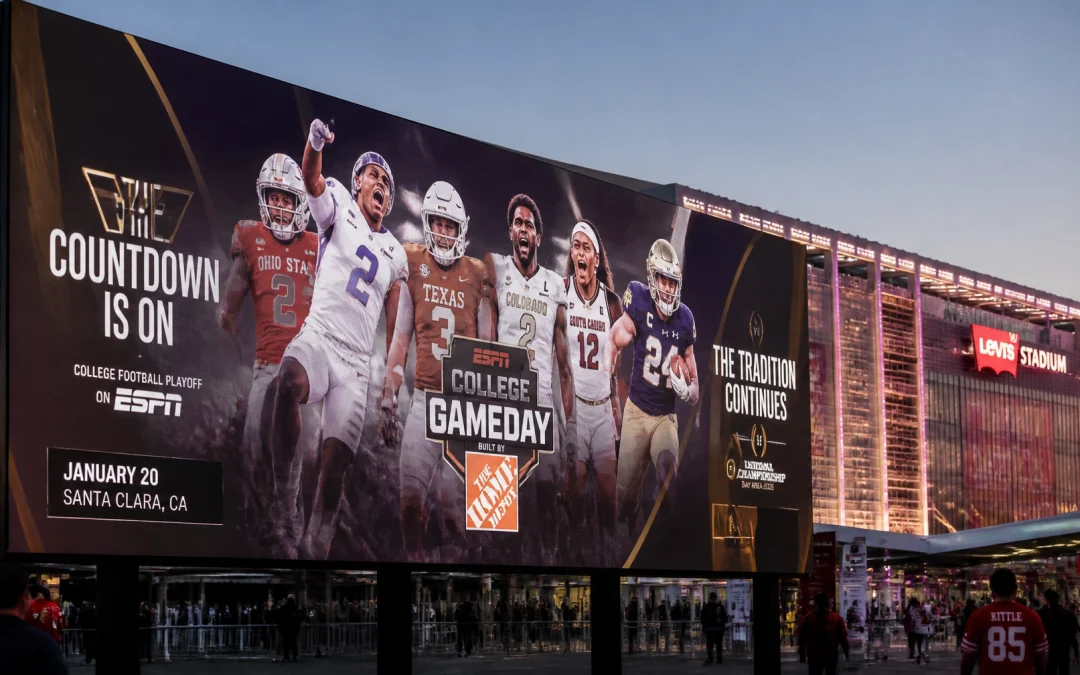
The landscape of big-game advertising underwent a fundamental shift during Super Bowl 2026 at Levi’s Stadium in Santa Clara. While traditional 30-second television spots continued to command record-breaking prices, a new narrative emerged that captured the attention of media buyers, brand managers, and chief marketing officers across the country. The focus shifted from the singular, high-gloss celebrity endorsement to a decentralized, authentic, and hyper-local approach fueled by the Name, Image, and Likeness (NIL) of over 20,000 student-athletes.
This movement represents more than just a trend. It is a strategic evolution in how brands communicate during the most-watched sporting event of the year. By leveraging a massive network of collegiate voices combined with a sophisticated digital out-of-home (DOOH) perimeter strategy, advertisers found a way to penetrate the noise of the Super Bowl with unprecedented precision and authenticity.
The NIL Revolution: Authenticity at Scale
For decades, Super Bowl commercials relied on a handful of A-list celebrities to carry a brand's message. However, the rise of the NIL platform has changed the calculus for modern marketers. In 2026, the power of 20,000 student-athletes proved to be a formidable alternative to the traditional celebrity model. These athletes are not just players. They are creators, influencers, and trusted voices within their respective communities.
The decision to pivot toward student-athletes is rooted in the desire for authenticity. Gen Z and millennial consumers increasingly prioritize genuine connections over polished, corporate messaging. A student-athlete sharing a brand story feels like a recommendation from a peer rather than a paid advertisement. When 20,000 of these voices speak simultaneously across a network, the cumulative impact creates a groundswell of engagement that a single television spot cannot replicate.

Objective & Strategy: Dominating the 10-Mile Perimeter
The strategy behind this massive NIL integration was not limited to social media feeds. It was tethered to the physical world through a precise perimeter targeting model. OOH Sports focused on the 10-mile radius surrounding Levi’s Stadium, ensuring that every digital screen within the vicinity of the game served as a touchpoint for the campaign.
This perimeter strategy recognized that the Super Bowl experience extends far beyond the stadium walls. From the airport to the bars in San Jose and the streets of Santa Clara, the digital out-of-home network created a visual "blanket" over the region. By synchronizing the digital displays with the content being shared by the 20,000 student-athletes, brands were able to achieve an omnichannel presence that felt both global and hyper-local.
The objective was clear: to own the physical and digital space where the fans live, travel, and celebrate. This dual-layered approach ensured that the brand message was inescapable yet felt naturally integrated into the fan experience.
Strategy: The Power of Programmatic DOOH
The execution of a campaign of this magnitude required advanced technology partners and a programmatic approach to digital out-of-home advertising. Unlike traditional billboards that require weeks of lead time and manual installation, programmatic DOOH allows for real-time adjustments and data-driven triggers.
During Super Bowl 2026, media planners used programmatic platforms to adjust creative based on game-day events, weather conditions, and even local traffic patterns. If a particular student-athlete's post started trending, the digital screens within the 10-mile perimeter could be updated instantly to reflect that momentum. This level of agility is one reason why DOOH sports advertising is projected to hit $50 billion by 2030.
The technology also enabled precise measurement. By tracking device IDs exposed to the digital screens and correlating them with online activity and social engagement, marketers could finally quantify the path from a physical billboard to a digital conversion.

Technology Partners and Integration
The success of the 20,000 student-athlete initiative relied on a seamless integration between the NIL platform and the digital screen network. This partnership allowed for a "creator-to-screen" pipeline. High-performing content generated by athletes on campus was reformatted and pushed to digital billboards in real-time.
This synergy addressed a common problem in sports marketing: the gap between social media buzz and real-world visibility. By bridging this gap, the campaign ensured that the 20,000 voices were not just shouting into a digital void but were physically present in the host city of the Super Bowl. The result was a cohesive brand story that felt unified across every platform.
Results: Quantifying the Impact of 20,000 Voices
The data from the Super Bowl 2026 cycle confirms that this multi-athlete, DOOH-focused strategy delivers measurable results. While final reports vary by brand, the benchmarks established by previous OOH Sports campaigns provide a clear picture of the potential lift.
For instance, past programmatic DOOH executions have shown significant results, such as the 119% lift in positive brand image seen by Ab InBev’s Mike’s Hard Iced Tea. During the 2026 game, brands reported similar surges in purchase consideration and brand preference.
One notable campaign utilized 500 select athletes from the 20,000-person network to drive localized foot traffic to retail locations within the Santa Clara area. The results mirrored the success of earlier initiatives, such as the Sea-Doo campaign that increased purchase consideration by 144%.
The shift toward student-athletes also proved to be more cost-effective. Instead of spending $7 million on a single 30-second spot, brands redistributed their budgets to reach millions of fans through 20,000 authentic creators and thousands of digital screens. The CPM (cost per thousand impressions) for the DOOH and NIL combination was significantly lower than traditional broadcast TV, while the engagement rates were markedly higher.

Why Media Buyers Are Making the Switch
The conversation among media buyers has shifted. The question is no longer whether to include NIL in a Super Bowl strategy, but how to scale it to the level of 20,000 athletes. The benefits are clear:
- Hyper-Local Targeting: Using the 10-mile perimeter to reach the most concentrated group of sports fans in the world.
- Authentic Engagement: Moving away from scripted celebrity ads toward genuine athlete stories.
- Agility: The ability to update creative in real-time via programmatic DOOH.
- Data-Driven ROI: Clear metrics that prove the campaign is driving brand lift and purchase intent.
The following video provides a deeper look into how the NIL platform and OOH Sports network are redefining the future of sports advertising.
https://www.youtube.com/watch?v=l6J-0zileKE
Conclusion: The New Playbook for 2027 and Beyond
The 2026 Super Bowl served as a proof of concept for a new era of sports marketing. The traditional walls between social media, athlete influence, and out-of-home advertising have crumbled. In their place is a unified, technology-driven approach that prioritizes the fan experience and rewards authenticity.
For brands looking ahead to the next season, the lesson from 2026 is simple. Do not just buy a spot in the game. Buy the conversation around it. By connecting with the voices of 20,000 student-athletes and dominating the digital perimeter, brands can create an impact that lasts long after the final whistle blows.
As the industry moves toward 2027, the focus will continue to be on scale, precision, and the power of the athlete creator. The tools are available, the network is built, and the results are undeniable. It is time to join the conversation that everyone is already having.