
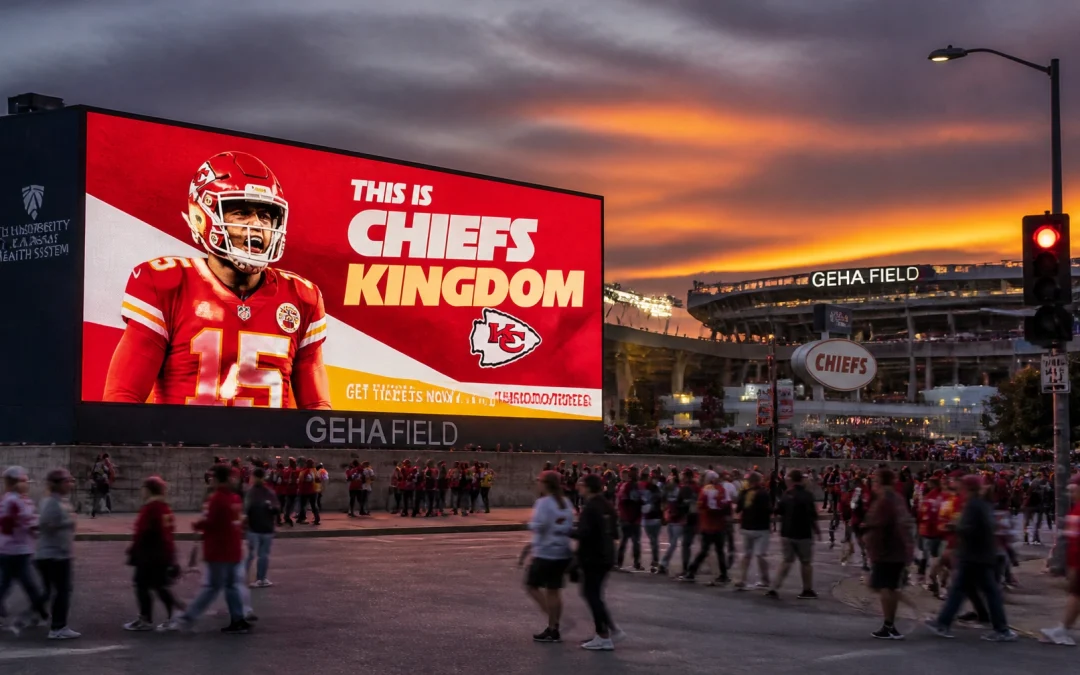
Digital Out-of-Home (DOOH) advertising has evolved far beyond the static roadside billboard. In the world of sports marketing, this medium has transformed into a dynamic, data-driven engine that connects brands with fans at the exact moment their passion is highest. For media buyers and brand managers, understanding how to navigate this innovative landscape is no longer optional. It is the key to breaking through the noise of a crowded advertising environment.
OOH Sports operates at the intersection of technology and fandom. As part of the Sports Media Inc. family, the focus is on creating a digital network that surrounds the sports experience. This guide explores the strategies, technology, and measurable outcomes that define modern sports DOOH innovation.
Strategy: The 10-Mile Venue Perimeter
A core tactic in sports DOOH innovation is the establishment of a high-impact perimeter around sports venues. Rather than simply placing an ad inside a stadium where attention is divided, smart campaigns focus on the fan’s entire environment.
By targeting all digital video advertising boards within a 10-mile radius of a stadium, a brand can achieve a dominant presence. This radius covers the essential touchpoints of a fan’s journey.
- Approach Routes: Major highways and transit corridors leading to the arena.
- Social Hubs: Sports bars, pubs, and restaurants where fans gather before and after the game.
- Retail Centers: Shopping malls and convenience stores near the venue where fans purchase merchandise or snacks.
- Transit Hubs: Train stations and ride-share pickup zones.
This perimeter strategy ensures that a brand message is not just seen once, but is reinforced throughout the day. It creates a sense of omnipresence that traditional, single-location sponsorships often fail to match.

Objective and Strategy: Mapping the Fan Journey
To succeed in sports DOOH, media planners must move away from a "set it and forget it" mentality. The objective is to align the brand message with the emotional state of the fan. This requires a strategy built around three distinct phases.
Pre-Game: Building Anticipation
In the days and hours leading up to a major matchup, the goal is awareness and hype. Digital screens in gyms, office buildings, and transit centers can display countdown clocks, "tune-in" reminders, or special offers. This phase primes the audience, ensuring the brand is top-of-mind before the first whistle blows.
Game-Day: Real-Time Engagement
On the day of the event, the strategy shifts to hyper-relevance. This is where Sportrons and similar high-impact screens play a vital role. Using real-time data feeds, creative can be updated to show live scores, social media reactions, or specific player achievements. If a star player scores a touchdown, the digital creative can update within minutes to celebrate the moment, creating an immediate connection with the fans on the street or in the bars nearby.
Post-Game: Capitalizing on the Outcome
The period immediately following a game is a prime opportunity for conversion. The strategy involves deploying modular creative that changes based on the win or loss. A victory might trigger an ad for celebratory drinks at a nearby partner location, while a loss could focus on "better luck next time" comfort food promotions.

Technology Partners: The Rise of Programmatic DOOH
The backbone of innovation in this space is Programmatic DOOH (pDOOH). This technology allows media buyers to purchase inventory with the same precision and flexibility found in online display or video advertising.
By using Demand-Side Platforms (DSPs) such as StackAdapt, planners can automate the buying process. This removes the need for long-term manual contracts and allows for rapid adjustments based on performance or external triggers.
Key Technology Advantages
- Trigger-Based Activation: Ads can be programmed to play only when certain conditions are met, such as specific weather patterns, traffic levels, or live game events.
- Dynamic Creative Optimization (DCO): This allows for the automatic swapping of creative elements (text, images, calls-to-action) without human intervention.
- Omnichannel Integration: Programmatic DOOH can be synced with mobile and Connected TV (CTV) campaigns. For example, a fan who passes a digital screen near a stadium can be retargeted with a mobile push notification later that evening.
For brands in competitive sectors, such as the sports betting industry, these tools are essential. Launching real-time sports betting DOOH campaigns that convert quickly requires a platform that can handle live odds and immediate creative updates.
Creative Execution: 3D and Interactive Visuals
Innovation is not just about where an ad is placed, but what it looks like. High-resolution digital screens allow for creative executions that were previously impossible.
One of the most effective trends is 3D DOOH. These are advertisements designed with a forced perspective that makes objects appear to pop out of the screen. In a sports context, this could be a basketball flying toward the viewer or a sneaker floating in mid-air. Studies indicate that 3D creative can generate significantly higher mental engagement and brand recall than standard 2D ads.
Furthermore, integrating QR codes into DOOH creative bridges the gap between physical and digital. A fan waiting at a transit stop can scan a code to enter a sweepstakes, download an app, or purchase a discounted ticket instantly.

Results: Measuring the Impact of Innovation
The shift toward digital and programmatic OOH has brought a new level of accountability to the industry. Media buyers no longer have to rely on vague "impressions" or estimated traffic counts. Modern measurement techniques provide concrete data on how a campaign performs.
Case Study: Mike’s Hard Iced Tea
In a programmatic DOOH campaign for Ab InBev’s Mike’s Hard Iced Tea, the use of targeted digital screens led to a 119 percent lift in positive brand image. This was achieved by reaching fans in high-context environments when they were most receptive to the message. You can read the full Mike's Hard Iced Tea case study here.
Case Study: Sea-Doo
When Sea-Doo launched its first digital OOH campaign, the strategy focused on reaching consumers in active, outdoor-oriented locations. The result was a 144 percent increase in purchase consideration. Detailed logistics of this execution are found in the Sea-Doo performance report.
Case Study: White Claw
For the launch of White Claw’s vodka, a programmatic approach was used to drive awareness in competitive urban markets. The campaign resulted in a 74 percent lift in purchase consideration. The White Claw case study highlights the power of using DOOH to support a national product launch with local precision.
Measuring Metrics
To determine success, campaigns now utilize:
- Brand Lift Studies: Surveying exposed versus unexposed audiences to measure changes in awareness and perception.
- Footfall Attribution: Using anonymized mobile location data to track how many people visited a retail location after seeing a DOOH ad.
- Web and App Conversion: Tracking spikes in website traffic or app downloads that correlate with the timing and location of DOOH placements.

Conclusion: Future-Proofing the Brand
Sports DOOH innovation is moving toward a future where every screen is a gateway to a deeper fan experience. By moving away from static sponsorships and embracing the flexibility of programmatic buying, 10-mile perimeter targeting, and dynamic creative, brands can ensure their message is as energetic as the game itself.
For the modern media buyer, the path to success involves a data-driven mindset and a willingness to integrate DOOH into the broader omnichannel strategy. When brand messages follow the fan journey with precision and relevance, the results speak for themselves.