
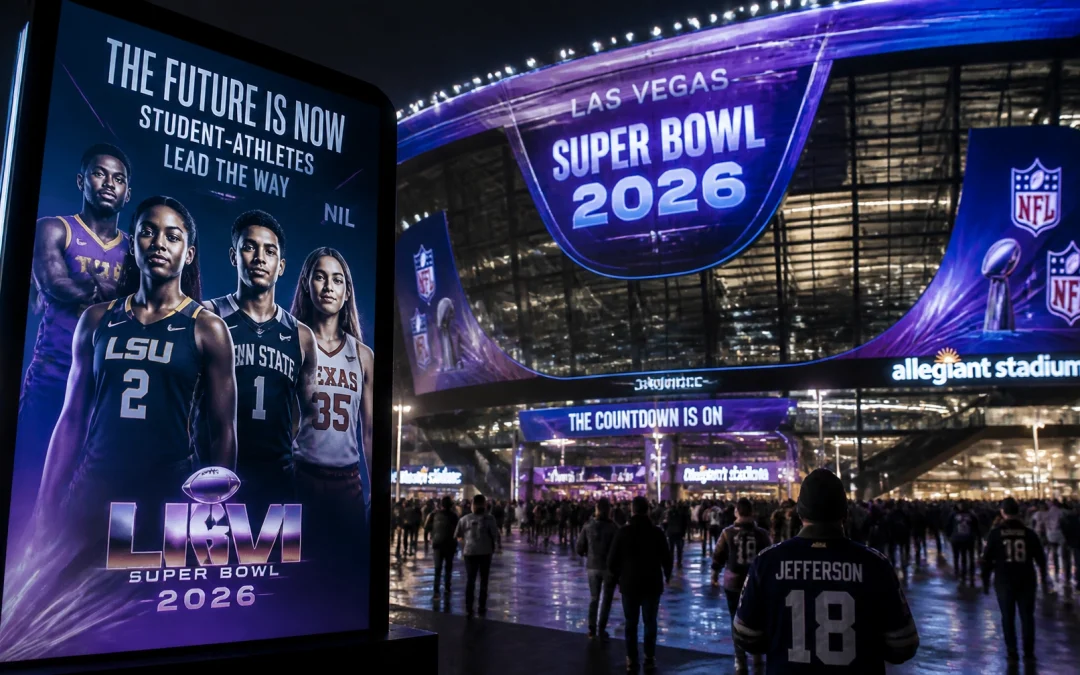
The landscape of sports marketing is undergoing a seismic shift as the industry approaches Super Bowl 2026. For media buyers and brand managers, the traditional playbook: anchored by high-cost, single-celebrity endorsements: is being replaced by a more fragmented and authentic model. This transition is driven by the maturation of the Name, Image, and Likeness (NIL) marketplace, which now allows brands to leverage thousands of student-athlete voices simultaneously.
By analyzing current trends and the technological capabilities of digital out-of-home (DOOH) networks, it becomes clear that the "secret" to 2026 success lies in scale, authenticity, and precision targeting. The following report outlines the strategic imperatives for navigating this new era of sports advertising.
Strategy: The Shift to 20,000 Authentic Voices
Historically, a Super Bowl campaign centered on a single "hero" talent to carry the brand message across broadcast and digital channels. However, data from recent sports cycles suggests that audience trust is shifting away from polished celebrity endorsements toward authentic, peer-to-peer recommendations.
The emergence of NIL platforms that manage over 20,000 student-athletes provides a unique opportunity for media planners. Instead of investing a massive portion of the budget into one NFL veteran, savvy brands are diversifying their spend across hundreds or thousands of active college athletes.
Key Tactical Advantages of the Portfolio Approach:
- Hyper-Local Relevance: Student-athletes possess deep-rooted connections to specific university towns and regional fanbases. A brand can activate athletes in the Top 100 media markets to create a national presence that feels local.
- Cost Efficiency: Reaching an audience through a mid-tier NIL partner typically costs 10% to 20% of the price of a national celebrity, while often yielding higher engagement rates due to the perceived authenticity of the creator.
- Algorithmic Favorability: Social platforms and search engines increasingly prioritize diverse content creators. Utilizing 20,000 voices creates a "blanket" effect that traditional media buys cannot replicate.

Objective & Strategy: Moving Beyond the 30-Second Spot
The objective for Super Bowl 2026 is no longer just to "win the game" during the broadcast. It is to dominate the cultural conversation before, during, and after the event. This requires a multi-layered strategy that integrates NIL creators with digital out-of-home (DOOH) advertising.
Strategic alignment involves placing brand messaging within a 10-mile perimeter of the Super Bowl venue and key sports hubs across America. By combining the digital reach of student-athletes with physical sportrons and billboards, brands create a unified omnichannel presence.
The strategy focuses on "the surround sound effect": where a fan sees a student-athlete's content on their phone while walking past a digital billboard featuring that same athlete. This reinforces brand recall without the friction of traditional, disruptive advertising.
Technology Partners: Bridging NIL and DOOH
Successful execution in 2026 relies on the seamless integration of specialized technology platforms. Media buyers are increasingly utilizing programmatic DOOH (pDOOH) to automate the delivery of NIL-driven content.
Integration Framework:
- NIL Aggregator Platforms: These systems manage the logistics, contracts, and compliance (such as the House v. NCAA settlement requirements) for thousands of athletes.
- Programmatic DSPs: Platforms like StackAdapt allow buyers to bid on DOOH inventory in real-time, targeting screens within a 10-mile radius of specific stadiums or fan zones.
- Measurement Tools: Brand lift studies and device ID tracking are used to quantify the "path to purchase," measuring how many fans saw a billboard and subsequently engaged with the brand online.
The use of these technologies ensures that the "20,000 voices" strategy is not just a creative choice, but a data-driven media buy that can be optimized in real-time.
The NIL Advantage: Authentic Voices in Action
The following video demonstrates how the connection between brands and authentic athlete voices is reshaping the industry.
https://www.youtube.com/watch?v=l6J-0zileKE
Execution: The Three-Phase Campaign Arc
Planning for Super Bowl 2026 does not begin in February; it starts months in advance. The execution process is divided into three distinct phases designed to maximize the lifespan of the creative assets.
Phase 1: The Long Lead Build (6+ Months Out)
During this phase, brands identify and secure partnerships with a broad roster of student-athletes. This period is used for relationship building and content co-creation. Brands that wait until the weeks before the game to negotiate NIL deals often face higher prices and lower-quality creative.
Phase 2: Pre-Game Hype (Mid-January)
Athletes begin seeding "anticipation content": behind-the-scenes preparation, watch-party tips, and teasers. Simultaneously, DOOH assets are deployed in high-traffic transit hubs and sports bars. This phase builds the retargeting pools that will be leveraged during the game.
Phase 3: Game Day and the "Golden Window"
On the day of the Super Bowl, the strategy shifts to real-time reaction. Student-athletes share live commentary, while digital billboards reflect current game trends or score updates. The 72 hours following the game are critical for sustaining momentum, as athletes share highlights and "post-game recovery" content while traditional television ad impact begins to wane.

Results: Measuring the Impact of Authentic Voices
The shift toward NIL-driven campaigns is supported by measurable data. Campaigns that prioritize student-athlete voices over traditional celebrity endorsements have shown significant lifts in key performance indicators.
- Purchase Consideration: Similar campaigns, such as those executed for White Claw, have seen up to a 74% lift in purchase consideration when combining targeted DOOH with digital-first talent.
- Brand Sentiment: Recent studies indicate that 68% of Gen Z and Millennial sports fans find student-athlete endorsements "more relatable" than those of professional superstars. This relatability translates into higher brand trust scores.
- Conversion Rates: By utilizing thousands of voices to drive localized traffic to retail partners, brands have reported conversion increases of 15% to 25% compared to national broadcast-only campaigns.
The efficacy of the "many voices" approach lies in the aggregate reach. While one celebrity might reach 50 million people broadly, 20,000 athletes can reach 50 million people with 20,000 different, personalized touchpoints.

Conclusion: Preparing for 2026
As the industry prepares for Super Bowl 2026, the competitive advantage will belong to those who move away from "one-size-fits-all" marketing. The combination of a robust NIL platform: connecting with over 20,000 authentic student-athlete voices: and a strategic digital out-of-home network represents the most effective way to cut through the noise.
Media buyers and CMOs must prioritize these "secrets" now: focus on scale over singular stardom, prioritize authenticity over polish, and use technology to bridge the gap between the physical and digital worlds. By etching the brand’s message into the hearts of fans through the voices they trust most, brands can achieve a level of engagement that transcends the traditional 30-second spot.
For more insights on sports marketing strategies and case studies, visit the OOH Sports resources page.