
The landscape of sports marketing is undergoing a significant transformation as traditional static displays give way to dynamic, data driven environments. Digital Out of Home (DOOH) advertising has moved beyond simple electronic billboards to become a sophisticated network of interconnected screens that capture fan attention exactly where they live, travel, and play. For media buyers and brand managers, staying ahead of these shifts is no longer optional. It is a strategic necessity to ensure maximum impact and return on investment.
As the industry moves toward a more automated and immersive future, several key innovations are defining how brands interact with sports audiences. These trends emphasize precision, creativity, and the seamless integration of physical and digital touchpoints.
1. Programmatic Buying and Real-Time Flexibility
The shift toward programmatic Digital Out of Home (pDOOH) represents one of the most significant advancements in modern advertising. Unlike traditional OOH, which often requires long lead times and manual negotiations, pDOOH allows for automated inventory acquisition through Demand Side Platforms (DSPs). This technology provides media planners with the ability to adjust campaigns in real time based on audience movement and environmental conditions.
Objective and Strategy
The primary goal of pDOOH in sports is to eliminate waste and maximize relevance. By utilizing platforms like StackAdapt, advertisers can set specific triggers for their campaigns. For example, a brand might choose to increase ad frequency only when a local team wins or when foot traffic near a stadium reaches a certain threshold.
Strategic Tactics
- Automated Bidding: Agencies use real time bidding to secure high value placements during peak fan activity.
- Flexible Budgeting: Allocating spend toward screens that demonstrate the highest engagement during pre-game hours.
- Rapid Creative Swaps: Changing messaging instantly to reflect live game outcomes or weather changes.

2. Anamorphic 3D Creative and Visual Depth
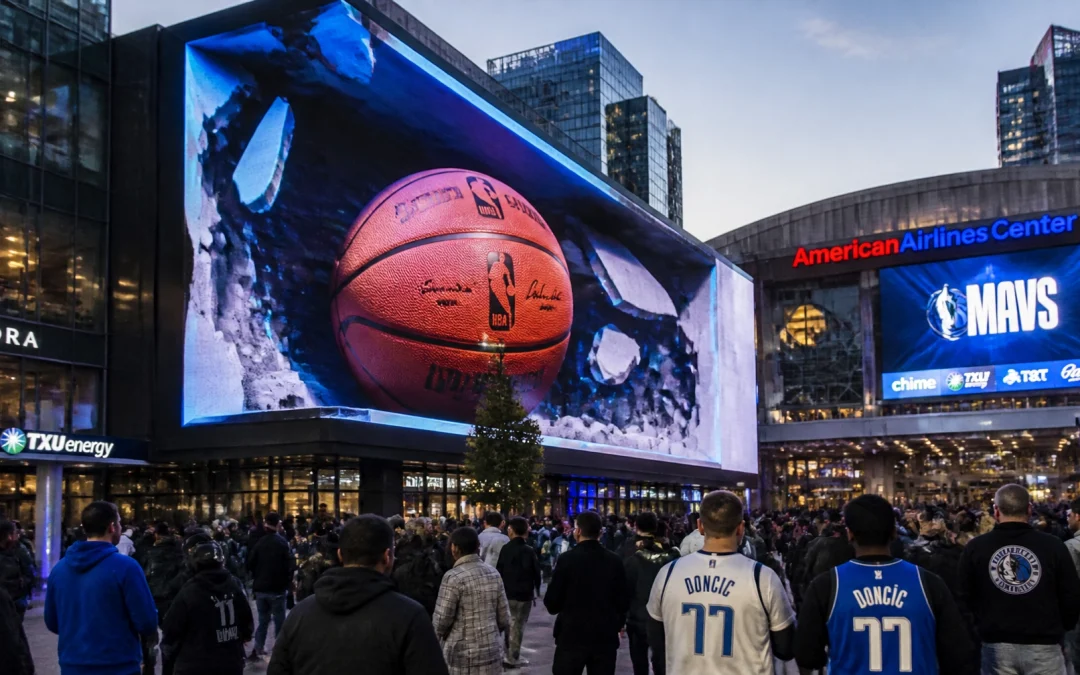
Visual impact is the cornerstone of effective out of home advertising. The rise of anamorphic 3D displays has introduced a new level of immersion. By using forced perspective, these screens create the illusion of objects popping out of the billboard, which significantly increases dwell time and brand recall.
Technology and Execution
These displays are strategically placed in high traffic urban centers and fan zones. The creative must be specifically designed for the screen's dimensions and the viewer's primary angle of approach. In a sports context, this might involve a hyper-realistic 3D sneaker floating over a plaza or a football appearing to fly toward passersby. This level of visual storytelling turns an advertisement into a shared experience, often leading to secondary social media exposure as fans capture and share the visual on platforms like Instagram and X.
3. Hyper-Local Perimeter Targeting
The effectiveness of sports DOOH is often tied to proximity. A core strategy involves building a "digital perimeter" around sports venues. This tactic involves securing all available digital video boards within a 10 mile radius of a stadium to ensure a brand is omnipresent throughout the fan's journey.
Strategic Logistics
- Transport Hubs: Targeting digital screens at train stations and bus stops where fans arrive.
- Retail and Bars: Placing ads on screens in sports bars and convenience stores near the venue.
- Street Furniture: Utilizing digital kiosks and posters to reach fans walking to the gates.
This comprehensive coverage ensures that the brand remains top of mind from the moment a fan leaves their house until they enter the arena. Organizations looking to scale their presence often refer to strategies for capturing share in this growing market.
4. Dynamic Data Triggers and Live Integration
DOOH is no longer a static medium. By integrating live data feeds, screens can update automatically to show scores, countdown clocks, or player statistics. This creates a sense of urgency and direct connection to the live event.
Execution Process
Brands can program ads to trigger based on specific events. If a player hits a milestone or a team scores a game winning goal, the DOOH creative can update within seconds to celebrate the moment. This "moment based" marketing ensures that the content is always relevant to the audience's current emotional state. This level of agility is a key differentiator for brands aiming for hyperlocal conversions in short windows of time.
5. Omnichannel Retargeting and Device IDs
One of the most powerful innovations is the ability to bridge the gap between physical screens and personal mobile devices. By capturing anonymized device IDs of fans exposed to a DOOH ad, brands can later retarget those same individuals with mobile or Connected TV (CTV) ads.
Results and Impact
This omnichannel approach leads to significant increases in brand lift. For instance, a campaign for Sea-Doo demonstrated how digital OOH can increase purchase consideration by as much as 144 percent when integrated correctly. The synergy between a large, high impact screen and a personal mobile device creates multiple touchpoints that reinforce the message and drive the fan toward a final action, such as a purchase or an app download.
6. Interactive AR Bridges and QR Integration
Interactive elements are transforming DOOH from a passive medium into an active engagement tool. QR codes and Augmented Reality (AR) markers are now common features on stadium area screens.
Strategy and Tactics
- Instant Access: Fans scan a QR code to enter a contest or download a team app.
- AR Filters: Screens act as a gateway to AR experiences where fans can "try on" team merchandise virtually.
- Social Connectivity: Integrating live social media feeds onto the screen to display fan photos and comments in real time.

7. Virtual Signage and Live Broadcast Synchronization
Innovation in sports marketing now allows for the synchronization of physical DOOH with virtual in game advertising. While a fan sees a physical board outside the stadium, viewers at home might see a different, digitally overlaid ad in the same location during the broadcast.
Technical Alignment
This allows brands to tailor their messaging to different geographic regions or demographics simultaneously. A global sponsor can run a synchronized campaign that dominates both the physical environment near the arena and the digital environment within the live broadcast feed. This creates a unified brand presence across all viewing platforms.
8. Advanced Measurement and Attribution Models
The "black box" of OOH measurement is being replaced by precise, data driven attribution models. Using mobile location data and third party research, brands can now quantify the direct impact of their DOOH spend.
Quantifying Results
Measurement partners can now track:
- Foot Traffic: How many fans visited a retail location after being exposed to a DOOH screen.
- Brand Lift: Percentage increases in brand awareness and purchase intent. For example, White Claw saw a 74 percent lift in purchase consideration for a product launch through programmatic DOOH.
- Online Conversion: Tracking fans who saw an ad and subsequently visited the brand's website or performed a search.
9. Immersive Fan Environments
Newer venues are being built with digital screens integrated into every facet of the architecture. These immersive environments allow for 360 degree brand takeovers. Instead of a single screen, a brand can occupy an entire fan zone, with coordinated visuals across dozens of monitors and LED surfaces. This level of environmental saturation ensures that the brand message is inescapable and deeply integrated into the fan experience.
10. Sustainable Infrastructure and Eco-Friendly Screens
As sustainability becomes a priority for corporate brands, the DOOH industry is responding with greener technology. This includes energy efficient LED displays, solar powered kiosks, and smart brightness controls that reduce power consumption during late night hours.
Strategic Alignment
Choosing sustainable DOOH partners allows brands to align their marketing efforts with their Environmental, Social, and Governance (ESG) goals. High efficiency hardware not only reduces the carbon footprint but also often provides better visual clarity and longer operational life.

Conclusion
The evolution of Digital Out of Home advertising in the sports sector is characterized by a move toward smarter, more responsive, and more immersive technology. From the flexibility of programmatic buying to the visual depth of 3D anamorphic creative, these innovations provide brand managers with powerful tools to connect with passionate fan bases. By leveraging data, proximity, and omnichannel integration, advertisers can ensure their campaigns resonate long after the final whistle. Organizations that embrace these trends will find themselves well positioned to capture a significant share of the expanding sports media landscape.